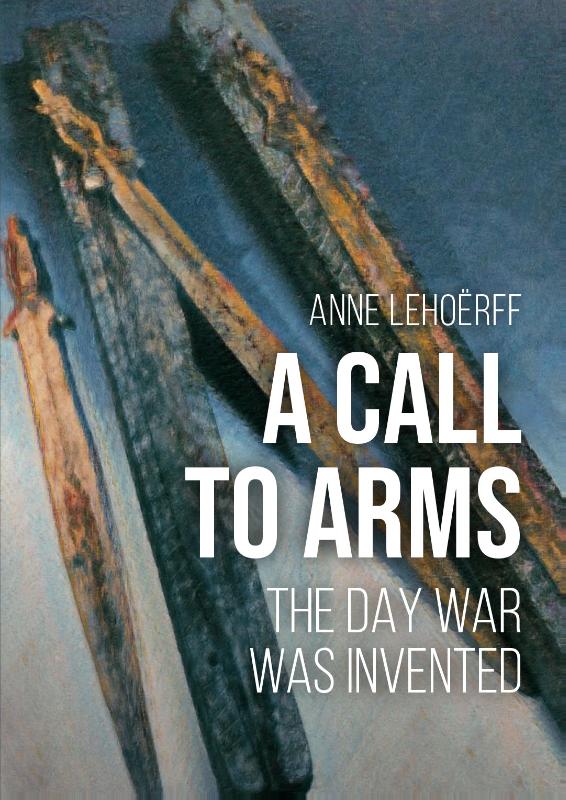
A call to arms The day war was invented
Paperback250 pagina’sEngels
Ook verkrijgbaar als
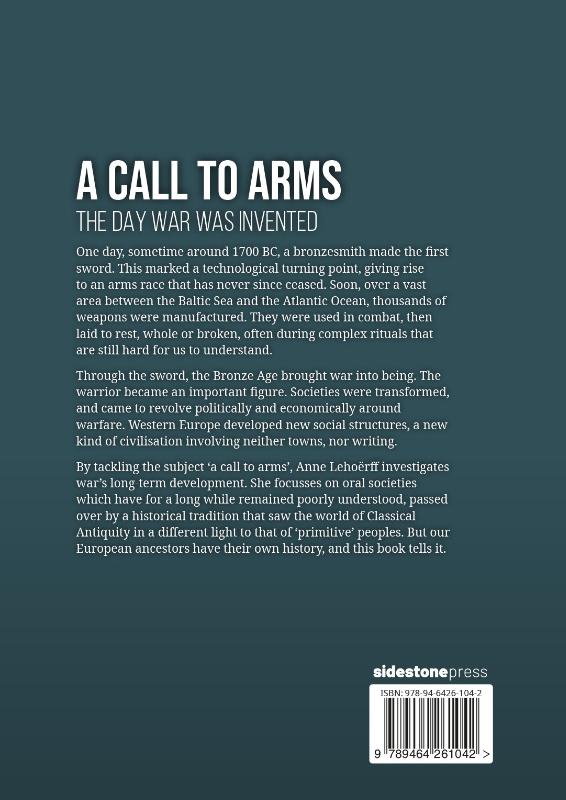
Introduction: Encountering WarHow history comes to the historianGoing to warHistory, a human scienceArchaeology in historyWar and European Protohistory revisitedWhat Wars?Introductory narrative: Once upon a time, a warrior’s weapons…War wordsTheories of warThe philosophical angleStateless societies as seen by EuropeansThe ‘savage’ beneath our feetEver more archaeological evidenceArchaeology and historyThe ‘primitive’ in the cityThe war of originsThe Celt of our dreamsAnd there was war…Research ‘evidence’Introductory narrative: Keeping ArmsAn abundance of evidenceAfter the battleThe Metal Ages in picturesScenes of combatThe first battlefieldsSacred sites and cult objectsSkeletons and splintersThe Lessons of BonesWhen Metal SpeaksIntroductory narrative: The World of MetalFascinating metalMetal choices in EuropeUnpicking harlequin’s cloakHierarchies that dare not speak their nameDeciphering and understandingIn the laboratoryStarting the investigation at the endIn the bronze smith’s cauldronUnder the metalworker’s hammerA list of weaponsNarrative introduction: The bronze-smith in his workshopThe sword extends the armThe sword evolvesAnd a scabbard…The spear thickensArrows of outrageous fortuneThe ambiguity of the hafted axeA shield to protect the bodyThe metal helmet reinforces the warrior’s headMetal to embellish the breastOff to warIntroductory narrative: Taking up armsViolence in the PalaeolithicMultiple-use technology in the NeolithicWhat kind of Neolithic ‘war’?Declaring war in the Bronze AgeThe revolution in fighting in 1700 BCMultifaceted war in the Iron AgeViolence upon violenceFarewell to armsMetal hoardsWar in all its StatesIntroductory narrative: The 1000 BC warrior on the Normandy coastWomen: goddesses or sinners?Masculine dominationRich women without weaponsTransgressing normsReasons for warThe State, primitives, the written word. Terms of power.What sort of society?Three ages of war?Words and functions for allThe West in the dynamics of warfareConclusion: The human levelQuestions of scaleWar and peaceA trip to the Bronze Age kitchenOne day, sometime around 1700 BC, a bronzesmith made the first sword. This marked a technological turning point, giving rise to an arms race that has never since ceased. Soon, over a vast area between the Baltic Sea and the Atlantic Ocean, thousands of weapons were manufactured. They were used in combat, then laid to rest, whole or broken, often during complex rituals that are still hard for us to understand. Through the sword, the Bronze Age brought war into being. The warrior became an important figure. Societies were transformed, and came to revolve politically and economically around warfare. Western Europe developed new social structures, a new kind of civilisation involving neither towns, nor writing. By tackling the subject ‘a call to arms’, Anne Lehoërff investigates war’s long-term development. She focusses on oral societies which have for a long while remained poorly understood, passed over by a historical tradition that saw the world of Classical Antiquity in a different light to that of ‘primitive’ peoples. But our European ancestors have their own history, and this book tells it.The French edition of A CALL TO ARMS was awarded the Verdun World Peace Center History Prize in 2018.
In het kort
ISBN-13
9789464261042
Uitgever
Verschenen
20 september 2022
Imprint
Bibliografisch
ISBN-139789464261042
Editie1
TaalEngels eng
Pagina’s250
GeïllustreerdJa
Uitgave
UitgeverSidestone Press
ImprintSidestone Press
CB-relatie-id9180064
Verschenen20 september 2022
StatusOnbekend 00
Vorm & inhoud
ProductvormPaperback BC
SamenstellingLos product
Classificatie
NUR (hoofd)Archeologie 682
NUR (alle)682 Archeologie
Medewerkers
Auteur A01Anne Lehoërff
Herkomst
Werk-id (NSTC)501499725
MeldingBevestigd bij publicatie 03
Bijgewerkt6 augustus 2026
Lijkt op dit boek
Durrington Walls and Woodhenge: A place for the living
Durrington Walls and Woodhenge: A place for the living
Indigenous Knowledge in Transformation
Indigenous Knowledge in Transformation
Archaeological Approaches to Inequality, Political Organisation, and Social Complexity
Archaeological Approaches to Inequality, Political Organisation, and Social Complexity
Stadterweiterungen und urbane Dynamik im Mittelalter
Stadterweiterungen und urbane Dynamik im Mittelalter
Prehistoric Shore Settlements of the Southwestern Balkans
Prehistoric Shore Settlements of the Southwestern Balkans
NSTC 501499725 · CB-relatie 9180064 · Bijgewerkt 6 augustus 2026