
A Violent History Power and Conflict in the Congo Basin from the Nineteenth Century to the Present
E-book246 pagina’sEngelsLeverbaar
Ook verkrijgbaar als
MapsAbbreviationsPreface to the English EditionAcknowledgementsIntroductionChapter 1. The “Ancien Régime”1.1 The “equatorial tradition”1.2 The Luba kingdom1.3 The Lunda “commonwealth”Chapter 2. Traders, Raiders and Warlords in the Nineteenth Century2.1 Long-distance trade networks2.2 Msiri’s warlord state2.3 Tippu Tip and the Arab-Swahili of eastern CongoChapter 3. The État Indépendant du Congo and the Occupation of the Congo Basin3.1 The “système domanial”3.2 The Force Publique3.3 Van Kerckhoven, the Congo–Arab War and Ngongo Luteta3.4 Mukanda Bantu and Clément BrasseurChapter 4. “Red Rubber”4.1 The rubber companies4.2 “Collaborators”: from the waungwana to Lupaka4.3 A genocide in Congo?4.4 The Congo reform movementChapter 5. The Belgian Congo5.1 Administrative structures5.2 The mining sector5.3 Forced crops and forced labour5.4 The Pende revolt and the “weapons of the weak”5.5 The “creation of tribalism”5.6 Belgian paternalismChapter 6. Decolonisation and Secession6.1 A “precipitous decolonisation”6.2 The secession of Katanga between neo-colonialism and the Cold War6.3 The Katangese ideology6.4 The return of warlordismChapter 7. The Rebellions of 1963–19657.1 From Pierre Mulele to the Simba7.2 Internal weaknesses7.3 Western interventionChapter 8. Mobutu’s Kleptocracy8.1 “Mobutism”, “neo-patrimonialism” and “clientelism”8.2 E economic and military crisis8.3 Mobutu and the Cold War8.4 The failure of the democratic transition8.5 The collapse of the state and the new warlordsChapter 9. The Congo and the “Great African War”9.1 The repercussions of the Rwandan genocide and the “First Congo War”9.2 Mzee Kabila’s Congo9.3 The “Second Congo War”9.4 The war economy9.5 Military fragmentation and Mayi-MayiEpilogue. An Uneasy PresentNotesBibliographyArchivesPublished primary sourcesSecondary sourcesIndexThe first long-durée history of large-scale violence in the Congo BasinSince the early nineteenth century, political and military violence has played an exceptionally significant role in the territory corresponding to the present-day Democratic Republic of Congo. By emphasising the periodic re-occurrence of "warlordism" and the economy of plunder that characterises it, Giacomo Macola offers new analytical tools to interpret the history of the societies of the Congo Basin over the past two hundred years. In the concluding chapters, the author dwells on more recent events, detailing the collapse of Mobutu's Zaire, the "Great African War" and the reasons for the continuing armed instability in the east of the country. Supplementing analyses of the contemporary dimension of African conflicts, Macola makes a case for the enduring importance of studying precolonial history.Since the early nineteenth century, political and military violence has played an exceptionally significant role in the territory corresponding to the present-day Democratic Republic of Congo. By emphasising the periodic re-occurrence of “warlordism” and the economy of plunder that characterises it, Giacomo Macola offers new analytical tools to interpret the history of the societies of the Congo Basin over the past two hundred years. In the concluding chapters, the author dwells on more recent events, detailing the collapse of Mobutu’s Zaire, the “Great African War” and the reasons for the continuing armed instability in the east of the country. Supplementing analyses of the contemporary dimension of African conflicts, Macola makes a case for the enduring importance of studying precolonial history.
In het kort
ISBN-13
9789461666253
Uitgever
Verschenen
3 september 2025
Oorspr. titel
Una storia violenta
Imprint
Bibliografisch
ISBN-139789461666253
Oorspronkelijke titelUna storia violenta
Editie1
TaalEngels eng
Pagina’s246
GeïllustreerdNee
Uitgave
UitgeverUniversitaire Pers Leuven
ImprintLeuven University Press
CB-relatie-id8004161
Verschenen3 september 2025
StatusLeverbaar 04
BeschikbaarheidBeschikbaar 20
Zonder prijsPrijs volgt
Vorm & inhoud
ProductvormE-book ED
VormdetailE107 PDF
SamenstellingLos product
Beveiliging e-bookDigitaal watermerk 02
Classificatie
NUR (hoofd)Moderne geschiedenis (1870-heden) 686
NUR (alle)686 Moderne geschiedenis (1870-heden)
Trefwoordenviolence · congo free state · belgian congo · postcolonial · colonial · warlords · precolonial · zaire · drc
Medewerkers
Auteur A01Giacomo Macola
Herkomst
Werk-id (NSTC)501613628
MeldingBevestigd bij publicatie 03
Bijgewerkt6 augustus 2026
Trefwoorden
Lijkt op dit boek
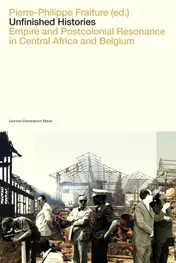
Unfinished Histories
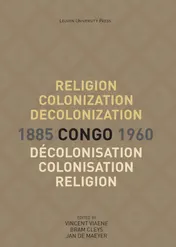
Religion, Colonization and Decolonization in Congo, 1885-1960. Religion, colonisation et décolonisation au Congo, 1885-1960
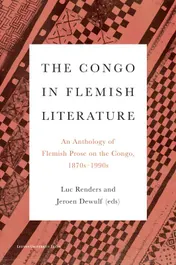
The Congo in Flemish Literature
Discovering Congo
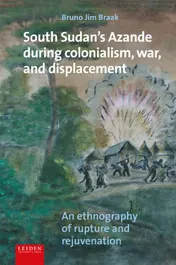
South Sudan's Azande during colonialism, war, and displacement
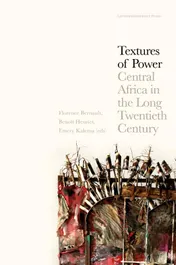
Textures of Power
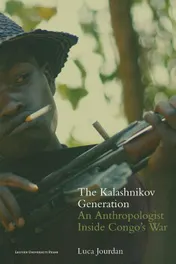
The Kalashnikov Generation
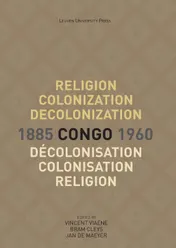
Religion, colonization and decolonization in Congo, 1885-1960.
All About the Democratic Republic of Congo
Textures of Power
NSTC 501613628 · CB-relatie 8004161 · Bijgewerkt 6 augustus 2026