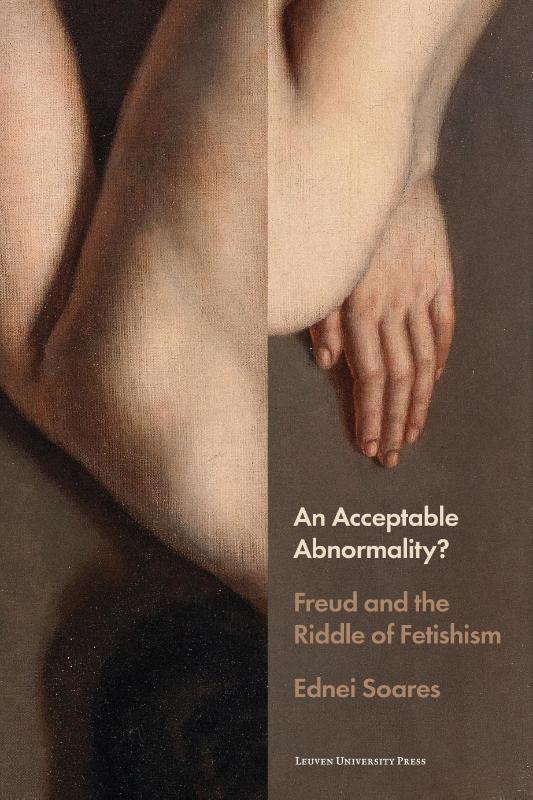
An Acceptable Abnormality? Freud and the Riddle of Fetishism
Ook verkrijgbaar als
AcknowledgementsChapter 1 IntroductionChapter 2 Freud and His Forebears: Binet and Krafft-Ebing 1. The Riddle of Fetishism 2. Alfred Binet and the Riddle of Fetishism Binet and Doubling Binet’s Conceptualization of Fetishism: The Birth of a Riddle 3. Freud, Krafft-Ebing, and the Problem of Perversions Krafft-Ebing’s Classification of Perversions Fetishism, Masochism, and Shared Aetiology 4. Freud’s Clinical Framework: The Neurosis–Perversion OppositionChapter 3 The Neurotic “Negative”: Freud’s Early Perversion Theory 1. Freud’s Early Aetiology of Neurosis and Perversion 2. Inherited Concepts: Trauma, Splitting, and Defence in Freud’s 1890s Work 3. The Nascent “Riddle”: Fetishism’s Challenge to Freud’s Early FrameworkChapter 4 The Initial Confrontation: Fetishism in Freud’s Three Essays and Early Revisions (1905–8) 1. Fetishism and the Breakdown of Freud’s 1905 Framework 2. Childhood Impressions and the Turn to Fantasy 3. Infantile Theories, Castration Anxiety, and the ObjectChapter 5 Deepening the Riddle: Fetishism, Trauma, and the Oedipus Complex (1909–20) 1. On the Genesis of Fetishism (1909) 2. The Role of the Fetish in Totem and Taboo 3. Freud’s Development of Binet’s Theory of Childhood Trauma 4. The Oedipus Complex and the Aetiology of Perversions 5. Fetishism and the RiddleChapter 6 Freud’s Late Works on Fetishism 1. Freud on Fetishism: Early and Late 2. Fetishism (1927) and Other Works 3. Freud on Disavowal, Scotomization, and Splitting in Fetishism 4. Freud on Binet on Double-Sided Fetishes 5. Fetishism in Freud’s Works in the Late 1930s 6. Freud, Fetishism, and the Brain 7. Freud’s Psychoanalytic Theory and FetishismChapter 7 “Fetishism” and Freud’s Riddle in Jacques Lacan’s Work 1. Doubling, Personality, and Perversity in Lacan’s Theorization of Fetishism Binet’s Ideas on Paranoia as Doubling of Personality in Lacan’s Explorations Lacan’s Initial Approach to Fetishism Lacan’s Psychoanalytic Model of Doubling 2. Lacan’s Debate on Fetishism with Object-Relation Theory Fetishism as an Object-Relation Phenomenon Fetishism as a Paradigm of Perversion in Lacan’s Theory 3. The Fetish as a Model of the Object of Human Desire in Lacan’s ThinkingConclusion ReferencesUnravelling the Fetish: Freud and the Riddles of DesireLong regarded as a marginal phenomenon, fetishism reshaped the foundations of psychoanalysis. By tracing the evolution of Freud’s thinking on fetishism — from his early pathologisation to his later understanding of it as a source of sexual and psychic meaning — this book reveals how his attention to fetishism compelled him to rethink desire, object‑choice, and the roots of inner conflict. In this book, Ednei Soares, drawing on the influence of Alfred Binet, early neuropathology, and later debates in Lacanian theory, as well as feminist, queer, and trans theory, explains why fetishism became central to discussions that shape gender studies today and contemporary reflections on identity.An Acceptable Abnormality? invites readers to view fetishism not as a curious anomaly but as a powerful lens through which we can understand how desire takes form. This compelling book opens new ways of thinking about human sexuality, making it essential reading for specialists while remaining accessible to a broad audience.
In het kort
ISBN-13
9789462705357
Uitgever
Verschenen
17 augustus 2026
Imprint
Bibliografisch
Uitgave
UitgeverUniversitaire Pers Leuven
ImprintLeuven University Press
CB-relatie-id8004161
Verschenen17 augustus 2026
StatusAangekondigd 02
BeschikbaarheidContact leverancier 99
Adviesprijs (incl. btw)€ 36,00
Vorm & inhoud
ProductvormPaperback BC
SamenstellingLos product
Classificatie
NUR (hoofd)Psychologie algemeen 770
NUR (alle)770 Psychologie algemeen
Trefwoordenfreud · fetishism · psychoanalysis · perversion · sexual diversity · alfred binet · lacan · splitting · history of psychoanalysis · depathologisation
Medewerkers
Auteur A01Ednei Soares
Herkomst
Werk-id (NSTC)501674158
MeldingUpdate 04
Laatste CB-bericht7778
Bijgewerkt5 augustus 2026
Trefwoorden
Lijkt op dit boek










NSTC 501674158 · CB-relatie 8004161 · Laatste CB-bericht 7778 · Bijgewerkt 5 augustus 2026