
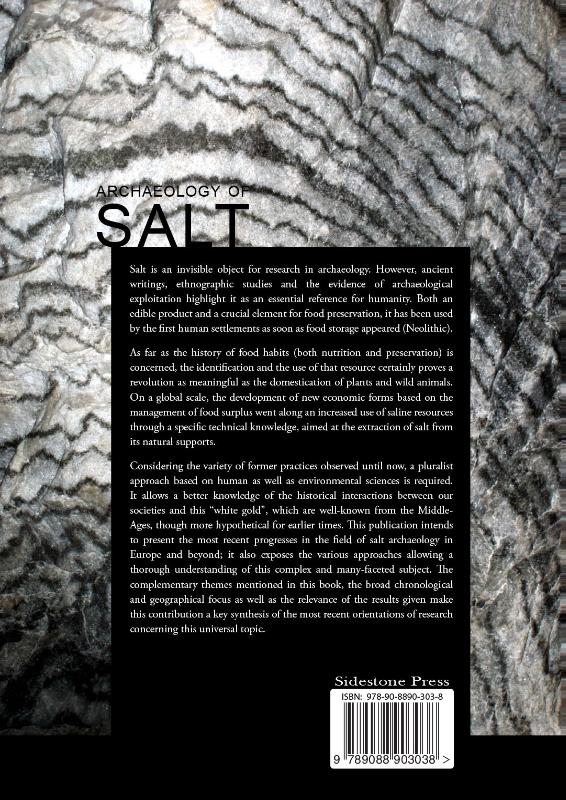
Archaeology of salt approaching an invisible past
Olivier Weller bewerker
Paperback200 pagina’sEngels
Salt is an invisible object for research in archaeology. However, ancient writings, ethnographic studies and the evidence of archaeological exploitation highlight it as an essential reference for humanity. Both an edible product and a crucial element for food preservation, it has been used by the first human settlements as soon as food storage appeared (Neolithic).
As far as the history of food habits (both nutrition and preservation) is concerned, the identification and the use of that resource certainly proves a revolution as meaningful as the domestication of plants and wild animals. On a global scale, the development of new economic forms based on the management of food surplus went along an increased use of saline resources through a specific technical knowledge, aimed at the extraction of salt from its natural supports.
Considering the variety of former practices observed until now, a pluralist approach based on human as well as environmental sciences is required. It allows a better knowledge of the historical interactions between our societies and this "white gold", which are well-known from the Middle-Ages, but more hypothetical for earlier times.
This publication intends to present the most recent progresses in the field of salt archaeology in Europe and beyond; it also exposes various approaches allowing a thorough understanding of this complex and many-faceted subject. The complementary themes dealt with in this book, the broad chronological and geographical focus, as well as the relevance of the results presented, make this contribution a key synthesis of the most recent research on this universal topic.
As far as the history of food habits (both nutrition and preservation) is concerned, the identification and the use of that resource certainly proves a revolution as meaningful as the domestication of plants and wild animals. On a global scale, the development of new economic forms based on the management of food surplus went along an increased use of saline resources through a specific technical knowledge, aimed at the extraction of salt from its natural supports.
Considering the variety of former practices observed until now, a pluralist approach based on human as well as environmental sciences is required. It allows a better knowledge of the historical interactions between our societies and this "white gold", which are well-known from the Middle-Ages, but more hypothetical for earlier times.
This publication intends to present the most recent progresses in the field of salt archaeology in Europe and beyond; it also exposes various approaches allowing a thorough understanding of this complex and many-faceted subject. The complementary themes dealt with in this book, the broad chronological and geographical focus, as well as the relevance of the results presented, make this contribution a key synthesis of the most recent research on this universal topic.
In het kort
Bibliografisch
ISBN-139789088903038
Editie1
TaalEngels eng
Pagina’s200
GeïllustreerdJa
Uitgave
Vorm & inhoud
ProductvormPaperback BC
SamenstellingLos product
Classificatie
NUR (hoofd)Archeologie 682
NUR (alle)682 Archeologie
Medewerkers
Bewerker B05Robin Brigand
Bewerker B05Olivier Weller
Herkomst
Werk-id (NSTC)500447145
MeldingBevestigd bij publicatie 03
Bijgewerkt6 augustus 2026
Lijkt op dit boek
Durrington Walls and Woodhenge: A place for the living
Durrington Walls and Woodhenge: A place for the living
Indigenous Knowledge in Transformation
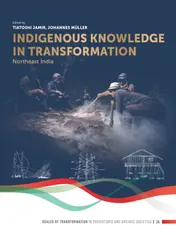
Indigenous Knowledge in Transformation
Archaeological Approaches to Inequality, Political Organisation, and Social Complexity
Archaeological Approaches to Inequality, Political Organisation, and Social Complexity
Stadterweiterungen und urbane Dynamik im Mittelalter
Stadterweiterungen und urbane Dynamik im Mittelalter
Prehistoric Shore Settlements of the Southwestern Balkans
Prehistoric Shore Settlements of the Southwestern Balkans
NSTC 500447145 · CB-relatie 9180064 · Bijgewerkt 6 augustus 2026