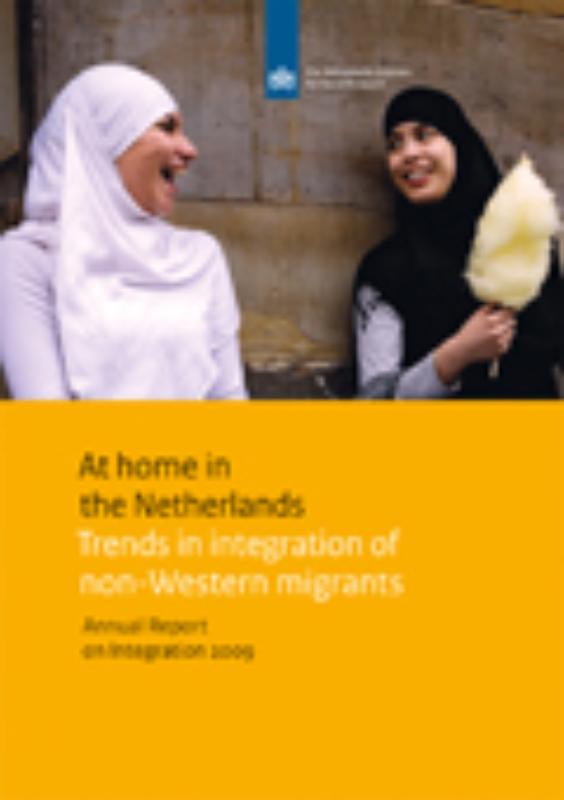
At home in the Netherlands? Trends in integration of non-Western migrants annual report on integration 2009
The integration of migrants has been exercising minds in the Netherlands for several decades now. The tone of the debate in both the political and public arena has frequently been sombre, reflecting the widespread feeling that large sections of the migrant population, and especially migrants with a Muslim background, had little connection with Dutch society. This report describes the position regarding the integration of migrant groups in the Netherlands and looks in depth at trends in the integration process. Integration is broken down into several dimensions in this report. This means that attention is devoted among other things to trends in education and on the labour market, but also to trends in spatial segregation, crime, interethnic contact, religious behaviour and command of the Dutch language. The picture that emerges is a mixed one. Migrants still lag behind considerably in many areas; at the same time, however, they are making up ground fast on several fronts. Members of the second generation are in many respects the driving force behind the improving position of migrant groups.
In het kort
ISBN-13
9789037704877
Uitgever
Verschenen
1 augustus 2010
Bibliografisch
ISBN-139789037704877
SerieSCP-publicatie — deel 2010-11
Editie1
TaalEngels eng
Pagina’s350
GeïllustreerdJa
Uitgave
UitgeverSociaal En Cultureel Planbureau
CB-relatie-id7300482
Verschenen1 augustus 2010
StatusOnbekend 00
BeschikbaarheidContact leverancier 99
Zonder prijsPrijs volgt
Vorm & inhoud
ProductvormPaperback BC
SamenstellingLos product
Classificatie
NUR (hoofd)Mens en maatschappij algemeen 740
NUR (alle)740 Mens en maatschappij algemeen
Medewerkers
Herkomst
Werk-id (NSTC)500299197
MeldingBevestigd bij publicatie 03
Bijgewerkt6 augustus 2026
Lijkt op dit boek









NSTC 500299197 · CB-relatie 7300482 · Bijgewerkt 6 augustus 2026