
General Introduction: Comics of the 'New' Europe Martha Kuhlman, José AlanizPart 1: The Former Yugoslav StatesUn-Drawn Experience: Visualizing Trauma in Aleksandar Zograf’s Regards from SerbiaMax BledsteinFilial Estrangement and Figurative Mourning in the Work of Nina BunjevacDragana ObradovićReality Check Through the Historical Avant-garde: Danilo Milošev WostokAleksandra SekulićPart 2: Czechoslovakia/the Czech RepublicFacets of Nostalgia: Text-centric Longing in Comics and Graphic Novels by Pavel ČechPavel KořínekThe Avant-Garde Aesthetic of Vojtěch MašekMartha KuhlmanRegardless of Context: Graphic Novels with the Faceless (and Homelandless) Hero of Branko JelinekMartin ForetPart 3: GermanyCo-Opting Childhood and Obscuring Ideology in Mosaik von Hannes Hegen, 1959-1974Sean EedyImages of Spies and Counter Spies in East German ComicsMichael F. ScholzTowards a Graphic Historicity: Authenticity and Photography in the German Graphic NovelElizabeth “Biz” NijdamPart 4: Poland, Ukraine, Romania, HungaryWomen, Feminism and Polish Comic Books: Frąś/Hagedorn’s Totalnie nie nostalgiaEwa StańczykIgor Baranko and National Precarity in Post-Soviet Ukrainian ComicsJosé AlanizThe Autobiographical Mode in Post-Communist Romanian Comics:Everyday Life in Brynjar Åbel Bandlien’s Strîmb Living and Andreea Chirică’s The Year of the PioneerMihaela PrecupAvatars and Iteration in Contemporary Hungarian Autobiographical ComicsEszter SzépAcknowledgmentsAbout the authorsIndexA new generation of European cartoonistsBringing together the work of an array of North American and European scholars, this collection highlights a previously unexamined area within global comics studies. It analyses comics from countries formerly behind the Iron Curtain like East Germany, Poland, Czechoslovakia, Hungary, Romania, Yugoslavia, and Ukraine, given their shared history of WWII and Communism. In addition to situating these graphic narratives in their national and subnational contexts, Comics of the New Europe pays particular attention to transnational connections along the common themes of nostalgia, memoir, and life under Communism. The essays offer insights into a new generation of European cartoonists that looks forward, inspired and informed by traditions from Franco-Belgian and American comics, and back, as they use the medium of comics to reexamine and reevaluate not only their national pasts and respective comics traditions but also their own post-1989 identities and experiences.Bringing together the work of an array of North American and European scholars, this collection highlights a previously unexamined area within global comics studies. It analyses comics from countries formerly behind the Iron Curtain like East Germany, Poland, Czech Republic, Hungary, Romania, Yugoslavia, and Ukraine, given their shared history of WWII and communism. In addition to situating these graphic narratives in their national and subnational contexts, Comics of the New Europe pays particular attention to transnational connections along the common themes of nostalgia, memoir, and life under communism. The essays offer insights into a new generation of European cartoonists that looks forward, inspired and informed by traditions from Franco-Belgian and American comics, and back, as they use the medium of comics to reexamine and reevaluate not only their national pasts and respective comics traditions but also their own post-1989 identities and experiences.Contributors: Max Bledstein (University of Winnipeg), Dragana Obradović (University of Toronto), Aleksandra Sekulić (University of Arts in Belgrade), Pavel Kořínek (Institute of Czech Literature, Czech Academy of Sciences in Prague), Martin Foret (Palacký University), Michael Scholz (Uppsala University), Sean Eedy (Carleton University), Elizabeth Nijdam (University of British Columbia), Ewa Stańczyk (University of Amsterdam), Eszter Szép (Eötvös Loránd University)
In het kort
ISBN-13
9789462702127
Uitgever
Verschenen
11 mei 2020
Imprint
Bibliografisch
ISBN-139789462702127
SerieStudies in European Comics and Graphic Novels — deel 7
Editie1
TaalEngels eng
Pagina’s290
GeïllustreerdJa
Uitgave
UitgeverUniversitaire Pers Leuven
ImprintLeuven University Press
CB-relatie-id8004161
Verschenen11 mei 2020
StatusOnbekend 00
BeschikbaarheidContact leverancier 99
Adviesprijs (incl. btw)€ 59,00
Vorm & inhoud
ProductvormPaperback BC
SamenstellingLos product
Classificatie
NUR (hoofd)Literatuurwetenschap 617
NUR (alle)617 Literatuurwetenschap
Medewerkers
Redacteur B01Martha Kuhlman
Redacteur B01José Alaniz
Herkomst
Werk-id (NSTC)501629772
MeldingBevestigd bij publicatie 03
Bijgewerkt6 augustus 2026
Trefwoorden
Lijkt op dit boek
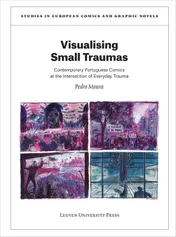
Visualising Small Traumas
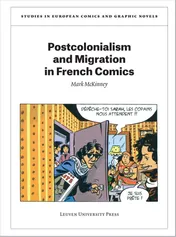
Postcolonialism and Migration in French Comics
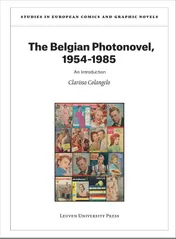
The Belgian Photonovel, 1954-1985
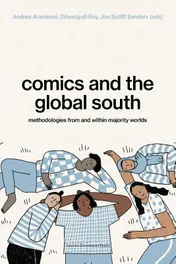
Comics and the Global South
The Visionary Art of Franco-Belgian Comics, 1930s to 1960s
Remembered reading

Sfar so far
Sugar, Spice, and the Not So Nice
What happens when nothing happens
Graphic Embodiments
NSTC 501629772 · CB-relatie 8004161 · Bijgewerkt 6 augustus 2026