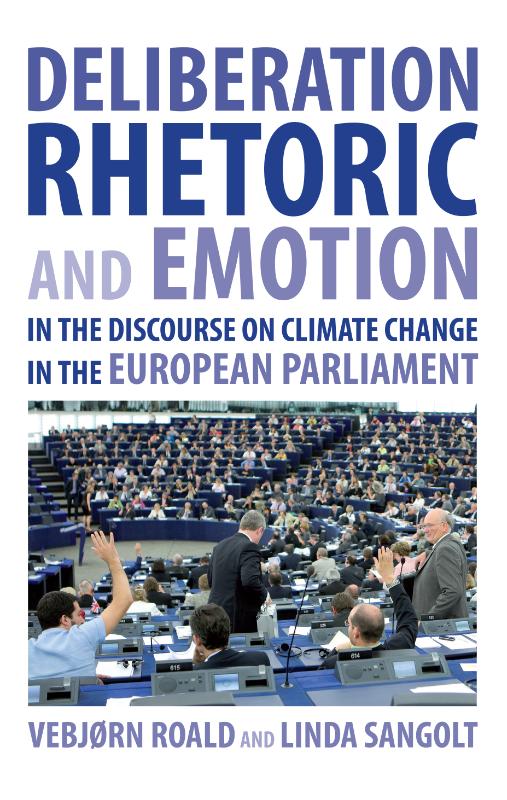
Deliberation, rhetoric and emotion in the discourse on climate change in the European parliament
Hardback136 pagina’sEngels
Ook verkrijgbaar als
Emotions and rationality are often seen as opposites, and as being in conflict. Modern democratic politics emphasizes the primacy of rational decision making without the interference of disturbing emotions. Political theorizing, in the same vein, tends to focus on the ratiocinative rather than the emotive. What is the relationship between emotions and deliberation in political discourse? Are emotions inimical to deliberative democracy? Or is lack of emotional engagement as detrimental to deliberation and decision-making as sheer emotionalizing? How can one systematically measure and appraise the role of emotions in political discussions?This book grapples with such questions through an analysis of three major plenary debates in the European Parliament (EP) concerning climate change policy in the period 1992-2007. Two different quantitative methods are used: the Discourse Quality Index which focuses on variables related to Habermas' ideal of deliberative democracy and an exploratory measure, the Textual Emotional Index. The latter is based on coding the emotional content of statements in which representatives give reasons for why they feel as they do about the issues they debate. The index traces eight emotions or emotional "triggers" in the climate change debates - pity, disappointment, indignation, hope, pride, joy, guilt and fear.Linda Sangolt is Associate Professor in the Department of Administration and Organization Theory, University of Bergen, Norway. Her most recent book is Between Enlightenment and Disaster. Dimensions of the Political use of Knowledge (2010).Vebjørn Roald holds a masters degree in political science from the University of Bergen and is currently a consultant with a private insurance company.
In het kort
ISBN-13
9789059725539
Uitgever
Verschenen
1 februari 2012
Bibliografisch
ISBN-139789059725539
Editie1
TaalEngels eng
Pagina’s136
GeïllustreerdJa
Uitgave
UitgeverEburon Uitgeverij B.V.
CB-relatie-id7804140
Verschenen1 februari 2012
StatusInactief 08
BeschikbaarheidContact leverancier 99
Adviesprijs (incl. btw)€ 29,50
Vorm & inhoud
ProductvormHardback BB
SamenstellingLos product
Classificatie
NUR (hoofd)Staats- en bestuursrecht 823
NUR (alle)823 Staats- en bestuursrecht
Medewerkers
Auteur A01Linda Sangolt
Auteur A01Vebjorn Roald
Herkomst
Werk-id (NSTC)500187334
MeldingBevestigd bij publicatie 03
Bijgewerkt6 augustus 2026
Lijkt op dit boek
NSTC 500187334 · CB-relatie 7804140 · Bijgewerkt 6 augustus 2026