
Developing circular building components Between ideal and feasible
Creating a circular economy within the built environment is vital to achieve a more sustainable society. By replacing building components with more circular ones during new construction, maintenance and renovation, we can gradually create a circular built environment. There are many different possible design variants for circular building components. Yet, knowledge on which variants are the most most circular, and which are feasible to implement is lacking. In this dissertation, we aimed to develop feasible, circular building components focussing on the context of renovation of Dutch, low-rise, post-war housing. Eight circular building components were designed and tested for implementation with housing associations and industry partners. Combining Action Research and Research through Design approaches, the development process was used to generate knowledge on 4 research goals. We developed a design tool for circular building components: the Circular Building Components (CBC) Generator. We developed the Circular Economy Life Cycle Assessment (CE-LCA) model to support environmental impacts assessment of circular building components. We developed environmental design guidelines for circular building components by comparing the Material Flow Analysis (MFA) and CE-LCA of multiple circular design variants for 2 circular building components. Finally, we identified which stakeholder choices led to circular building components which were considered feasible by reflecting and analysing stakeholder choices throughout their development processes. We concluded that not all circular design options led to desirable circular building components; not all desirable circular design options were yet found feasible. To implement more circular building components we recommended 4 changes in practice. We also urge for all to look beyond circularity. This research makes scientific contributions to circular design theories, management models for the built environment, and research methodology. The examples and knowledge developed in this research can support practice to develop more feasible and more circular building components; through their potential implementation, towards creating a more circular economy in the built environment.
In het kort
ISBN-13
9789463666749
Uitgever
Verschenen
21 april 2023
Imprint
Bibliografisch
ISBN-139789463666749
Editie1
TaalEngels eng
Pagina’s736
GeïllustreerdJa
Uitgave
Vorm & inhoud
ProductvormPaperback BC
SamenstellingLos product
Classificatie
NUR (hoofd)Bouwkunde 955
NUR (alle)955 Bouwkunde
Medewerkers
Auteur A01Anne van Stijn
Herkomst
Werk-id (NSTC)501537152
MeldingBevestigd bij publicatie 03
Bijgewerkt6 augustus 2026
Lijkt op dit boek
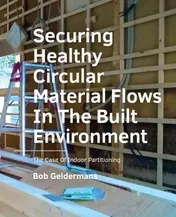
Securing Healthy Circular Material Flows In The Built Environment
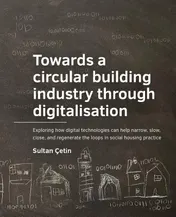
Towards a circular building industry through digitalisation
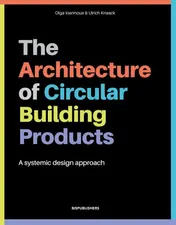
The Architecture of Circular Building Products
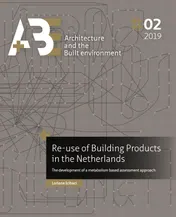
Re-use of Building Products in the Netherlands
Spatial approaches to a circular economy
Circular Communities
Facade refurbishment toolbox
The Potential of Small, Low-Carbon, Zero-Energy Housing
Towards a future sustainable housing stock
Reconfiguration of Practices towards a Circular Economy in the Architecture, Engineering, and Construction sector
NSTC 501537152 · CB-relatie 6225289 · Bijgewerkt 6 augustus 2026