
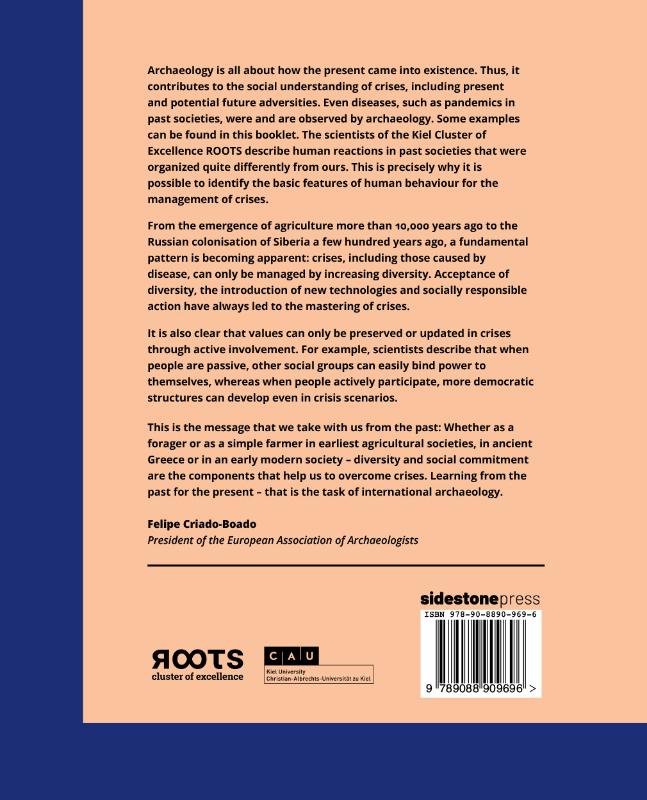
Distant Times so Close Pandemics and Crises Reloaded
PrefaceIntroduction. Pandemics, Crises and Solutions: The Past in the FutureLutz Käppel, Cheryl Makarewicz, and Johannes MüllerThe Roots of ZoonosesCheryl MakarewiczEpidemics, Mobility and Permafrost: Lessons from SiberiaHenny PiezonkaSocial Diversity and the Sharing of Knowledge in European Prehistory: Lessons for the Pandemic Present?Martin FurholtWhy Solidarity Is Needed: Neolithic Connectivity and the Chance of EpidemicsTim KerigPopulation Agglomeration and the “Bubonic Plague”: The Earliest European Cities around 3800 BCEJohannes MüllerUpheaval against Social Order. A Solution? Lessons from Neolithic and Iron Age EuropeJohannes MüllerPandemia and Holism: What Ancient Medicine Had to SayChiara ThumigerThe Epidemic as a Challenge: Homer, IliadLutz KäppelThe Epidemic as a Challenge: Sophocles, Oedipus RexLutz KäppelOedipus and the Attic PlagueLutz KäppelTracing Past Pandemics through the Analysis of Ancient Pathogen GenomesBen Krause-Kyora and Almut NebelThe Medieval Leprosy Pandemic and Its Impact on the Human Gene PoolBen Krause-Kyora and Almut NebelPolitics of the PandemicVesa ArponenConsequences: Diversity and Personal ResponsibilityLutz Käppel, Cheryl Makarewicz, and Johannes MüllerArchaeology is all about how the present came into existence. Thus, it contributes to the social understanding of crises, including present and potential future adversities. Even diseases, such as pandemics in past societies, were and are observed by archaeology. Some examples can be found in this booklet. The scientists of the Kiel Cluster of Excellence ROOTS describe human reactions in past societies that were organized quite differently from ours. This is precisely why it is possible to identify the basic features of human behaviour for the management of crises.From the emergence of agriculture more than 10,000 years ago to the Russian colonisation of Siberia a few hundred years ago, a fundamental pattern is becoming apparent: crises, including those caused by disease, can only be managed by increasing diversity. Acceptance of diversity, the introduction of new technologies and socially responsible action have always led to the mastering of crises.It is also clear that values can only be preserved or updated in crises through active involvement. For example, scientists describe that when people are passive, other social groups can easily bind power to themselves, whereas when people actively participate, more democratic structures can develop even in crisis scenarios.This is the message that we take with us from the past: Whether as a forager or as a simple farmer in earliest agricultural societies, in ancient Greece or in an early modern society – diversity and social commitment are the components that help us to overcome crises. Learning from the past for the present – that is the task of international archaeology.Felipe Criado-BoadoPresident of the European Association of Archaeologists
In het kort
ISBN-13
9789088909696
Uitgever
Verschenen
15 september 2020
Imprint
Bibliografisch
ISBN-139789088909696
SerieRoots Booklet Series — deel 1
Editie1
TaalEngels eng
Pagina’s54
GeïllustreerdJa
Uitgave
UitgeverSidestone Press
ImprintSidestone Press
CB-relatie-id9180064
Verschenen15 september 2020
StatusOnbekend 00
Vorm & inhoud
ProductvormPaperback BC
SamenstellingLos product
Classificatie
NUR (hoofd)Archeologie 682
NUR (alle)682 Archeologie
Medewerkers
Herkomst
Werk-id (NSTC)500854375
MeldingBevestigd bij publicatie 03
Bijgewerkt6 augustus 2026
Lijkt op dit boek
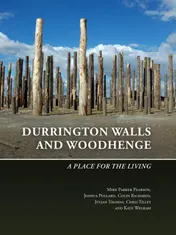
Durrington Walls and Woodhenge: A place for the living
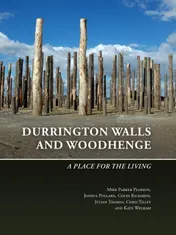
Durrington Walls and Woodhenge: A place for the living
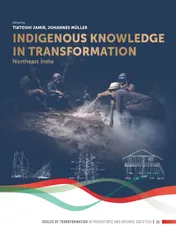
Indigenous Knowledge in Transformation
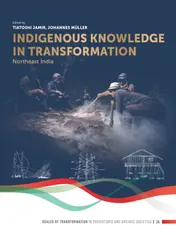
Indigenous Knowledge in Transformation
Archaeological Approaches to Inequality, Political Organisation, and Social Complexity
Archaeological Approaches to Inequality, Political Organisation, and Social Complexity
Stadterweiterungen und urbane Dynamik im Mittelalter
Stadterweiterungen und urbane Dynamik im Mittelalter
Prehistoric Shore Settlements of the Southwestern Balkans
Prehistoric Shore Settlements of the Southwestern Balkans
NSTC 500854375 · CB-relatie 9180064 · Bijgewerkt 6 augustus 2026