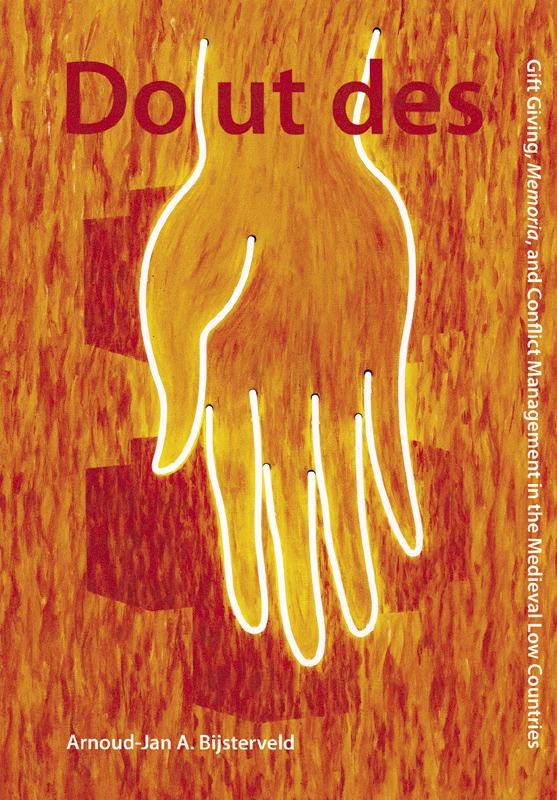
Do ut des gift giving, memoria, and conflict management in the medieval low countries
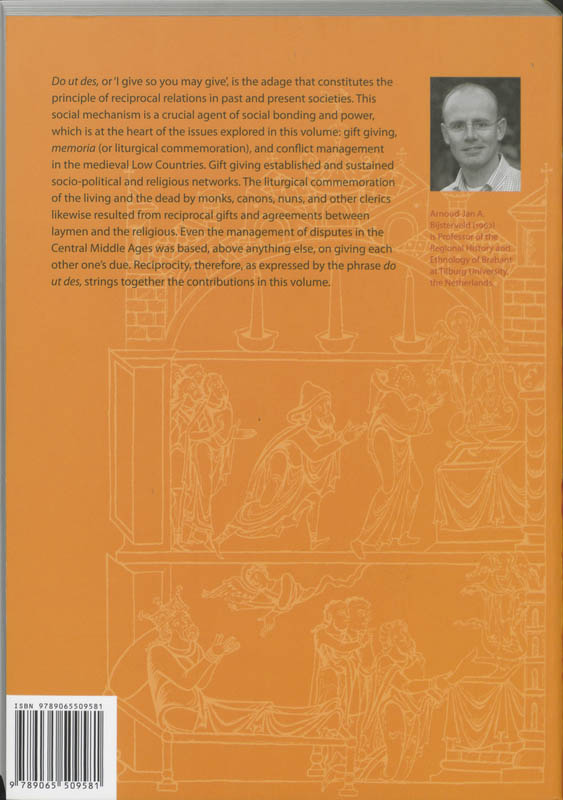
Do ut des, or 'I give so you may give', is the adage that constitutes the principle of reciprocal relations in past and present societies. This social mechanism is a crucial agent of social bonding and power, which is at the heart of the issues explored in this volume: gift giving, memoria (or liturgical commemoration), and conflict management in the medieval Low Countries. Gift giving established and sustained socio-political and religious networks. The liturgical commemoration of the living and the dead by monks, canons, nuns, and other clerics likewise resulted from reciprocal gifts and agreements between laymen and the religious. Even the management of disputes in the Central Middle Ages was based, above anything else, on giving each other one's due. Reciprocity, therefore, as expressed by the phrase do ut des, strings together the contributions in this volume.
Contents: Introduction Gift Giving: The Medieval Gift as Agent of Social Bonding and Power Afterword: the Study of Gift Giving since the 1990s 2 Beyond Legal Sources: Contextualizing Charters of Gift 3 A Glove on the Altar: Profane Symbols and Sacred Rituals 4 Gift Exchange, Landed Property, and Eternity: the Priory of Postel Memoria: 5 Commemorating Patrons and Gifts in Monastic Chronicles 6 In mei memoriam: Hollow Phrase or Intentional Formula? 7 Eternal Life, Perpetual Glory: Memorializing Donors and Founders Conflict Management 8 In Honour Bound: Give and Take 9 Appealing to the Mighty Vindicator: Canons and Laity in Conflict Sources and Bibliography List of Illustrations and Maps General Index Acknowledgements About the Author
Contents: Introduction Gift Giving: The Medieval Gift as Agent of Social Bonding and Power Afterword: the Study of Gift Giving since the 1990s 2 Beyond Legal Sources: Contextualizing Charters of Gift 3 A Glove on the Altar: Profane Symbols and Sacred Rituals 4 Gift Exchange, Landed Property, and Eternity: the Priory of Postel Memoria: 5 Commemorating Patrons and Gifts in Monastic Chronicles 6 In mei memoriam: Hollow Phrase or Intentional Formula? 7 Eternal Life, Perpetual Glory: Memorializing Donors and Founders Conflict Management 8 In Honour Bound: Give and Take 9 Appealing to the Mighty Vindicator: Canons and Laity in Conflict Sources and Bibliography List of Illustrations and Maps General Index Acknowledgements About the Author
In het kort
ISBN-13
9789065509581
Uitgever
Verschenen
27 mei 2007
Bibliografisch
ISBN-139789065509581
SerieMiddeleeuwse studies en bronnen — deel 104
Editie1
TaalEngels eng
Pagina’s256
GeïllustreerdJa
Uitgave
UitgeverVerloren b.v., uitgeverij
CB-relatie-id7300840
Verschenen27 mei 2007
StatusInactief 08
BeschikbaarheidContact leverancier 99
Adviesprijs (incl. btw)€ 29,00
Vorm & inhoud
ProductvormPaperback BC
SamenstellingLos product
Classificatie
NUR (hoofd)Middeleeuwen (500-1500) 684
NUR (alle)684 Middeleeuwen (500-1500)
Medewerkers
Auteur A01A.J.A. Bijsterveld
Herkomst
Werk-id (NSTC)500659940
MeldingBevestigd bij publicatie 03
Bijgewerkt6 augustus 2026
Lijkt op dit boek

NSTC 500659940 · CB-relatie 7300840 · Bijgewerkt 6 augustus 2026