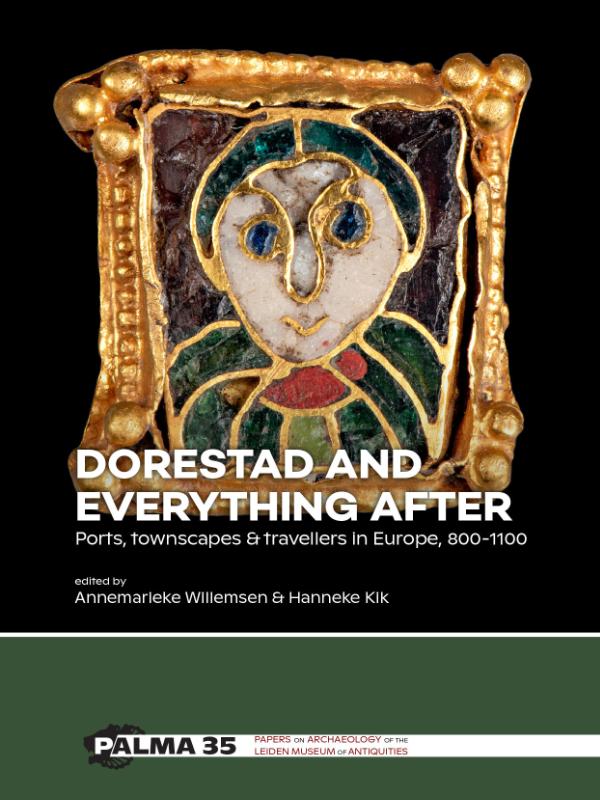
Dorestad and Everything After Ports, townscapes & travellers in Europe, 800-1100
Hanneke Kik bewerker
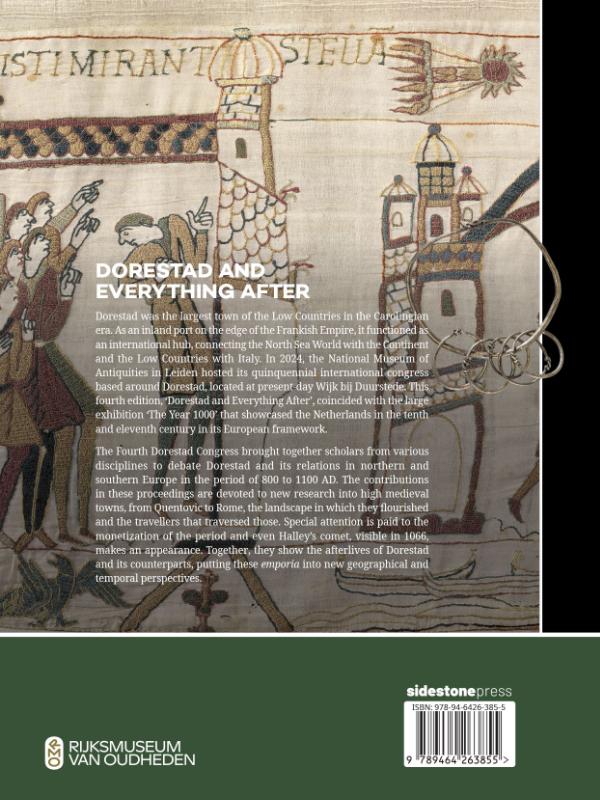
Dorestad and everything after: an introductionAnnemarieke WillemsenQuentovic and after: Early medieval occupation on the banks of the CancheInès LeroyPlacing the early medieval kingdom of Lindsey in the North SeaAlex HarveyIn short: An early medieval royal estate in Haamstede (Schouwen-Duiveland, Zeeland)Ernst DekkersFrom Classe to Cervia: Urban stories from the Upper AdriaticAndrea AugentiPilgrimage to Rome around the year 1000Pleun van LieshoutThe Year 1000 in Rome: Results of an academic workshop at the Royal Netherlandish Institute (KNIR) in Rome, 7-8 October 2021Pleun van Lieshout, Raphaël Rijntjes & Annemarieke WillemsenExotic objects in church treasuries in Rome and surroundingsOlivia RomijnAfter Dorestad: silver and gold in Carolingian Frisia, 850-950Simon CouplandThe monetization of the Low Countries around 1000 AD and its potential for historiansJos BendersIn short: Needles and what they tell us about DorestadCynthia KromotaroenoThe significance of Halley’s Comet in the Bayeux TapestryMichael Lewis & Simon Portegies ZwartLife after Dorestad: Late medieval memories of an erstwhile emporiumChristian CooijmansDorestad was the largest town of the Low Countries in the Carolingian era. As an inland port on the edge of the Frankish Empire, it functioned as an international hub, connecting the North Sea World with the Continent and the Low Countries with Italy. In 2024, the National Museum of Antiquities in Leiden hosted its quinquennial international congress based around Dorestad, located at present-day Wijk bij Duurstede. This fourth edition, ‘Dorestad and Everything After’, coincided with the large exhibition ‘The Year 1000’ that showcased the Netherlands in the tenth and eleventh century in its European framework.The Fourth Dorestad Congress brought together scholars from various disciplines to debate Dorestad and its relations in northern and southern Europe in the period of 800 to 1100 AD. The contributions in these proceedings are devoted to new research into high medieval towns, from Quentovic to Rome, the landscape in which they flourished and the travellers that traversed those. Special attention is paid to the monetization of the period and even Halley’s comet, visible in 1066, makes an appearance. Together, they show the afterlives of Dorestad and its counterparts, putting these emporia into new geographical and temporal perspectives.
In het kort
ISBN-13
9789464263855
Uitgever
Verschenen
30 oktober 2025
Serie
Imprint
Bibliografisch
Uitgave
UitgeverSidestone Press
ImprintSidestone Press
CB-relatie-id9180064
Verschenen30 oktober 2025
StatusOnbekend 00
Vorm & inhoud
ProductvormPaperback BC
SamenstellingLos product
Classificatie
NUR (hoofd)Archeologie 682
NUR (alle)682 Archeologie
Medewerkers
Bewerker B05Annemarieke Willemsen
Bewerker B05Hanneke Kik
Herkomst
Werk-id (NSTC)501627416
MeldingBevestigd bij publicatie 03
Bijgewerkt6 augustus 2026
Lijkt op dit boek
Durrington Walls and Woodhenge: A place for the living
Durrington Walls and Woodhenge: A place for the living
Indigenous Knowledge in Transformation
Indigenous Knowledge in Transformation
Archaeological Approaches to Inequality, Political Organisation, and Social Complexity
Archaeological Approaches to Inequality, Political Organisation, and Social Complexity
Stadterweiterungen und urbane Dynamik im Mittelalter
Stadterweiterungen und urbane Dynamik im Mittelalter
Prehistoric Shore Settlements of the Southwestern Balkans
Prehistoric Shore Settlements of the Southwestern Balkans
NSTC 501627416 · CB-relatie 9180064 · Bijgewerkt 6 augustus 2026