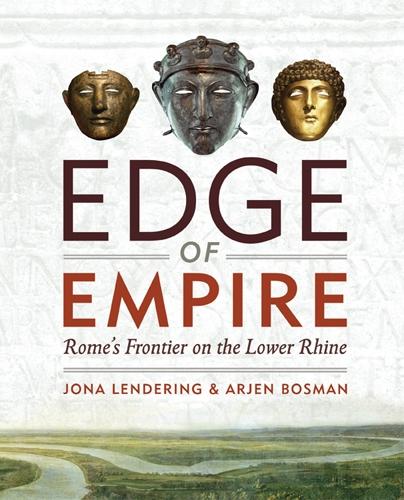
Edge of empire rome's frontier on the lower Rhine
Hardback264 pagina’sEngels
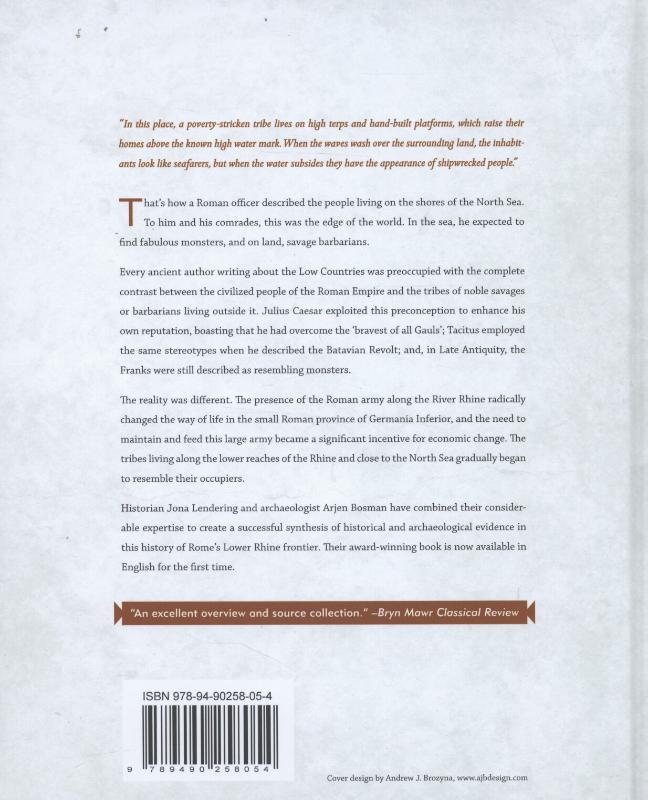
"In this place, a poverty-stricken tribe lives on high terps and hand-built platforms, which raise their homes above the known high water mark. When the waves wash over the surrounding land, the inhabitants look like seafarers, but when the water subsides they have the appearance of shipwrecked people."
That's how a Roman officer described the people living on the shores of the North Sea. To him and his comrades, this was the edge of the world. In the sea, he expected to find fabulous monsters, and on land, savage barbarians.
Every ancient author writing about the Low Countries was preoccupied with the complete contrast between the civilized people of the Roman Empire and the tribes of noble savages or barbarians living outside it. Julius Caesar exploited this preconception to enhance his own reputation, boasting that he had overcome the 'bravest of all Gauls'; Tacitus employed the same stereotypes when he described the Batavian Revolt; and, in Late Antiquity, the Franks were still described as resembling monsters.
The reality was different. The presence of the Roman army along the River Rhine radically changed the way of life in the small Roman province of Germania Inferior, and the need to maintain and feed this large army became a significant incentive for economic change. The tribes living along the lower reaches of the Rhine and close to the North Sea gradually began to resemble their occupiers.
Historian Jona Lendering and archaeologist Arjen Bosman have combined their considerable expertise to create a successful synthesis of historical and archaeological evidence, in this history of Rome's Lower Rhine frontier. Their award-winning book is now available in English for the first time.
"an excellent overview and source collection" - Bryn Mawr Classical Review
That's how a Roman officer described the people living on the shores of the North Sea. To him and his comrades, this was the edge of the world. In the sea, he expected to find fabulous monsters, and on land, savage barbarians.
Every ancient author writing about the Low Countries was preoccupied with the complete contrast between the civilized people of the Roman Empire and the tribes of noble savages or barbarians living outside it. Julius Caesar exploited this preconception to enhance his own reputation, boasting that he had overcome the 'bravest of all Gauls'; Tacitus employed the same stereotypes when he described the Batavian Revolt; and, in Late Antiquity, the Franks were still described as resembling monsters.
The reality was different. The presence of the Roman army along the River Rhine radically changed the way of life in the small Roman province of Germania Inferior, and the need to maintain and feed this large army became a significant incentive for economic change. The tribes living along the lower reaches of the Rhine and close to the North Sea gradually began to resemble their occupiers.
Historian Jona Lendering and archaeologist Arjen Bosman have combined their considerable expertise to create a successful synthesis of historical and archaeological evidence, in this history of Rome's Lower Rhine frontier. Their award-winning book is now available in English for the first time.
"an excellent overview and source collection" - Bryn Mawr Classical Review
In het kort
ISBN-13
9789490258054
Uitgever
Verschenen
29 november 2012
Imprint
Bibliografisch
ISBN-139789490258054
Editie1
TaalEngels eng
Pagina’s264
GeïllustreerdJa
Uitgave
UitgeverKarwansaray BV
ImprintKarwansaray Publishers
CB-relatie-id7908970
Verschenen29 november 2012
StatusInactief 08
BeschikbaarheidContact leverancier 99
Adviesprijs (incl. btw)€ 30,95
Vorm & inhoud
ProductvormHardback BB
SamenstellingLos product
Classificatie
NUR (hoofd)Oudheid (tot 500) 683
NUR (alle)683 Oudheid (tot 500)
Medewerkers
Herkomst
Werk-id (NSTC)500273229
MeldingBevestigd bij publicatie 03
Bijgewerkt6 augustus 2026
Lijkt op dit boek






NSTC 500273229 · CB-relatie 7908970 · Bijgewerkt 6 augustus 2026