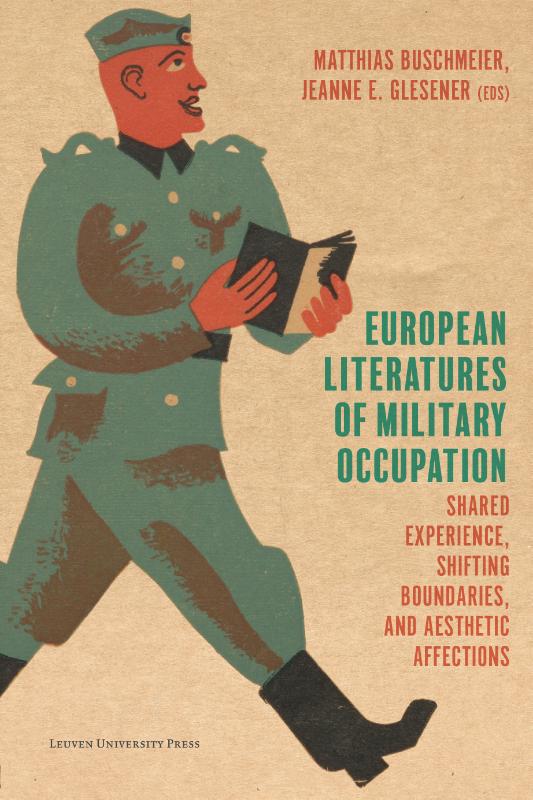
European Literatures of Military Occupation Shared Experience, Shifting Boundaries, and Aesthetic Affections
Jeanne E. Glesener red.
Paperback360 pagina’sEngels
Ook verkrijgbaar als
AcknowledgmentsEuropean Literatures of Military Occupation: An Introduction to the Topic and Terminology of the GenreMatthias BuschmeierPART 1 LITERATURE AND THE WORLD: OCCUPATION AS A EUROPEAN EXPERIENCEIntroduction to Part 1Jeanne E. GlesenerChapter 1. SCARS. Writing on Occupation: The Reality Effect of Narrative and Psychogeographical Space, or The Case of WilJeroen OlyslaegersChapter 2. Affective Realism: The Literature of Occupation through Regions and Ages − Vercors’ Le Silence de la mer (1942), Willem Frederik Hermans’ De donkere kamer van Damokles (1958), and Cătălin Mihuleac’s America de peste pogrom (2014)Matthias BuschmeierPART 2 CULTURAL SPACES OF OCCUPATIONIntroduction to Part 2Jeanne E. GlesenerChapter 3. Military Occupation as Tourism? Griechenland. Ein Buch aus dem Kriege (1942) and Ölberge, Weinberge (1953) by Erhart KästnerChristopher MeidChapter 4. Banished from an Occupied Exile: Rudolf Borchardt’s Anabasis Fragment (1944)Jan AndresChapter 5. German Writers as Occupiers and Occupied: Franco-German Representations in the Works of Felix Hartlaub (1940–1941) and Tami Oelfken (1945–1955)Stefanie SiessChapter 6. Literary Representations of Occupied Cities: Tbilisi, Paris, and LuxembourgAtinati MamatsashviliChapter 7. Semantics of Occupation(s) in Pierre Grégoire’s Europäische Suite Trilogy: Catholicism, Anticommunism, and the Idea of Luxembourgish ExceptionalismDaniela LiebPART 3 WRITING UNDER/AGAINST OCCUPATION: STRATEGIES OF RESISTANCE AND PROPAGANDAIntroduction to Part 3Jeanne E. GlesenerChapter 8. Setting the Stage for an Immediate Historicization? Early Sense-Making of the Allied Occupation of Italy between Fictionalized Accounts, War Novels, and Propaganda (1943–1947)Stefan LaffinChapter 9. Literature from Below: Literary Competitions in Serbia (1941–1945) and in the Protectorate of Bohemia and Moravia (1939–1945)Aleksandar MomčilovićChapter 10. Translating Occupied Poland into English, 1939–1955Joanna RzepaChapter 11. How to Handle the New Occupiers? Margret Boveri’s Amerikafibel für erwachsene Deutsche: Ein Versuch, Unverstandenes zu erklären (1946)Sandra SchellPART 4 REMEMBERING OCCUPATIONIntroduction to Part 4Jeanne E. GlesenerChapter 12. “It was over. Düsseldorf was dead”—Narratives of a Renewed OccupationKlaus-Michael BogdalChapter 13. Reflections on Twentieth-Century Military Occupations in Latvian and Estonian NovelsBenedikts KalnačsChapter 14. Occupied by Comrades? The Concealed Story of the Soviet Military Presence in Mecklenburg and Western Pomerania after 1945 in Uwe Johnson’s Jahrestage (1970–1983)Meinolf SchumacherList of ContributorsOccupation literature: a new perspective on European identitiesWhat does it mean to live under occupation? How does it shape the culture and identities of European nations? How does it affect the way we write and read literature? These are fundamental questions that set the stage for an in-depth exploration. Focusing on the literary works of writers from various European countries that were occupied by Nazi Germany, the Soviet Union or the Allies during and after World War II, the contributions in this edited volume seek to unravel the complex interplay between historical circumstances and literary expression. Centred on the concept of occupation literature as a genre in its own right, differentiating it from 'war literature', the book navigates this subtle distinction, drawing connections with the Holocaust novel and extending the timeframe beyond Nazi occupation.European Literatures of Military Occupation argues that the multifaceted experiences of occupation have played a pivotal role in shaping European identities. Moreover, the volume links European identities to the experience of occupation by unveiling the complex and diverse ways in which writers respond to historical and political circumstances. Introducing the concept of 'affective realism' and exploring its intersection with the occupation novel, the book provides nuanced insights into the intricate relationship between history, identity, and literature. It combines theoretical perspectives relevant to researchers in the humanities with detailed case studies, generating a truly interdisciplinary perspective, enriched by a strong transnational dimension, creating a cohesive narrative that intervenes innovatively in the fields of literary, cultural, and historical criticism.What does it mean to live under occupation? How does it shape the culture and identities of European nations? How does it affect the way we write and read literature? These are fundamental questions that set the stage for an in-depth exploration. Focusing on the literary works of writers from various European countries that were occupied by Nazi Germany, the Soviet Union or the Allies during and after World War II, the contributions in this edited volume seek to unravel the complex interplay between historical circumstances and literary expression. Centered on the concept of occupation literature as a genre in its own right, differentiating it from 'war literature', the book navigates this subtle distinction, drawing connections with the Holocaust novel and extending the timeframe beyond Nazi occupation.European Literatures of Military Occupation argues that the multifaceted experiences of occupation have played a pivotal role in shaping European identities. Moreover, the volume links European identities to the experience of occupation by unveiling the complex and diverse ways in which writers respond to historical and political circumstances. Introducing the concept of 'affective realism' and exploring its intersection with the occupation novel, the book provides nuanced insights into the intricate relationship between history, identity, and literature. It combines theoretical perspectives relevant to researchers in the humanities with detailed case studies, generating a truly interdisciplinary perspective, enriched by a strong transnational dimension, creating a cohesive narrative that intervenes innovatively in the fields of literary, cultural, and historical criticism.
In het kort
ISBN-13
9789462704077
Uitgever
Verschenen
26 juni 2024
Imprint
Bibliografisch
ISBN-139789462704077
Editie1
TaalEngels eng
Pagina’s360
GeïllustreerdNee
Uitgave
UitgeverUniversitaire Pers Leuven
ImprintLeuven University Press
CB-relatie-id8004161
Verschenen26 juni 2024
StatusAangekondigd 02
BeschikbaarheidContact leverancier 99
Adviesprijs (incl. btw)€ 37,00
Vorm & inhoud
ProductvormPaperback BC
SamenstellingLos product
Classificatie
NUR (hoofd)Literatuurwetenschap 617
NUR (alle)617 Literatuurwetenschap
Trefwoordenworld war ii · post-war period · military occupation · occupation literature · cultural memory · european identities
Medewerkers
Redacteur B01Matthias Buschmeier
Redacteur B01Jeanne E. Glesener
Herkomst
Werk-id (NSTC)501661011
MeldingBevestigd bij publicatie 03
Bijgewerkt6 augustus 2026
Trefwoorden
Lijkt op dit boek

The Secret - 20 jaar Limited edition
A Companion to Tom Phillips
A Companion to Tom Phillips
A Companion to Tom Phillips
Wat zich aan het oog onttrekt
Joyce Translated
In gesprek met marsmannetjes
Affect in Translation and Interpreting
Affect in Translation and Interpreting
Affect in Translation and Interpreting
NSTC 501661011 · CB-relatie 8004161 · Bijgewerkt 6 augustus 2026