
Facade refurbishment toolbox supporting the design of residential energy upgrades
Paperback420 pagina’sEngels
The starting point of the research is the need to refurbish existing residential building stock, in order to reduce its energy demand, which accounts for over one fourth of the energy consumption in the European Union. Refurbishment is a necessary step to reach the ambitious energy and decarbonisation targets for 2020 and 2050 that require an eventual reduction up to 90% in CO2 emissions. In this context, the rate and depth of refurbishment need to grow. The number of building to be renovated every year should increase, while the energy savings in renovated buildings should be over 60% reduction to current energy demand. To achieve that, not only is it necessary to find politics and incentives, but also to enable the building industry to design and construct effective refurbishment strategies. This research focuses on refurbishment of the building envelope, as it is very influential with regard to energy reduction.The early design phases are particularly important, as decisions taken during this stage can determine the success or failure of the design. Even though the design decisions made earlier can have bigger impact with lower cost and effort, most existing tools focus on post-design evaluation. The integration of all aspects during the early design phases is complex, particularly as far as energy efficient design is concerned. At this stage, architects are in search for a design direction to make an informed decision. If the designer is provided with an indication of how efficient refurbishment options are, it is possible to apply them as part of an integrated strategy rather than trying to add measures at later stages, after the strategy has been developed.Therefore, taking into account the need to refurbish residential buildings and the importance of integrated design of façade refurbishment strategies, the thesis aims at answering the following question.How can the energy upgrade potential of residential façade refurbishment strategies be integrated in the early design phase, in order to support decision-making?
In het kort
ISBN-13
9789461863379
Uitgever
Verschenen
8 september 2014
Bibliografisch
ISBN-139789461863379
Editie1
TaalEngels eng
Pagina’s420
GeïllustreerdJa
Uitgave
Vorm & inhoud
ProductvormPaperback BC
SamenstellingLos product
Classificatie
Medewerkers
Auteur A01Thaleia Konstantinou
Herkomst
Werk-id (NSTC)500454688
MeldingBevestigd bij publicatie 03
Bijgewerkt6 augustus 2026
Lijkt op dit boek

Energy in Dwellings
Climate-responsive design
Policy instruments to improve energy performance of existing owner occupied dwellings
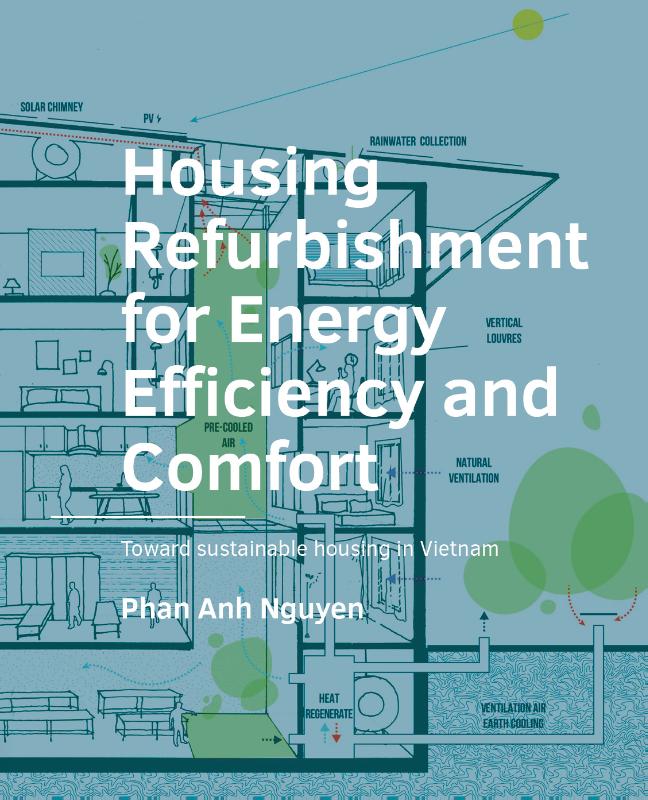
Housing Refurbishment for Energy Efficiency and Comfort
Towards a future sustainable housing stock

Integral facade construction
Strategic investment of embodied energy during the architectural planning process
Towards Energy-Efficient Residential Buildings In Jeddah, Saudi Arabia
Developing circular building components
Adaptive thermal comfort opportunities for dwellings
NSTC 500454688 · CB-relatie 7868142 · Bijgewerkt 6 augustus 2026