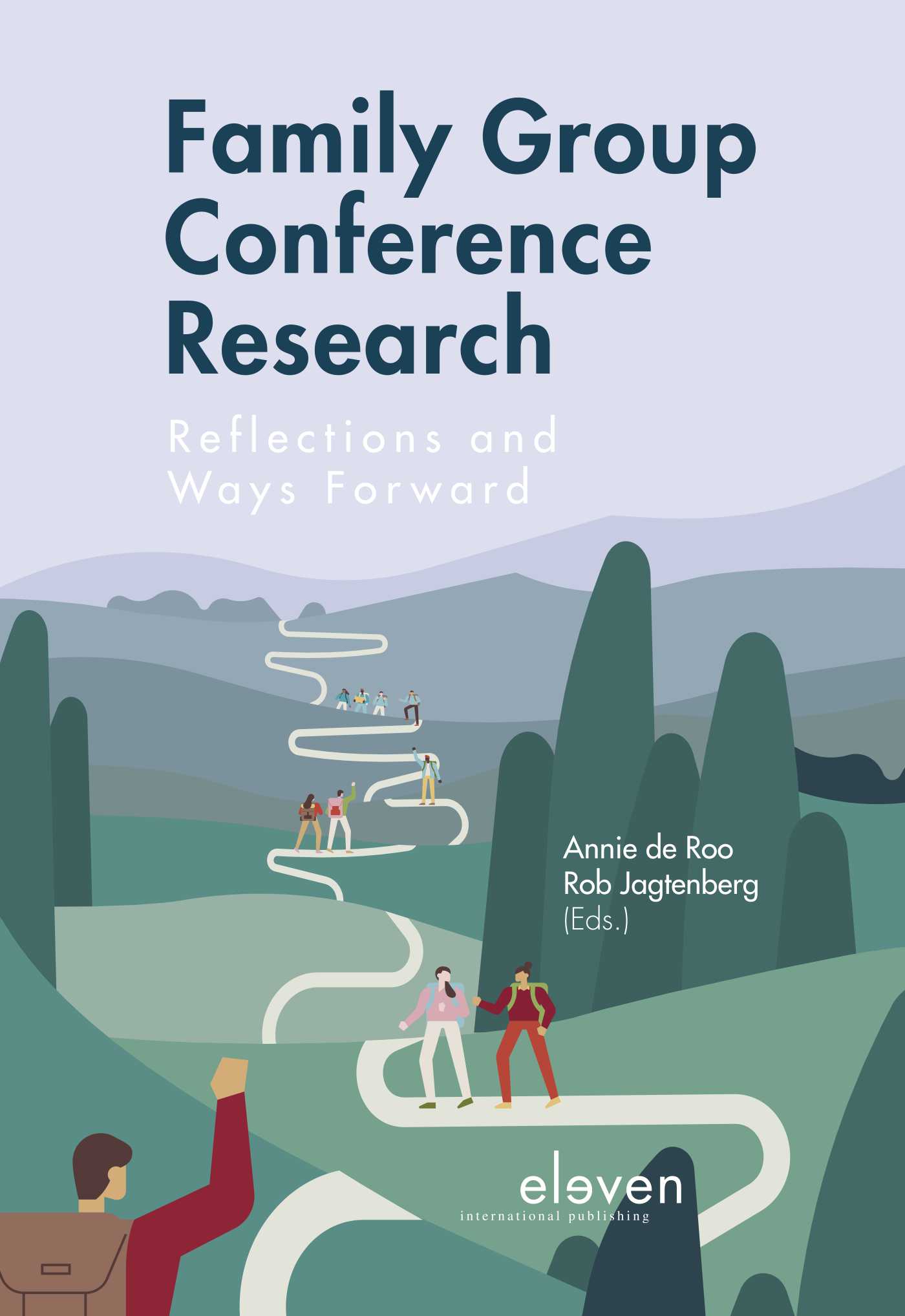
Family Group Conference Research Reflections and Ways Forward
Rob Jagtenberg red.
E-book228 pagina’sEngels
Ook verkrijgbaar als
Acknowledgements; Abbreviations; Part I FGC Research – Overview and Methodology; Chapter 1 Introduction (Annie de Roo); Chapter 2 Choosing a Strategy in Researching Family Group Conferencing – The Unavoidability of Making Trade-offs (Peter Mascini); Part II FGC Research Projects – Reflections and Ways Forward; Chapter 3 Understanding Family Group Conferences – Questions, Issues and Principles (Peter Marsh); Chapter 4 An FGC Evaluation in Adult Contexts – Benefits of a Mixed Methods Study Design (Ira Malmberg-Heimonen and Sidsel Natland); Chapter 5 Evaluating Family Group Conferences in Adult Mental Health – A Plea for a Responsive Approach (Gert Schout and Gideon de Jong); Chapter 6 A Randomized Controlled Trial on the Effectiveness of Family Group Conferencing in Child Welfare – Methods, Results and Methodological Considerations (Hanneke Creemers, Sharon Dijkstra, Maja DekoviĆ, Geert Jan Stams and Jessica Asscher); Chapter 7 A Retrospective Case Study Approach to Studying FGC Outcomes (Mary Mitchell); Chapter 8 FGC Research in a Multi-problem Context (Rob Jagtenberg and Annie de Roo); Chapter 9 FGDM and the Evidence-Based Paradigm (Tony McGinn); Part III FGC – The Wider Context; Chapter 10 Ever-Widening Circles – The Emergence of Reciprocity in the Camden Village and the (Re)generative Nature of Community (Becca Dove, Tim Fisher and Edward Purchase); Chapter 11 FGCs and Legal Proceedings – Common Aims and Incompatible Approaches? (Judith Masson); Chapter 12 Well-Lit and Underexposed Road Sections on the Way Forward (Annie de Roo and Rob Jagtenberg); About the Authors; IndexIn this book, FGC researchers with different methodological orientations discuss their findings and reflect candidly on the methodological choices they made and the challenges faced.In social care, mobilizing network support is a topical issue. Networks are at the heart of Family Group Conferencing, or Family Group Decision Making. FGC originated in New Zealand but has spread to many countries worldwide. In this book, FGC researchers with different methodological orientations discuss their findings and reflect candidly on the methodological choices they made and the challenges faced. The ‘what works’ versus ‘context’ controversy in social work research is highlighted from different perspectives. Moreover, the interaction between FGC and the care system in which it is embedded, is illustrated through a variety of disciplines including governance studies, law, and economic analysis.The wealth of insights collated make this book unique. The book is relevant for researchers, care professionals and (inter-) national policy makers. They will benefit from the experiences and visions shared in this book.Ten different research teams have contributed to this book. The editors are associate professors at Erasmus University, Rotterdam. This publication was financially supported by the Netherlands Organization for Scientific Research and the Municipality of Rotterdam.
In het kort
ISBN-13
9789089744913
Uitgever
Verschenen
26 maart 2021
Druk
1
Bibliografisch
ISBN-139789089744913
Editie1
Druk1
TaalEngels eng
Pagina’s228
GeïllustreerdNee
Uitgave
UitgeverKoninklijke Boom uitgevers PW
CB-relatie-id7500275
Verschenen26 maart 2021
StatusOnbekend 00
BeschikbaarheidContact leverancier 99
Adviesprijs (incl. btw)€ 76,00
Vorm & inhoud
ProductvormE-book ED
VormdetailE107 PDF
SamenstellingLos product
Beveiliging e-bookDigitaal watermerk 02
Classificatie
NUR (hoofd)Algemene sociale wetenschappen 741
NUR (alle)741 Algemene sociale wetenschappen
Trefwoordenchild welfare · multi-problem context · smart governance · adult mental health
Medewerkers
Redacteur B01Annie de Roo
Redacteur B01Rob Jagtenberg
Herkomst
Werk-id (NSTC)500844096
MeldingBevestigd bij publicatie 03
Bijgewerkt6 augustus 2026
Trefwoorden
Lijkt op dit boek


NSTC 500844096 · CB-relatie 7500275 · Bijgewerkt 6 augustus 2026