
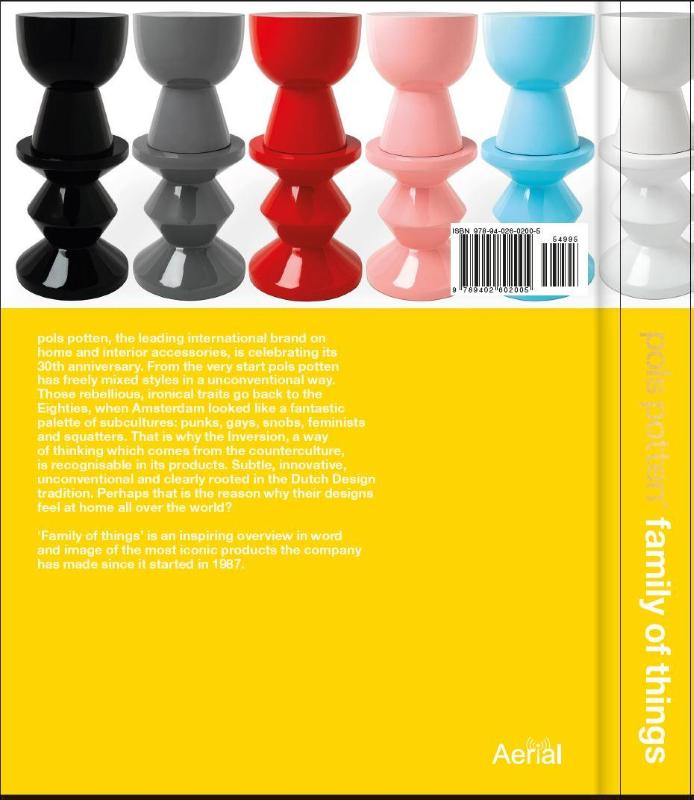
Pols Potten bestaat dertig jaar en is een toonaangevend internationaal merk op het gebied van interieur en woonaccessoires, opgericht in Amsterdam. Vanaf het begin heeft Pols Potten stijlen vrijelijk en non-conformistisch met elkaar vermengd. Die rebelse, ironische trekken dateren uit de jaren tachtig, toen Amsterdam - meer dan vandaag - leek op een fantastisch palet van subculturen: punk, gays, snobs, feministen en krakers. Jan Wolleswinkel, Frans Piek en Erik Pol werden geabsorbeerd in het straatbeeld en uitgaansleven van die tijd. Zo komt het dat de omkering, een manier van denken uit de tegencultuur, herkenbaar is in producten.Subtiel, vernieuwend, onconventioneel en duidelijk geworteld in de Nederlandse designtraditie.Wellicht is dat de reden waarom hun ontwerpen zich over de hele wereld zo thuis voelen? Tegenwoordig worden producten van Pols Potten gemaakt in Indonesië, China, India en Senegal en verkocht in winkels in Parijs, Sydney, New York, Beiroet en Johannesburg. Family of things verwijst naar het ontstaan van het bedrijf Pols Potten, alsmede naar de specifieke eigenschappen die terug te vinden zijn in de meest karakteristieke producten die het bedrijf gemaakt. Dit boek geeft in tekst en beeld een overzicht sinds de oprichting in 1987.Pols Potten werkt samen met ontwerpers als: Norman Trapman, Bas van der Veer, Bas van Beek, Carla Peters, Chis Koens, Ramon Middelkoop, Anne-Marie Jetten, Marette Buist, Jacob de Baan, Josha Roymans, Lise Lefebvre, Lot Moorrees, Els ten Klooster, Esther Hörchner, Maaike Burgers, Inge Kuipers, Diederik Schneeman, Wieki Somers, Minke van Voorthuizen, Jasper van Grootel, Aart van Asseldonk, Pascal Smelik, Carolina Wilcke, Nic Roex, Jeske Kapitein, Josephine Colsen, Naomi Thellier de Poncheville, Hans van Bentem, Jeroen Wesselink.The title refers both to the creation of the Pols Potten company and to the familiarity of traits apparent in the most iconic products the firm has sold and produced since its foundation in 1987. The authors started research for this story, dedicated to the 30th anniversary of the business, by interviewing owners Jan Wolleswinkel and Theo Grootendorst. During one of these talks a strange, somewhat nostalgic analogy to an Italian circus movie (probably by Fellini) occurred to them. Imagine a troupe of acrobats, clowns, musicians, directors and odd helpers seated around a large table in the middle of the ring, enjoying a simple, delightful meal, drinking and discussing the evening's performance. Although a metaphor like this fails to exactly explain the complete business history, it helps to picture the playful nature of the portfolio and the driving force of Pols Potten as an extended family of mixed characters, balancing creative and entrepreneurial instincts, producing small furniture, accessories and objects in workshops around the world that deliver atmosphere and joy to homes globally.Pols Potten started in Amsterdam, The Netherlands in 1986. Clear, innovative, tongue-in-cheek, every Pols Potten product shows its Dutch roots. For almost 30 years, it's these very same qualities that make our products feel right at home anywhere in the world. Whether it is in a shop window, a hotel or your very own home. We globally offer a style-conscious concept for spaces and invite you to forget about normalcy. Pols Potten adds spice!
In het kort
ISBN-13
9789402602005
Uitgever
Verschenen
15 maart 2017
Imprint
Bibliografisch
ISBN-139789402602005
Editie1
TaalEngels eng
GeïllustreerdJa
Uitgave
UitgeverAerial Media Company B.V.
ImprintAerial Media Company B.V.
CB-relatie-id6253923
Verschenen15 maart 2017
StatusInactief 08
BeschikbaarheidContact leverancier 99
Adviesprijs (incl. btw)€ 45,00
Vorm & inhoud
ProductvormHardback BB
SamenstellingLos product
Classificatie
NUR (hoofd)Vormgeving en design 656
NUR (alle)656 Vormgeving en design
Medewerkers
Herkomst
Werk-id (NSTC)500074117
MeldingBevestigd bij publicatie 03
Bijgewerkt6 augustus 2026
Lijkt op dit boek
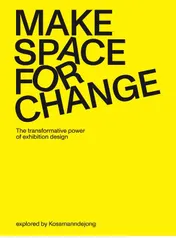
Make Space for Change
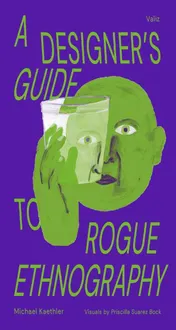
A Designer's Guide to Rogue Ethnographies
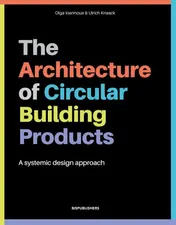
The Architecture of Circular Building Products
Before the Solution
The Design Village
This is Human Centered Design
The Empathy Compass
Models from the Past for the Future
Models from the Past for the Future

50 hoogtepunten. De collectiepresentatie van Design Museum Gent
NSTC 500074117 · CB-relatie 6253923 · Bijgewerkt 6 augustus 2026