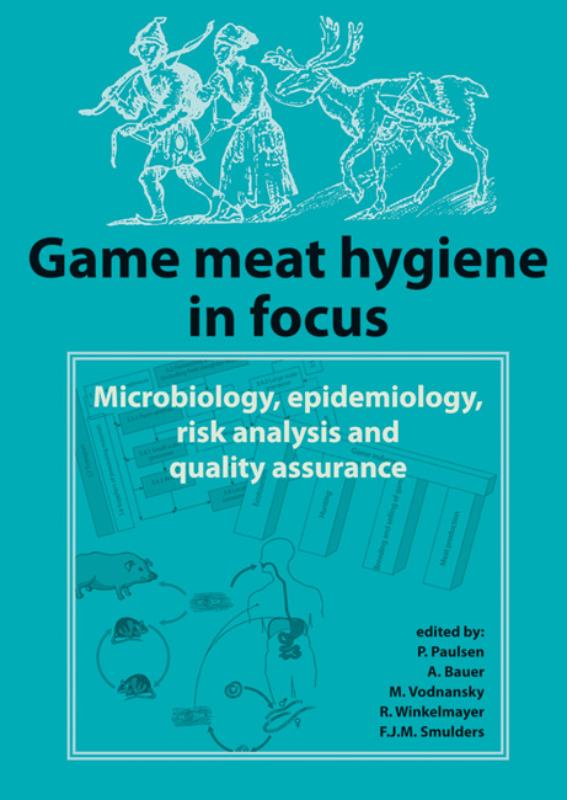
Game meat hygiene in focus microbiology, epidemiology, risk analysis and quality assurance
HardbackEngelsLeverbaar
Ook verkrijgbaar als
Game meat is consumed world-wide. In most regions, it contributes only a small part to the overall meat and food supply, but for reasons of animal welfare and sustainability it is sometimes considered an alternative to meat from farmed animals. Despite differences in game species, ante mortem conditions (free-range or fenced; wild or semi-domesticated), hunting or harvesting procedures and further handling of the carcass, there are common requirements as regards meat safety and quality. Whereas meat hygiene and safety have been an issue in game meat for export/import for a long time, primary production, domestic supply and direct supply to the consumer have recently been addressed by legislation and these sectors still present unresolved questions and challenges.This book combines 24 contributions presenting the view of experts in game meat hygiene and quality. They address four main topics: i.e. ‘hygiene and microbiology’, ‘epidemiology’, ‘risk assessment and management’ and ‘muscle biology and meat quality’. In addition to contributions on this topic by authors from eight European countries, a South African perspective is provided, thus representing the standpoint of a major game meat exporter.This volume is the first in a series on safety and quality assurance along the game meat chain, following an approach ‘from forest to fork’ and is targeted at scientists in academia and industry, graduate students as well as at governmental officials in veterinary public health and food safety.Game meat is consumed world-wide. In most regions, it contributes only a small part to the overall meat and food supply, but for reasons of animal welfare and sustainability it is sometimes considered an alternative to meat from farmed animals. Despite differences in game species, ante mortem conditions (free-range or fenced; wild or semi-domesticated), hunting or harvesting procedures and further handling of the carcass, there are common requirements as regards meat safety and quality. Whereas meat hygiene and safety have been an issue in game meat for export/import for a long time, primary production, domestic supply and direct supply to the consumer have recently been addressed by legislation and these sectors still present unresolved questions and challenges.This book combines 24 contributions presenting the view of experts in game meat hygiene and quality. They address four main topics: i.e. ‘hygiene and microbiology’, ‘epidemiology’, ‘risk assessment and management’ and ‘muscle biology and meat quality’. In addition to contributions on this topic by authors from eight European countries, a South African perspective is provided, thus representing the standpoint of a major game meat exporter.This volume is the first in a series on safety and quality assurance along the game meat chain, following an approach ‘from forest to fork’ and is targeted at scientists in academia and industry, graduate students as well as at governmental officials in veterinary public health and food safety.
In het kort
ISBN-13
9789086861651
Uitgever
Verschenen
1 februari 2011
Bibliografisch
ISBN-139789086861651
Editie1
TaalEngels eng
GeïllustreerdJa
Uitgave
UitgeverWageningen Academic Publishers
CB-relatie-id8850573
Verschenen1 februari 2011
StatusLeverbaar 04
BeschikbaarheidBeschikbaar 20
Zonder prijsPrijs volgt
Vorm & inhoud
ProductvormHardback BB
SamenstellingLos product
Classificatie
Medewerkers
Redacteur B01P. Paulsen
Redacteur B01A. Bauer
Redacteur B01M. Vodnansky
Redacteur B01R. Winkelmayer
Redacteur B01F.J.M. Smulders
Herkomst
Werk-id (NSTC)500409515
MeldingBevestigd bij publicatie 03
Bijgewerkt6 augustus 2026
Lijkt op dit boek




NSTC 500409515 · CB-relatie 8850573 · Bijgewerkt 6 augustus 2026