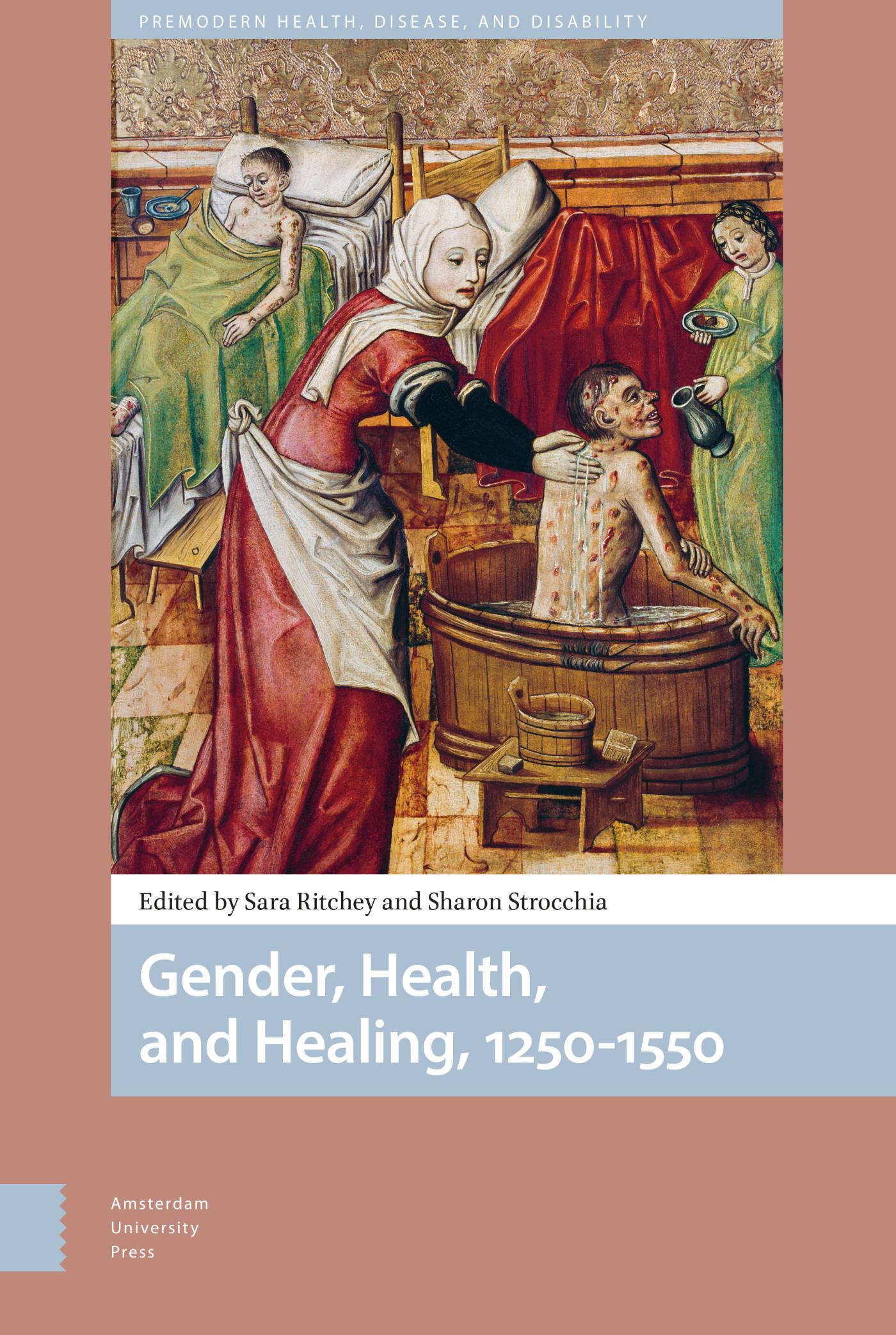
This path-breaking collection offers an integrative model for understanding health and healing in Europe and the Mediterranean from 1250-1550. By foregrounding gender as an organizing principle of healthcare, the contributors challenge traditional binaries that ahistorically separate care from cure, medicine from religion, and domestic healing from fee-for-service medical exchanges. The essays collected here illuminate previously hidden and undervalued forms of healthcare and varieties of body knowledge produced and transmitted outside the traditional settings of university, guild, and academy. They draw on non-traditional sources-vernacular regimens, oral communications, religious and legal sources, images and objects-to reveal additional locations for producing body knowledge in households, religious communities, hospices, and public markets. Emphasizing cross-confessional and multi-linguistic exchange, the essays also reveal the multiple pathways for knowledge transfer in these centuries. The volume provides a synoptic view of how gender and cross-cultural exchange shaped medical theory and practice in later medieval and Renaissance societies.
In het kort
ISBN-13
9789048544462
Uitgever
Verschenen
23 maart 2020
Imprint
Bibliografisch
ISBN-139789048544462
SeriePremodern Health, Disease, and Disability — deel 3
Editie1
TaalEngels eng
Pagina’s330
GeïllustreerdJa
Uitgave
UitgeverAmsterdam University Press
ImprintAmsterdam University Press
CB-relatie-id7400597
Verschenen23 maart 2020
StatusOnbekend 00
Vorm & inhoud
ProductvormE-book ED
VormdetailE107 PDF
SamenstellingLos product
Beveiliging e-bookAdobe DRM 03
Classificatie
NUR (hoofd)Middeleeuwen (500-1500) 684
NUR (alle)684 Middeleeuwen (500-1500)
Medewerkers
Redacteur B01Sara Ritchey
Redacteur B01Sharon Strocchia
Herkomst
Werk-id (NSTC)500345384
MeldingBevestigd bij publicatie 03
Bijgewerkt6 augustus 2026
Lijkt op dit boek
Onze oeroude jaarfeesten
Middeleeuwse hospitalen

Das ultimative Faktenbuch über die Wikinger

Las Navas de Tolosa 1212: la batalla que quebró el poder almohade

Byzantium: Van Constantijn tot Constantinopel

Dhaghelot en middeleeuws voor beginners deel 2
Reizen met klasse
Tussen culturen
Tussen culturen
Willem de Veroveraar
NSTC 500345384 · CB-relatie 7400597 · Bijgewerkt 6 augustus 2026