
Learning from co-housing initiatives Between Passivhaus engineers and active inhabitants
The aim of this issue of A+BE is to create a deeper understanding of the current rise of co-housing in Europe, and what it could mean in urban policies addressing energy transition and climate change. Studying co-housing is timely because the residents' associations become 'prosumers'; uniting the supply (production) and demand (consumption) of energy, housing and services in their projects. As such, they are increasingly seen as partners in the co-creation and maintenance of urban space.The study contributes to the emerging body of knowledge with a new understanding of co-housing, analysing its 'key-features' with an interdisciplinary framework, in a European context. It adds a new perspective to existing co-housing research, which is dominated by social sciences, by drawing attention to the physical characteristics of co-housing, produced in architectural, planning and engineering processes (the technosphere).
In het kort
ISBN-13
9789492516848
Uitgever
Verschenen
16 oktober 2017
Imprint
Bibliografisch
ISBN-139789492516848
Editie1
TaalEngels eng
GeïllustreerdJa
Uitgave
UitgeverTU Delft Open
ImprintTU Delft Open
CB-relatie-id6225289
Verschenen16 oktober 2017
StatusOnbekend 00
Vorm & inhoud
ProductvormPaperback BC
SamenstellingLos product
Classificatie
NUR (hoofd)Bouwkunde 955
NUR (alle)955 Bouwkunde
Medewerkers
Auteur A01Lidewij Tummers
Herkomst
Werk-id (NSTC)500114480
MeldingBevestigd bij publicatie 03
Bijgewerkt6 augustus 2026
Lijkt op dit boek
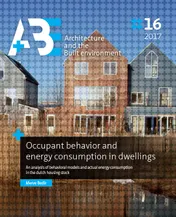
Occupant behavior and energy consumption in dwellings
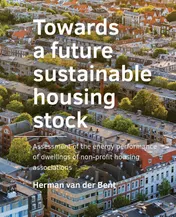
Towards a future sustainable housing stock
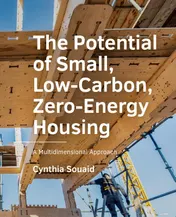
The Potential of Small, Low-Carbon, Zero-Energy Housing
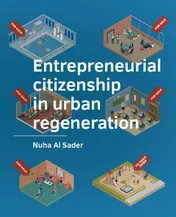
Entrepreneurial citizenship in urban regeneration
Everyday Heritage
Collective housing
Energy in Dwellings
2018
Home Occupant Archetypes
The Spatial Dimension of Household Energy Consumption
NSTC 500114480 · CB-relatie 6225289 · Bijgewerkt 6 augustus 2026