
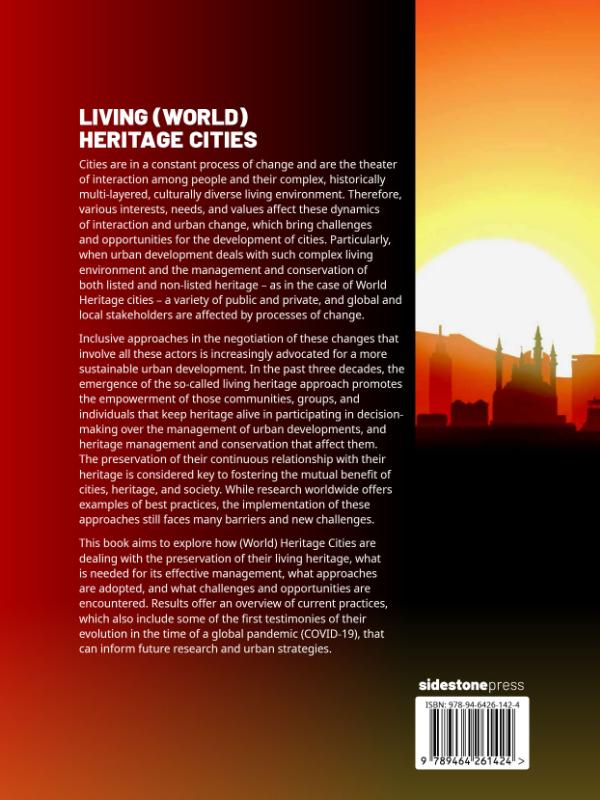
Living (World) Heritage Cities Opportunities, challenges, and future perspectives of people-centered approaches in dynamic historic urban landscapes
Paperback250 pagina’sEngels
LIST OF FIGURES AND TABLESFOREWORDFrancesca GilibertoINTRODUCTIONLiving (World) Heritage Cities. An introductionMaaike S. de Waal, Ilaria Rosetti, Uditha Jinadasa, & Mara de GrootSECTION ONE: VALUES AND USES OF URBAN HERITAGEFree space as an antidote to monoculture in heritage cities: An essay on the potential of interstitial wastelandsKarin StadhoudersPriceless but precious: How residents feel attached to a city ruin. The ancient city of Shekhem (Tell Balata, Palestine) as living heritageMonique H. van den Dries, Krijn Boom, Ihab Daoud, Dergham Fares, Arnout van Rhijn, & Sjoerd van der LindePublic decision-making in living multi-layered cities: Hacı Bayram District of Ankara, TurkeyÖzgün Özçakır, Ayşe Güliz Bilgin Altınöz and Anna MignosaHeritage City: Building the Historic Environment – Values and Uses – Urban Regeneration at King’s Cross Central, LondonCaroline DonnellanThe Practice of Backgammon in the Parks of Tehran: Characteristics, Challenges, and Motivations in Safeguarding Intangible HeritageMona MomeniSECTION TWO: WORLD HERITAGE CHALLENGESBetween opportunity and challenge: Mayors’ perspective on participatory heritage practices in World Heritage CitiesIlaria Rosetti, Ana Pereira Roders, & Marc JacobsGalle Fort: The Gentrification of South Asia’s World HeritageUditha JinadasaAdaptation of circular models for global heritage cities: regeneration in vicinity to Istanbul World Heritage Site as a case studyDeniz Ikiz KayaChallenges and successes in a Living World Heritage City. Historic Bridgetown and its Garrison, BarbadosMaaike S. de WaalSECTION THREE: HERITAGE IMPACT ASSESSMENT AND HISTORIC URBAN LANDSCAPE APPROACHESThe development of HIA instruments for Indonesian heritage citiesPunto WijayantoThe heritage impact assessment of Valparaíso (Chile) and the challenges of the historic urban landscape approach for its elaborationMartín Andrade-Pérez & Juan Luis Isaza-LondoñoHeritage Impact Assessment method in the protection of cultural heritage; Iranian casesHassan Bazazzadeh, Seyedeh sara Hashemi safaei & Asma MehanSaving an ancient irrigation canal in Lima, Peru: the experience of a citizen’s campaignJavier LizarzaburuSECTION FOUR: HERITAGE CITIES IN TIMES OF A GLOBAL PANDEMIC‘I can see through the water’s eyes’. COVID-19 in Heritage Cities: Citizen Participation and Self-Organization for greater Conservation and Sustainability. The case of Venezia Pulita (Clean Venice)Bruno de AndradeReimagining the City: Exploring the Implications of COVID-19 for Living (World) Heritage CitiesEldris Con AguilarTowards a tourism of proximity: small historical centers as catalysts of new living modelsMariacristina Giambruno, Sonia Pistidda, Benedetta Silva & Francesca VigottiUrban Heritage as the Anchor for an Uncertain Future? The City of Turku and the COVID-19 crisisVisa Immonen & Maija MäkiThe Restart and Revitalization of Heritage Tourism in the Post-Pandemic Era: A Case Study of Xi’an, ChinaZhaoyang Sun & Tao XueEPILOGUEEpilogueMaaike S. de Waal, Ilaria Rosetti, & Francesca GilibertoACKNOWLEDGEMENTSAUTHOR BIOGRAPHIESCities are in a constant process of change and are the theater of interaction among people and their complex, historically multi-layered, culturally diverse living environment. Therefore, various interests, needs, and values affect these dynamics of interaction and urban change, which bring challenges and opportunities for the development of cities. Particularly, when urban development deals with such complex living environment and the management and conservation of both listed and non-listed heritage – as in the case of World Heritage cities – a variety of public and private, and global and local stakeholders are affected by processes of change.Inclusive approaches in the negotiation of these changes that involve all these actors is increasingly advocated for a more sustainable urban development. In the past three decades, the emergence of the so-called living heritage approach promotes the empowerment of those communities, groups, and individuals that keep heritage alive in participating in decision-making over the management of urban developments, and heritage management and conservation that affect them. The preservation of their continuous relationship with their heritage is considered key to fostering the mutual benefit of cities, heritage, and society. While research worldwide offers examples of best practices, the implementation of these approaches still faces many barriers and new challenges.This book aims to explore how (World) Heritage Cities are dealing with the preservation of their living heritage, what is needed for its effective management, what approaches are adopted, and what challenges and opportunities are encountered. Results offer an overview of current practices, which also include some of the first testimonies of their evolution in the time of a global pandemic (COVID-19), that can inform future research and urban strategies.
In het kort
ISBN-13
9789464261424
Uitgever
Verschenen
13 december 2022
Imprint
Bibliografisch
ISBN-139789464261424
Editie1
TaalEngels eng
Pagina’s250
GeïllustreerdJa
Uitgave
UitgeverSidestone Press
ImprintSidestone Press
CB-relatie-id9180064
Verschenen13 december 2022
StatusOnbekend 00
Vorm & inhoud
ProductvormPaperback BC
SamenstellingLos product
Classificatie
NUR (hoofd)Geschiedenis algemeen 680
NUR (alle)680 Geschiedenis algemeen
Medewerkers
Bewerker B05Maaike de Waal
Bewerker B05Ilaria Rosetti
Bewerker B05Mara de Groot
Bewerker B05Uditha Jinadasa
Herkomst
Werk-id (NSTC)501514093
MeldingBevestigd bij publicatie 03
Bijgewerkt6 augustus 2026
Lijkt op dit boek
Living (World) Heritage Cities
Changes in the Cultural Landscape and their Impacts on Heritage Management
LDE Heritage Conference on Heritage and the Sustainable Development Goals
Everyday Heritage
Heritage Beyond Singular Narratives
Research on Urban Heritage Values based on the UNESCO Historic Urban Landscape (HUL) Approach
Heritage and Tourism
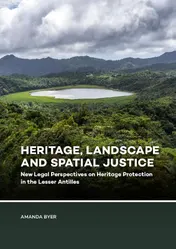
Heritage, Landscape and Spatial Justice
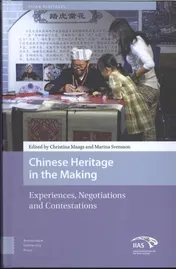
Chinese Heritage in the Making
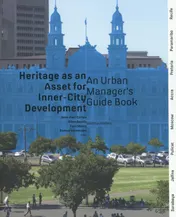
Heritage as an asset for inner city development
NSTC 501514093 · CB-relatie 9180064 · Bijgewerkt 6 augustus 2026