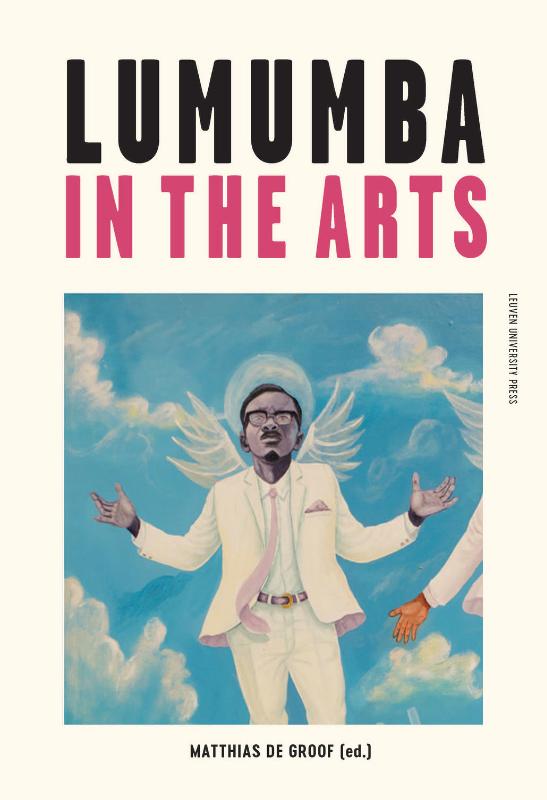
Lumumba in the Arts
Paperback464 pagina’sEngels
Introduction by Matthias De Groof – The Iconography of Patrice Emery LumumbaPART 1 – LUMUMBA IN HISTORIOGRAPHY: FROM BÊTE NOIRE TO BEATIFICATIONIsabelle de Rezende – History as SpectacleJean Omasombo Tshonda – Lumumba, a Never-ending Tragedy and the Unfulfilled Mourning Process of ColonisationPedro Monaville – A History of Glory and Dignity: Patrice Lumumba in Historical Imagination and Postcolonial GenealogiesChristopher L. Miller – Patrice Lumumba and the Past Conditional: The Virtual Reality of a MartyrElikia M’Bokolo, interviewed by Julien Truddaïu & Matthias De Groof – The History of Patrice Lumumba’s HistoriographyGALLERY SECTIONPART 2 – ICONOGRAPHY OF LUMUMBACinemaMatthias De Groof – Lumumba in CinemaRaoul Peck – It’s About the ImageKaren Bouwer – Lumumba entre deux genres: Peck’s Filmic DiptychRosario Giordano – The Masks of the Savage: Lumumba and the Independence of the CongoBalufu Bakupa-Kanyinda, interviewed by Matthias De Groof – Imagining LumumbaTheatrePiet Defraeye – Lumumba on Stage: X Times a MurderPhotographyMark Sealy – Picturing Lumumba: Framed in Colonial TimePoetryMathieu Zana Etambala – Tributes to Patrice Lumumba in the Poetry of the American Continent, 1961-1966ComicsVéronique Bragard – Between Communicative and Cultural Memory: The Figure of Lumumba as Decolonial Counterpoint in Nicolas Pitz’s Comics Les Jardins du Congo (2013)MusicLéon Tsambu – The Figurative Representation of Lumumba in Popular MusicGert Huskens and Idesbald Goddeeris – Lumumba in the Hood: The Legacy of Patrice Lumumba in Rap Music since 1990PaintingBogumil Jewsiewicki – A Congolese Hero to the Oppressed Peoples of the World: Lumumba, from Christlike Martyr to Guide for the FutureTshibumba Kanda Matulu and Johannes Fabian – ConversationsMarlene Dumas and Luc Tuymans, interviewed by Matthias De Groof – My Pauline and Your PatricePublic spacePierre Petit – Official Miniatures: The Figure of Patrice Lumumba in the Global and the National ContextsJulien Truddaïu – Representing Lumumba (1956-1961): The Twists and Turns of Belgian Colonial PropagandaRobbert Jacobs – Down Lumumba LanePiet Defraeye – Lumumba’s Bike: A Rhizomatic Walk in the ParkEpilogue by Matthias De Groof – ShilatemboContributorsBibliographyIndexColophonLumumba as a symbol of decolonisation and as an icon in the artsIt is no coincidence that a historical figure such as Patrice Emery Lumumba, independent Congo’s first prime minister, who was killed in 1961, has lived in the realm of the cultural imaginary and occupied an afterlife in the arts. After all, his project remained unfinished and his corpse unburied. The figure of Lumumba has been imagined through painting, photography, cinema, poetry, literature, theatre, music, sculpture, fashion, cartoons and stamps, and also through historiography and in public space. No art form has been able to escape and remain indifferent to Lumumba. Artists observe the memory and the unresolved suffering that inscribed itself both upon Lumumba’s body and within the history of Congo. If Lumumba – as an icon – lives on today, it is because the need for decolonisation does as well.Rather than seeking to unravel the truth of actual events surrounding the historical Lumumba, this book engages with his representations. What is more, it considers every historiography as inherently embedded in iconography. Film scholars, art critics, historians, philosophers, and anthropologists discuss the rich iconographic heritage inspired by Lumumba. Furthermore, Lumumba in the Arts offers unique testimonies by a number of artists who have contributed to Lumumba's polymorphic iconography, such as Marlene Dumas, Luc Tuymans, Raoul Peck, and Tshibumba Kanda Matulu, and includes contributions by such highly acclaimed scholars as Johannes Fabian, Bogumil Jewsiewicky, and Elikia M’Bokolo.Contributors: Balufu Bakupa-Kanyinda (artist), Karen Bouwer (University of San Francisco), Véronique Bragard (UCLouvain), Piet Defraeye (University of Alberta), Matthias De Groof (scholar/filmmaker), Isabelle de Rezende (independent scholar), Marlene Dumas (artist), Johannes Fabian (em., University of Amsterdam), Rosario Giordano (Università della Calabria), Idesbald Goddeeris (KU Leuven), Gert Huskens (ULB), Robbert Jacobs (artist), Bogumil Jewsiewicki (em., Université Laval), Tshibumba Kanda Matulu (artist), Elikia M’Bokolo (EHESS), Christopher L. Miller (Yale University), Pedro Monaville (NYU), Raoul Peck (artist), Pierre Petit (ULB), Mark Sealy (Autograph ABP), Julien Truddaïu (CEC), Léon Tsambu (University of Kinshasa), Jean Omasombo Tshonda (Africa Museum), Luc Tuymans (artist), Mathieu Zana Etambala (AfricaMuseum)It is no coincidence that a historical figure such as Patrice Emery Lumumba, independent Congo’s first prime minister, who was killed in 1961, has lived in the realm of the cultural imaginary and occupied an afterlife in the arts. After all, his project remained unfinished and his corpse unburied. The figure of Lumumba has been imagined through painting, photography, cinema, poetry, literature, theatre, music, sculpture, fashion, cartoons and stamps, and also through historiography and in public space. No art form has been able to escape and remain indifferent to Lumumba. Artists observe the memory and the unresolved suffering that inscribed itself both upon Lumumba’s body and within the history of Congo. If Lumumba – as an icon – lives on today, it is because the need for decolonisation does as well.Rather than seeking to unravel the truth of actual events surrounding the historical Lumumba, this book engages with his representations. What is more, it considers every historiography as inherently embedded in iconography. Film scholars, art critics, historians, philosophers, and anthropologists discuss the rich iconographic heritage inspired by Lumumba. Furthermore, Lumumba in the Arts offers unique testimonies by a number of artists who have contributed to Lumumba's polymorphic iconography, such as Marlene Dumas, Luc Tuymans, Raoul Peck, and Tshibumba Kanda Matulu, and includes contributions by such highly acclaimed scholars as Johannes Fabian, Bogumil Jewsiewicky, and Elikia M’Bokolo.Contributors: Balufu Bakupa-Kanyinda (artist), Karen Bouwer (University of San Francisco), Véronique Bragard (UCLouvain), Piet Defraeye (University of Alberta), Matthias De Groof (scholar/filmmaker), Isabelle de Rezende (independent scholar), Marlene Dumas (artist), Johannes Fabian (em., University of Amsterdam), Rosario Giordano (Università della Calabria), Idesbald Goddeeris (KU Leuven), Gert Huskens (ULB), Robbert Jacobs (artist), Bogumil Jewsiewicki (em., Université Laval), Tshibumba Kanda Matulu (artist), Elikia M’Bokolo (EHESS), Christopher L. Miller (Yale University), Pedro Monaville (NYU), Raoul Peck (artist), Pierre Petit (ULB), Mark Sealy (Autograph ABP), Julien Truddaïu (CEC), Léon Tsambu (University of Kinshasa), Jean Omasombo Tshonda (Africa Museum), Luc Tuymans (artist), Mathieu Zana Etambala (AfricaMuseum)
In het kort
ISBN-13
9789462701748
Uitgever
Verschenen
30 januari 2020
Imprint
Bibliografisch
ISBN-139789462701748
Editie1
TaalEngels eng
Pagina’s464
GeïllustreerdJa
Uitgave
UitgeverUniversitaire Pers Leuven
ImprintLeuven University Press
CB-relatie-id8004161
Verschenen30 januari 2020
StatusOnbekend 00
BeschikbaarheidContact leverancier 99
Adviesprijs (incl. btw)€ 65,00
Vorm & inhoud
ProductvormPaperback BC
SamenstellingLos product
Classificatie
NUR (hoofd)Kunstgeschiedenis 654
NUR (alle)654 Kunstgeschiedenis
Trefwoordenafrica · iconography · art · congo · history · visual culture · lumumba · postcolonial · colonial · martyr
Medewerkers
Redacteur B01Matthias De Groof
Herkomst
MeldingBevestigd bij publicatie 03
Bijgewerkt6 augustus 2026
Trefwoorden
Lijkt op dit boek
CB-relatie 8004161 · Bijgewerkt 6 augustus 2026