
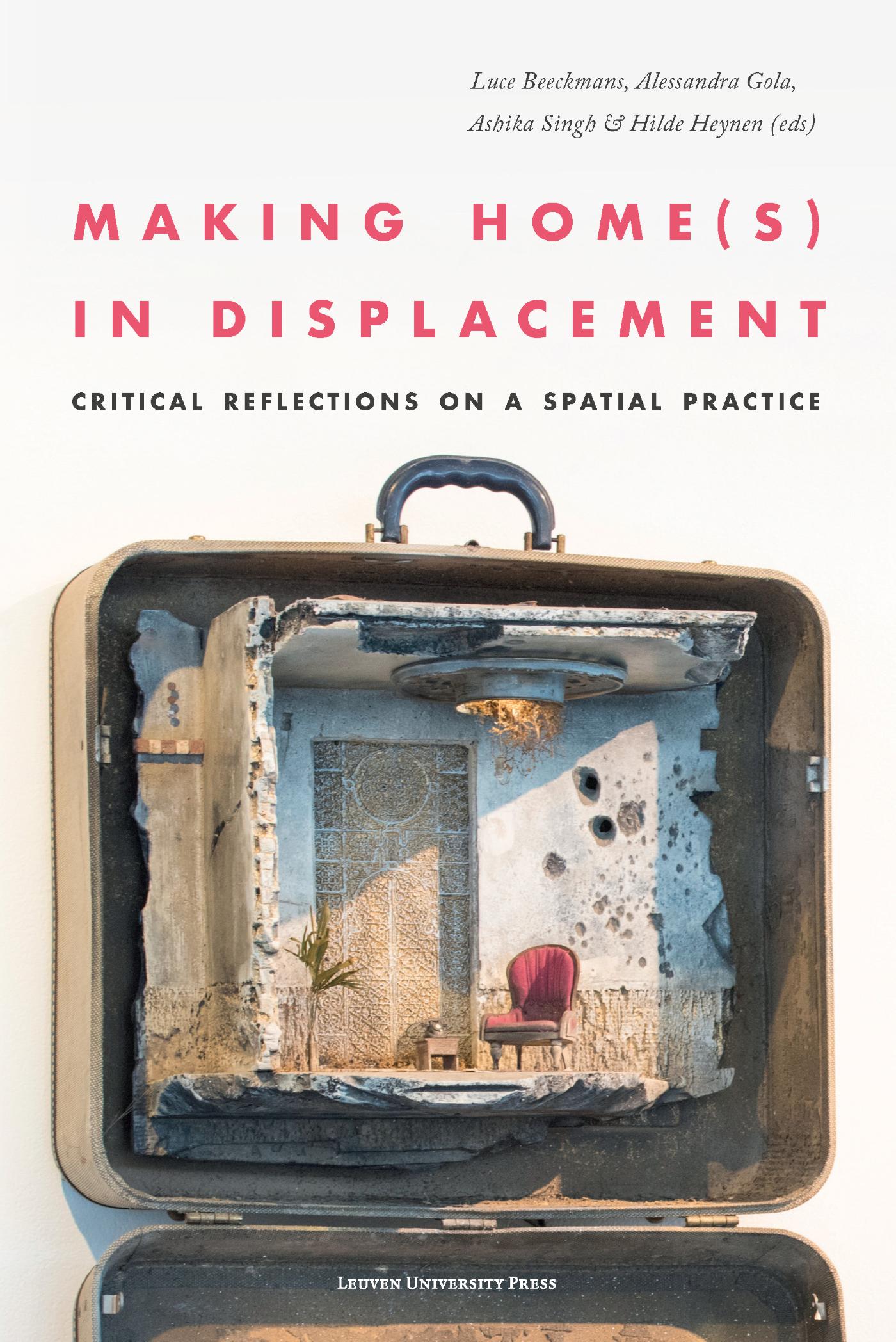
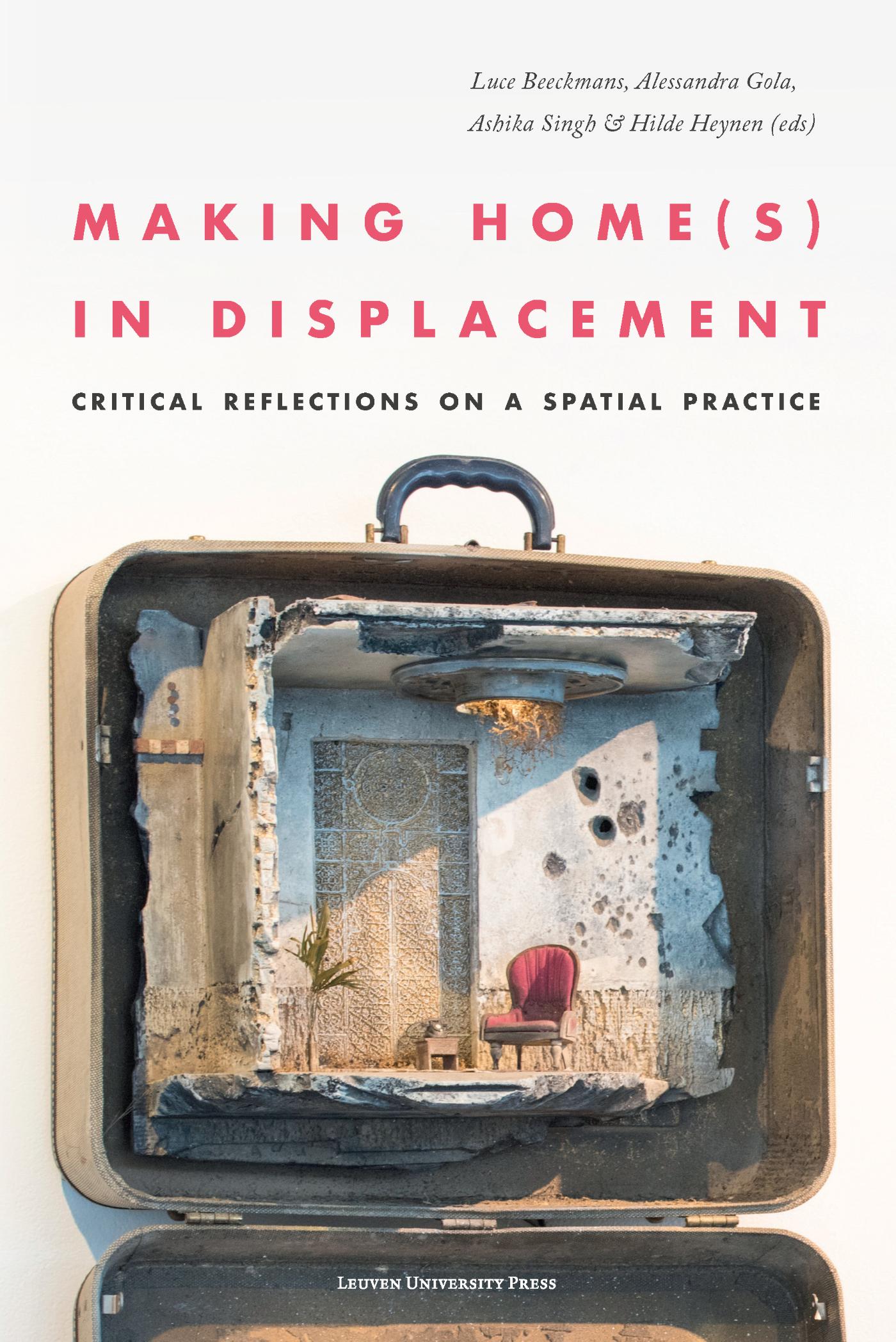
Making Home(s) in Displacement Critical Reflections on a Spatial Practice
Paperback420 pagina’sEngels
INTRODUCTIONRethinking the Intersection of Home and Displacement from a Spatial PerspectiveLuce Beeckmans, Ashika Singh & Alessandra GolaPART 1 – CAMPTo Shelter in Place for a Time BeyondAnooradha Iyer Siddiqi & Somayeh ChitchianTowards Dwelling in Spaces of Inhospitality. A Phenomenological Exploration of Home in Nahr Al-BaridAshika SinghWho/What Is Doing What? Dwelling and Homing Practices in Syrian Refugee Camps –The Kurdistan Region of IraqLayla Zibar, Nurhan Abujidi & Bruno de MeulderIn the Name of BelongingDeveloping Sheikh Radwan for the Refugees in Gaza City, 1967-1982Fatina Abreek-ZubiedatPART 2 – SHELTERAt Home in the Centre? Spatial Appropriation and Horizons of Homemaking in Reception Facilities for Asylum SeekersPaolo BoccagniBare Shelter. The Layered Spatial Politics of Inhabiting DisplacementIrit KatzRefugee Shelters done Differently. Humanist Architecture of Socialist YugoslaviaAleksandar StaničićYears in the Waiting Room. A feminist Ethnography of the Invisible Institutional Living Spaces of Forced DisplacementMaretha DreyerPART 3 – CITYGendering Displacement. Women Refugees and the Geographies of Dwelling in IndiaRomola SanyalHoming Displacements. Socio-Spatial Identities in Contemporary Urban PalestineAlessandra GolaMediating between Formality and Informality. Refugee Housing as City-Making Activity in Refugee Crisis AthensAikaterini AntonopoulouMaking Home in Borgo Mezzanone. Dignity and Mafias in South ItalyAnna Di GiustoPART 4 – HOUSENews from the Living Room. Historiography and Immigrant Agency in Urban Housing in BerlinEsra AkcanThe Nubian House. Displacement, Dispossession, and ResilienceMenna AghaTrans-national Homes. From Nairobi to Cape TownHuda TayobStatic Displacement, Adaptive Domesticity. The Three Temporary Geographies of Firing Zone 918, PalestineWafa ButmehCODAAbout the Displacement of HomeHilde HeynenMaking Home(s) in Displacement critically rethinks the relationship between home and displacement from a spatial, material, and architectural perspective.Making Home(s) in Displacement critically rethinks the relationship between home and displacement from a spatial, material, and architectural perspective. Recent scholarship in the social sciences has investigated how migrants and refugees create and reproduce home under new conditions, thereby unpacking the seemingly contradictory positions of making a home and overcoming its loss. Yet, making home(s) in displacement is also a spatial practice, one which intrinsically relates to the fabrication of the built environment worldwide.Conceptually the book is divided along four spatial sites, referred to as camp, shelter, city, and house, which are approached with a multitude of perspectives ranging from urban planning and architecture to anthropology, geography, philosophy, gender studies, and urban history, all with a common focus on space and spatiality. By articulating everyday homemaking experiences of migrants and refugees as spatial practices in a variety of geopolitical and historical contexts, this edited volume adds a novel perspective to the existing interdisciplinary scholarship at the intersection of home and displacement. It equally intends to broaden the canon of architectural histories and theories by including migrants' and refugees' spatial agencies and place-making practices to its annals. By highlighting the political in the spatial, and vice versa, this volume sets out to decentralise and decolonise current definitions of home and displacement, striving for a more pluralistic outlook on the idea of home.Making Home(s) in Displacement critically rethinks the relationship between home and displacement from a spatial, material, and architectural perspective. Recent scholarship in the social sciences has investigated how migrants and refugees create and reproduce home under new conditions, thereby unpacking the seemingly contradictory positions of making a home and overcoming its loss. Yet, making home(s) in displacement is also a spatial practice, one which intrinsically relates to the fabrication of the built environment worldwide.Conceptually the book is divided along four spatial sites, referred to as camp, shelter, city, and house, which are approached with a multitude of perspectives ranging from urban planning and architecture to anthropology, geography, philosophy, gender studies, and urban history, all with a common focus on space and spatiality. By articulating everyday homemaking experiences of migrants and refugees as spatial practices in a variety of geopolitical and historical contexts, this edited volume adds a novel perspective to the existing interdisciplinary scholarship at the intersection of home and displacement. It equally intends to broaden the canon of architectural histories and theories by including migrants' and refugees' spatial agencies and place-making practices to its annals. By highlighting the political in the spatial, and vice versa, this volume sets out to decentralise and decolonise current definitions of home and displacement, striving for a more pluralistic outlook on the idea of home.
In het kort
ISBN-13
9789462702936
Uitgever
Verschenen
17 januari 2022
Imprint
Bibliografisch
ISBN-139789462702936
Editie1
TaalEngels eng
Pagina’s420
GeïllustreerdJa
Uitgave
UitgeverUniversitaire Pers Leuven
ImprintLeuven University Press
CB-relatie-id8004161
Verschenen17 januari 2022
StatusOnbekend 00
BeschikbaarheidContact leverancier 99
Adviesprijs (incl. btw)€ 59,00
Vorm & inhoud
ProductvormPaperback BC
SamenstellingLos product
Classificatie
NUR (hoofd)Bouwkunst, architectuur 648
NUR (alle)648 Bouwkunst, architectuur
Trefwoordenruimtelijke ordening · essays · sociologie · displacement · home-making · spatial practices · refugee shelter · urban citizenship · migration
Medewerkers
Redacteur B01Luce Beeckmans
Redacteur B01Alessandra Gola
Redacteur B01Ashika Singh
Redacteur B01Hilde Heynen
Andere edities van dit werk NSTC 501476649
Herkomst
Werk-id (NSTC)501476649
MeldingBevestigd bij publicatie 03
Bijgewerkt6 augustus 2026
Trefwoorden
NSTC 501476649 · CB-relatie 8004161 · Bijgewerkt 6 augustus 2026