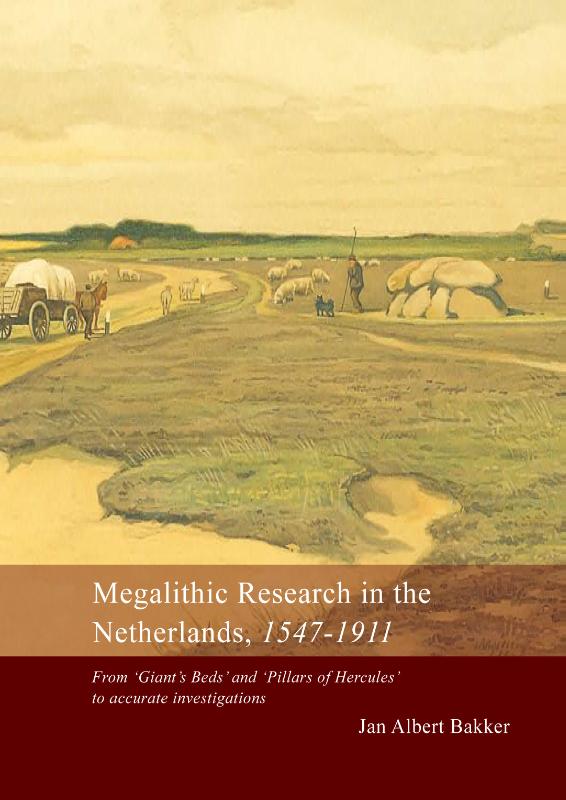
Megalithic Research in the Netherlands, 1547-1911 from Giants Beds and Pillars of Hercules to accurate investigations
Paperback328 pagina’sEngels
Ook verkrijgbaar als
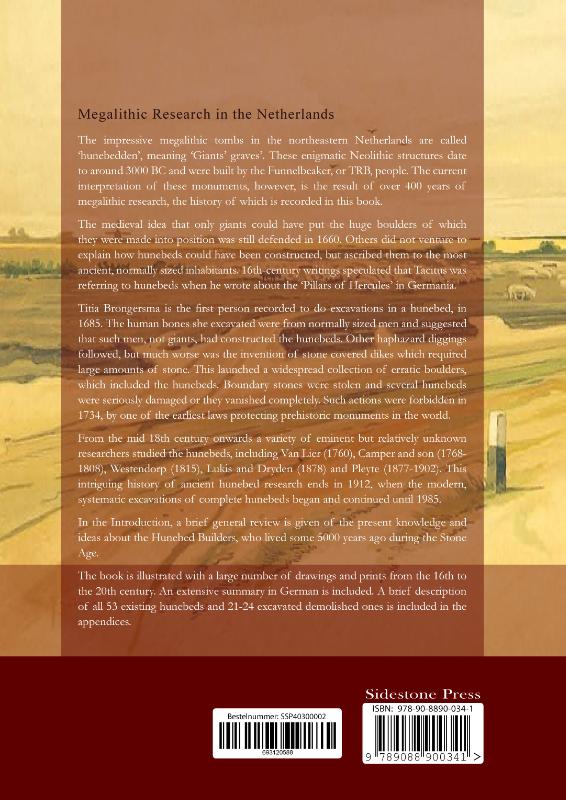
Dit Engelstalige boek geeft een volledig overzicht van de geschiedenis van het Nederlandse hunebedonderzoek. Het boek bevat een gedetailleerde beschrijving van de eerste onderzoekers die deze merkwaardige monumenten reeds in de 16de eeuw onderzochten tot aan het grootschalige "moderne" onderzoek door prof. Van Giffen in 1911.The impressive megalithic tombs in the northeastern Netherlands are called 'hunebedden', meaning 'Giants' graves'. These enigmatic Neolithic structures date to around 3000 BC and were built by the Funnelbeaker, or TRB, people. The current interpretation of these monuments, however, is the result of over 400 years of megalithic research, the history of which is recorded in this book.The medieval idea that only giants could have put the huge boulders of which they were made into position was still defended in 1660. Others did not venture to explain how hunebeds could have been constructed, but ascribed them to the most ancient, normally sized inhabitants. 16th-century writings speculated that Tacitus was referring to hunebeds when he wrote about the 'Pillars of Hercules' in Germania.Titia Brongersma is the first person recorded to do excavations in a hunebed, in 1685. The human bones she excavated were from normally sized men and suggested that such men, not giants, had constructed the hunebeds. Other haphazard diggings followed, but much worse was the invention of stone covered dikes which required large amounts of stone. This launched a widespread collection of erratic boulders, which included the hunebeds. Boundary stones were stolen and several hunebeds were seriously damaged or they vanished completely. Such actions were forbidden in 1734, by one of the earliest laws protecting prehistoric monuments in the world.From the mid 18th century onwards a variety of eminent but relatively unknown researchers studied the hunebeds, including Van Lier (1760), Camper and son (1768-1808), Westendorp (1815), Lukis and Dryden (1878) and Pleyte (1877-1902). This intriguing history of ancient hunebed research ends in 1912, when the modern, systematic excavations of complete hunebeds began and continued until 1985.In the Introduction, a brief general review is given of the present knowledge and ideas about the Hunebed Builders, who lived some 5000 years ago during the Stone Age. The book is illustrated with a large number of drawings and prints from the 16th to the 20th century. An extensive summary in German is included. A brief description of all 53 existing hunebeds and 21-24 excavated demolished ones is included in the appendices.
In het kort
Bibliografisch
ISBN-139789088900341
Editie1
TaalEngels eng
Pagina’s328
GeïllustreerdJa
Uitgave
UitgeverSidestone Press
CB-relatie-id9180064
Verschenen25 november 2009
StatusOnbekend 00
BeschikbaarheidContact leverancier 99
Zonder prijsPrijs volgt
Vorm & inhoud
ProductvormPaperback BC
SamenstellingLos product
Classificatie
NUR (hoofd)Archeologie 682
NUR (alle)682 Archeologie
Medewerkers
Auteur A01Jan Albert Bakker
Herkomst
Werk-id (NSTC)500176708
MeldingBevestigd bij publicatie 03
Bijgewerkt6 augustus 2026
Lijkt op dit boek

Durrington Walls and Woodhenge: A place for the living

Durrington Walls and Woodhenge: A place for the living

Indigenous Knowledge in Transformation

Indigenous Knowledge in Transformation

Archaeological Approaches to Inequality, Political Organisation, and Social Complexity

Archaeological Approaches to Inequality, Political Organisation, and Social Complexity
Stadterweiterungen und urbane Dynamik im Mittelalter
Stadterweiterungen und urbane Dynamik im Mittelalter

Prehistoric Shore Settlements of the Southwestern Balkans

Prehistoric Shore Settlements of the Southwestern Balkans
NSTC 500176708 · CB-relatie 9180064 · Bijgewerkt 6 augustus 2026