
Modern Etruscans Close Encounters with a Distant Past
Paperback188 pagina’sEngels
Ook verkrijgbaar als
9 Introduction Chiara Zampieri, Martina Piperno and Bart Van den Bossche23 Etruscans, Victorians, and After: The Modern Sense of Beauty Francesca Orestano43 The ‘Walking Apollo’: From Archaeological Dissemination to Literary Knowledge Chiara Zampieri63 Cooking by the Book: Travel Writing and Etruscan Food Culture in the Interwar Period Bart Van den Bossche81 Etruscans in Unexpected Places: Space, Temporality and Visual Agency Lisa C. Pieraccini97 The Demonisation of the Etruscans: From Alfred Grünwedel to German Schoolbooks Martin Miller115 Mr Lawrence and Lady Larthia: D. H. Lawrence as an Apprentice Etruscologist Marie-Laurence Haack127 Etruscan Studies and the Infernal Landscape in Vincenzo Cardarelli’s prose d’arte Gennaro Ambrosino147 The Problem of Distance: Giorgio Bassani, The Etruscans and the Limits of Compassion Martina Piperno163 A Compromised Antiquity: The Post-war Italian Rejection of the Etruscan Past Andrea Avalli181 About the Authors185 IndexNew insights on the reception of Etruscan antiquity in the modernist period.“L’Étrurie est à la mode”, French archaeologist Salomon Reinach bluntly stated in 1927. Since the beginning of the nineteenth century, Etruria had not only been attracting the attention of archaeologists and specialists of all sorts, but it had also been a fascinating and, in some cases, captivating destination for poets, novelists, painters and sculptors from all over Europe. This volume deals with the impact of the constantly expanding knowledge on the Etruscans and their mysterious civilisation on Italian, French, English, and German literature, arts and culture, with particular regard to the modernist period (1890–1950). The volume brings a distinctive point of view to the subject by approaching it from an interdisciplinary and comparative perspective, and by looking at a quite diverse range of topics and artefacts, which includes, but is not limited to, the study of drawings, art works, travel essays, novels, cooking recipes, schoolbooks, photographs, and movies.By exploring a new paradigm to understand ancient cultures, beyond the traditional ideas and models of “reception of the classics”, and by challenging the alleged fracture between the so-called “two cultures” of humanities and natural sciences, Modern Etruscans will be of interest to scholars from various disciplines. Designed as a learning tool for university courses on the interplay between literature and science in the twentieth century, it is suited as recommended reading for students in the humanities.“L’Étrurie est à la mode”, French archaeologist Salomon Reinach bluntly stated in 1927. Since the beginning of the nineteenth century, Etruria had not only been attracting the attention of archaeologists and specialists of all sorts, but it had also been a fascinating and, in some cases, captivating destination for poets, novelists, painters and sculptors from all over Europe. This volume deals with the impact of the constantly expanding knowledge on the Etruscans and their mysterious civilisation on Italian, French, English, and German literature, arts and culture, with particular regard to the modernist period (1890–1950). The volume brings a distinctive point of view to the subject by approaching it from an interdisciplinary and comparative perspective, and by looking at a quite diverse range of topics and artefacts, which includes, but is not limited to, the study of drawings, art works, travel essays, novels, cooking recipes, schoolbooks, photographs, and movies.By exploring a new paradigm to understand ancient cultures, beyond the traditional ideas and models of “reception of the classics”, and by challenging the alleged fracture between the so-called “two cultures” of humanities and natural sciences, Modern Etruscans will be of interest to scholars from various disciplines. Designed as a learning tool for university courses on the interplay between literature and science in the twentieth century, it is suited as recommended reading for students in the humanities.
In het kort
ISBN-13
9789462703797
Uitgever
Verschenen
24 november 2023
Imprint
Bibliografisch
ISBN-139789462703797
Editie1
TaalEngels eng
Pagina’s188
GeïllustreerdJa
Uitgave
UitgeverUniversitaire Pers Leuven
ImprintLeuven University Press
CB-relatie-id8004161
Verschenen24 november 2023
StatusAangekondigd 02
BeschikbaarheidContact leverancier 99
Adviesprijs (incl. btw)€ 30,00
Vorm & inhoud
ProductvormPaperback BC
SamenstellingLos product
Classificatie
NUR (hoofd)Archeologie 682
NUR (alle)682 Archeologie
Trefwoordenarts · reception · modernism · literature · etruscans · etruscology · antiquity · reception of antiquity · archaeology
Medewerkers
Herkomst
Werk-id (NSTC)501661009
MeldingBevestigd bij publicatie 03
Bijgewerkt6 augustus 2026
Trefwoorden
Lijkt op dit boek
Durrington Walls and Woodhenge: A place for the living
Durrington Walls and Woodhenge: A place for the living
Indigenous Knowledge in Transformation
Indigenous Knowledge in Transformation
Archaeological Approaches to Inequality, Political Organisation, and Social Complexity
Archaeological Approaches to Inequality, Political Organisation, and Social Complexity
Stadterweiterungen und urbane Dynamik im Mittelalter
Stadterweiterungen und urbane Dynamik im Mittelalter
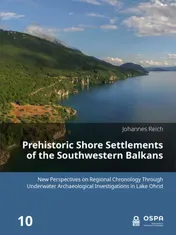
Prehistoric Shore Settlements of the Southwestern Balkans
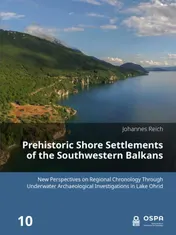
Prehistoric Shore Settlements of the Southwestern Balkans
NSTC 501661009 · CB-relatie 8004161 · Bijgewerkt 6 augustus 2026