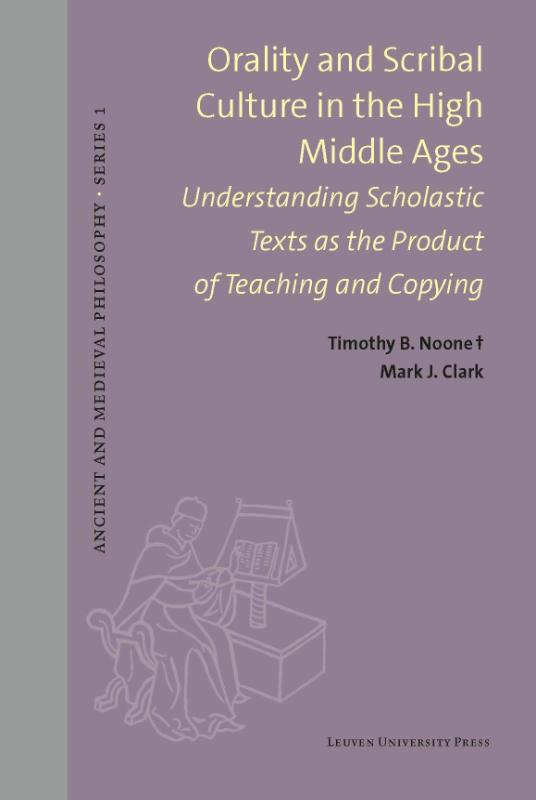
Orality and Scribal Culture in the High Middle Ages Understanding Scholastic Texts as the Product of Teaching and Copying
Ook verkrijgbaar als
• Preface • I. Introduction • 1. From the Humanist Editorial Methods of the Maurists to Lachmann • 2. The Limitations of Lachmannian Editing of Scholastic Texts • 3. Preview of Chapters, Evidence, and Statement of Aims and Thesis • II. Vestiges of Scribal Culture and Orality in the Organization of Scholastic Texts: Macro Data • 1. Anomalies Arising from Multiple Stages and Formats for Copying • 2. Organizational Anomalies • 3. Conclusion • III. Vestiges of Scribal Culture and Orality in the Organization of Scholastic Texts: Micro Data • 1. The Fundamental Problem of Intelligibility • 2. The Presence and Problem of Multiple Voices Speaking for the Lecturer • 3. The Consequences of Memory for Lectures Recorded in Texts • 4. Oral Digressions • 5. Textual Errors Attributable to Orality • 6. Conclusion • IV. Vestiges of Scribal Culture and Orality: Reportationes • 1. Reports: Origins • 2. Reports: History • V. Conclusion • Bibliography • Primary Sources • Index codicum • Index nominum • Primary Sources • Secondary SourcesNew guidelines for editing, reading, and interpreting Scholastic texts of the High Middle Ages.This book highlights the interplay between vestigial orality and scribal culture in Scholastic texts of the High Middle Ages. Apart from Thomas Aquinas and a few others who exercised complete control over their texts, the surviving works of most medieval Scholastic masters – copied and recopied many times – retain traces of the oral settings in which they originated. This book presents hundreds of examples from texts spanning the entire High Middle Ages, showing editors and readers of Scholastic texts how to recognize and account for difficulties arising from the vestigial orality embedded in them, and how to recognize and interpret textual anomalies attributable to multi-stage copying following original lectures.
In het kort
ISBN-13
9789462705371
Uitgever
Verschenen
17 november 2026
Imprint
Bibliografisch
ISBN-139789462705371
SerieAncient and Medieval Philosophy - Series 1 — deel 70
Editie1
TaalEngels eng
Pagina’s202
GeïllustreerdNee
Uitgave
UitgeverUniversitaire Pers Leuven
ImprintLeuven University Press
CB-relatie-id8004161
Verschenen17 november 2026
StatusAangekondigd 02
BeschikbaarheidContact leverancier 99
Adviesprijs (incl. btw)€ 85,00
Vorm & inhoud
ProductvormHardback BB
SamenstellingLos product
Classificatie
NUR (hoofd)Geschiedenis van de filosofie 732
NUR (alle)732 Geschiedenis van de filosofie
Trefwoordenscholastic texts · editorial theory · scribal culture · vestigial orality · memory
Medewerkers
Auteur A01Timothy B. Noone
Auteur A01Mark J. Clark
Herkomst
Werk-id (NSTC)501682266
MeldingUpdate 04
Laatste CB-bericht7898
Bijgewerkt9 november 2026
Trefwoorden
Lijkt op dit boek
Geletterde geesten - tweede editie
Petri Thomae Quaestiones de formis
Petri Thomae Quaestiones de formis
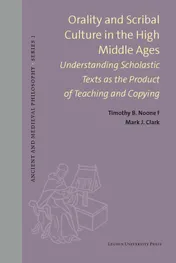
Orality and Scribal Culture in the High Middle Ages
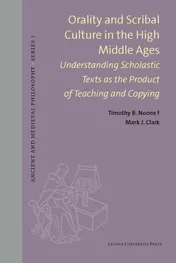
Orality and Scribal Culture in the High Middle Ages

Het verhaal van de filosofie: de Oudheid

Summa (Quaestiones ordinariae) art. LXXIII - LXXV

Summa (Quaestiones ordinariae) art. LXXIII - LXXV
Plutarch’s 'Politikos'
Plutarch’s 'Politikos'
NSTC 501682266 · CB-relatie 8004161 · Laatste CB-bericht 7898 · Bijgewerkt 9 november 2026