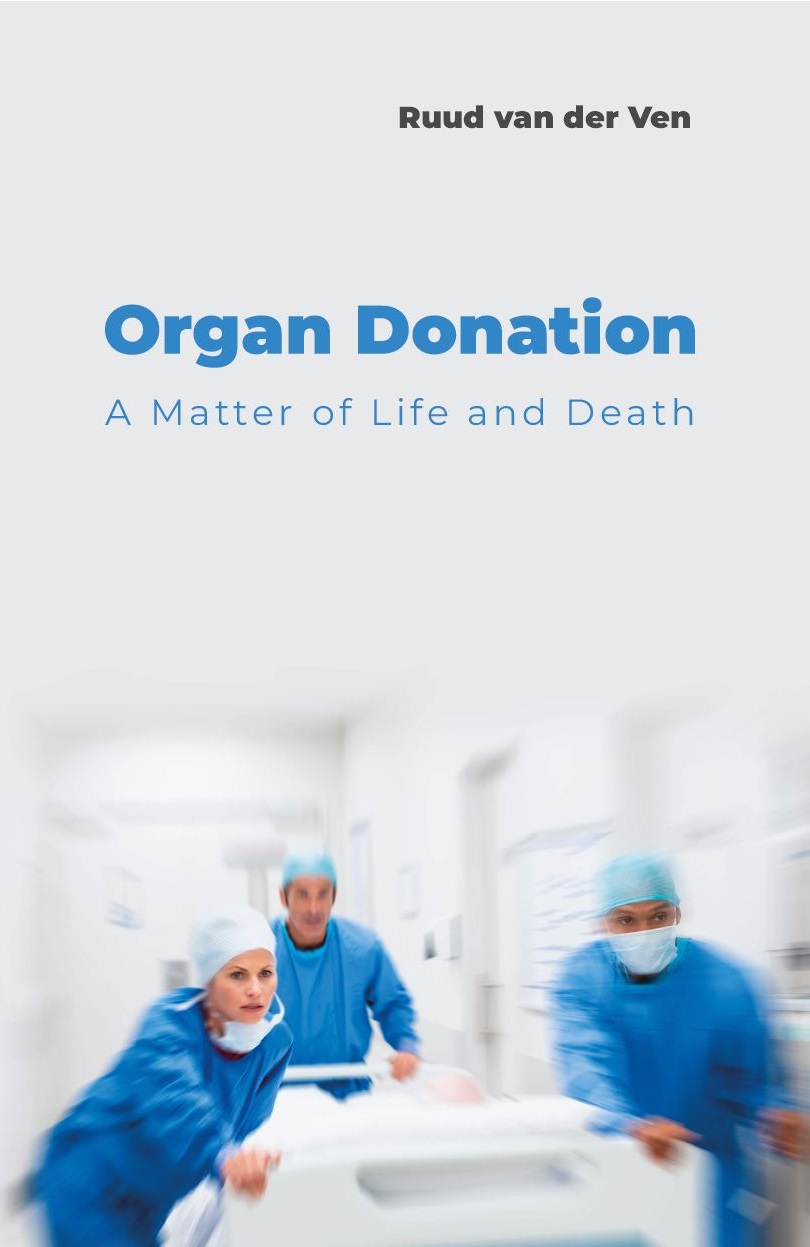
Organ Donation A Matter of Life and Death
E-bookEngelsLeverbaar
Ook verkrijgbaar als
You are confronted with it unexpectedly. Your loved one has an accident and is declared ‘brain-dead’. Before this really sinks in, your dear person is rushed through the hospital corridors to the operating room. Or, if you live in the United States, your loved one may be declared ‘dead’ two minutes after cardiacarrest and is then also rushed to the operating room. The aim here is to keep the organs in good condition so that they can be donated.In this book, the author attempts, as far as possible, to enter four worlds.The first world is that of the grieving family. For them, the key question is whether the ‘brain-dead’ person is really dead. He or she seems more like they are sleeping. Can they still think or feel pain, and is complete anesthesia necessary? In the case of cardiac arrest, the person appears to be dead, but is twominutes enough to be certain?The second world is that of the nurses and doctors. They do what they can professionally. However, it affects some more than others.A third world is that of the ‘brain-dead’ person who has regained consciousness and enthusiastically recounts how he or she experienced everything. Much was said and done around the patient. He or she had felt so powerless to make it clear that ‘I am still here!’ The question arises as to what extent the ‘dead’ person is still conscious.A fourth world is that of the recipient of the organs. The author also gives them a voice. They live in constant fear and tension about whether the organ they so desperately need will arrive in time.The question of where the exact boundary between life and death lies is of fundamental importance. Does it even exist?The author explores the deeper background of transplant medicine.Where did this medicine originate? What was its source? The book ends with a chapter on alternatives to transplant medicine. Are there disadvantages to be found in the possibility of rejection reactions and the side effects of the many medications that must be taken? The question arises whether there is a form of medicine without these disadvantages. There are still many people who have not made a decision for or against organ donation. Under the new legislation (in The Netherlands), ‘not choosing’ means that you are automatically a donor. May this book help readers to make the right choice.
In het kort
ISBN-13
9789083569406
Uitgever
Verschenen
22 juni 2025
Imprint
Druk
1
Bibliografisch
ISBN-139789083569406
Editie1
Druk1
TaalEngels eng
GeïllustreerdJa
Uitgave
UitgeverUitgeverij Maatkamp
ImprintMaatkamp Publishing
CB-relatie-id6801966
Verschenen22 juni 2025
StatusLeverbaar 04
BeschikbaarheidBeschikbaar 20
Adviesprijs (incl. btw)€ 14,99
Vorm & inhoud
ProductvormE-book ED
VormdetailE101 EPUB
SamenstellingLos product
EPUB-versie2
Beveiliging e-bookGeen 00
Classificatie
NUR (hoofd)Gezondheid algemeen 860
NUR (alle)860 Gezondheid algemeen
876 Specialistische geneeskunde: algemeen
870 Geneeskunde algemeen
874 Anatomie en fysiologie
883 Medische en socio-medische wetenschappen
876 Specialistische geneeskunde: algemeen
870 Geneeskunde algemeen
874 Anatomie en fysiologie
883 Medische en socio-medische wetenschappen
Trefwoordenprocurement operation, organ procurement · donation after brain death · donation after death · donation after circulatory death · donation after euthanasia · donation after cardiac death · xenotransplantation · brain-dead · brain death · organ donation, transplant medicine, brain death · dead donor rule
Medewerkers
Auteur A01Ruud Van der Ven
Illustrator A12Arend Maatkamp
Redacteur B01E. W. J. Maatkamp
Redacteur B01Heidi Klessig
Herkomst
Werk-id (NSTC)501626932
MeldingBevestigd bij publicatie 03
Bijgewerkt6 augustus 2026
Trefwoorden
Lijkt op dit boek
NSTC 501626932 · CB-relatie 6801966 · Bijgewerkt 6 augustus 2026