
Outlaw motorcycle gangs in the Meuse Rhine Euregion Exploration of the phenomenon, OMCG-related crime and the public response to OMCGs
E-book1 pagina’sEngels
Ook verkrijgbaar als
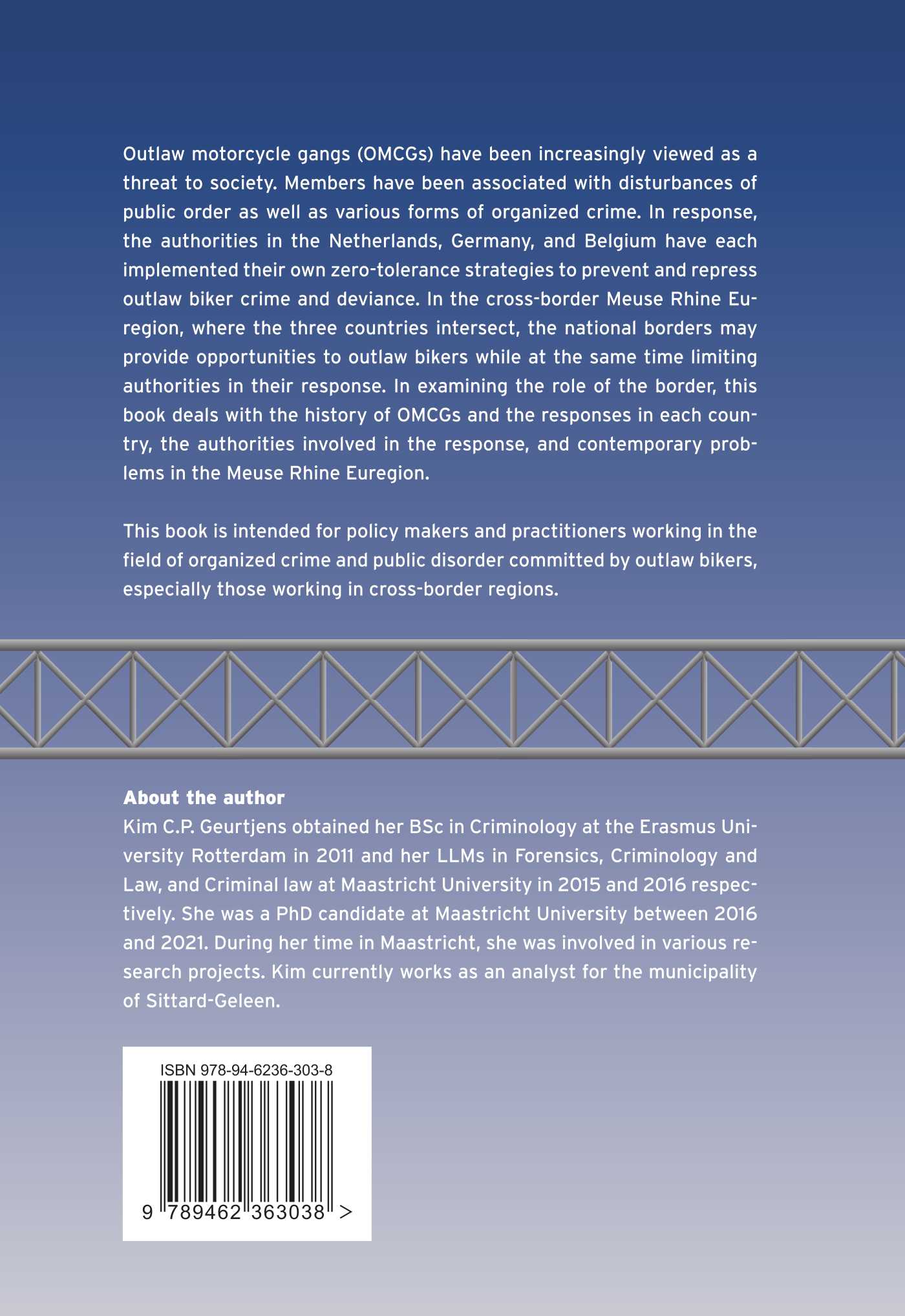
1 Introduction; 2 Research approach & methodology; 3 From bikers to gangsters – On the rise of OMCGs and the development of repressive approaches in the Netherlands, Germany, and Belgium from the 1970s until 2010; 4 Towards a zero-tolerance strategy against OMCGs – In the Netherlands, Germany, and Belgium, and its implications in the Meuse Rhine Euregion from 2010 until 2016; 5 Authorities involved in the public response to OMCGs in the MeuseRhine Euregion; 6 Outlaw motorcycle gangs without borders? – Perceived displacement in relation to the multi-agency approach in the Meuse Rhine Euregion; 7 Social embeddedness of OMCG-related crime in the MeuseRhine Euregion and transnational offending; 8 The role of the border for OMCG-related crime and the public response thereof in the Meuse Rhine Euregion; References; AppendixThis book deals with the history of OMCGs and the responses in each country, the authorities involved in the response, and contemporary problems in the Meuse Rhine Euregion.Outlaw motorcycle gangs (OMCGs) have been increasingly viewed as a threat to society. Members have been associated with disturbances of public order as well as various forms of organized crime. In response, the authorities in the Netherlands, Germany, and Belgium have each implemented their own zero-tolerance strategies to prevent and repressoutlaw biker crime and deviance. In the cross-border Meuse Rhine Euregion, where the three countries intersect, the national borders may provide opportunities to outlaw bikers while at the same time limiting authorities in their response. In examining the role of the border, this book deals with the history of OMCGs and the responses in each country, the authorities involved in the response, and contemporary problems in the Meuse Rhine Euregion.This book is intended for policy makers and practitioners working in the field of organized crime and public disorder committed by outlaw bikers, especially those working in cross-border regions.
In het kort
ISBN-13
9789400111554
Uitgever
Verschenen
20 juni 2022
Druk
1
Bibliografisch
ISBN-139789400111554
Editie1
Druk1
TaalEngels eng
Pagina’s1
GeïllustreerdNee
Uitgave
UitgeverKoninklijke Boom uitgevers PW
CB-relatie-id7500275
Verschenen20 juni 2022
StatusOnbekend 00
BeschikbaarheidContact leverancier 99
Adviesprijs (incl. btw)€ 66,50
Vorm & inhoud
ProductvormE-book ED
VormdetailE107 PDF
SamenstellingLos product
Beveiliging e-bookDigitaal watermerk 02
Classificatie
NUR (hoofd)Algemene sociale wetenschappen 741
NUR (alle)741 Algemene sociale wetenschappen
Trefwoordenbikers · multi-agency approach · transnational offending · cross-border crime
Medewerkers
Auteur A01Kim C.P. Geurtjens
Herkomst
Werk-id (NSTC)501504313
MeldingBevestigd bij publicatie 03
Bijgewerkt6 augustus 2026
Trefwoorden
NSTC 501504313 · CB-relatie 7500275 · Bijgewerkt 6 augustus 2026