
Pancreatic islet transplantation Studies on the technique and efficacy of islet isolation and transplantation
P.G. van der Burg ill. · M.P.M. van der Burg ill. · M.P.M. van der Burg fot. · M.P.M. van der Burg red. · S.B. Blankevoort ill.
E-book192 pagina’sEngelsLeverbaar
Ook verkrijgbaar als
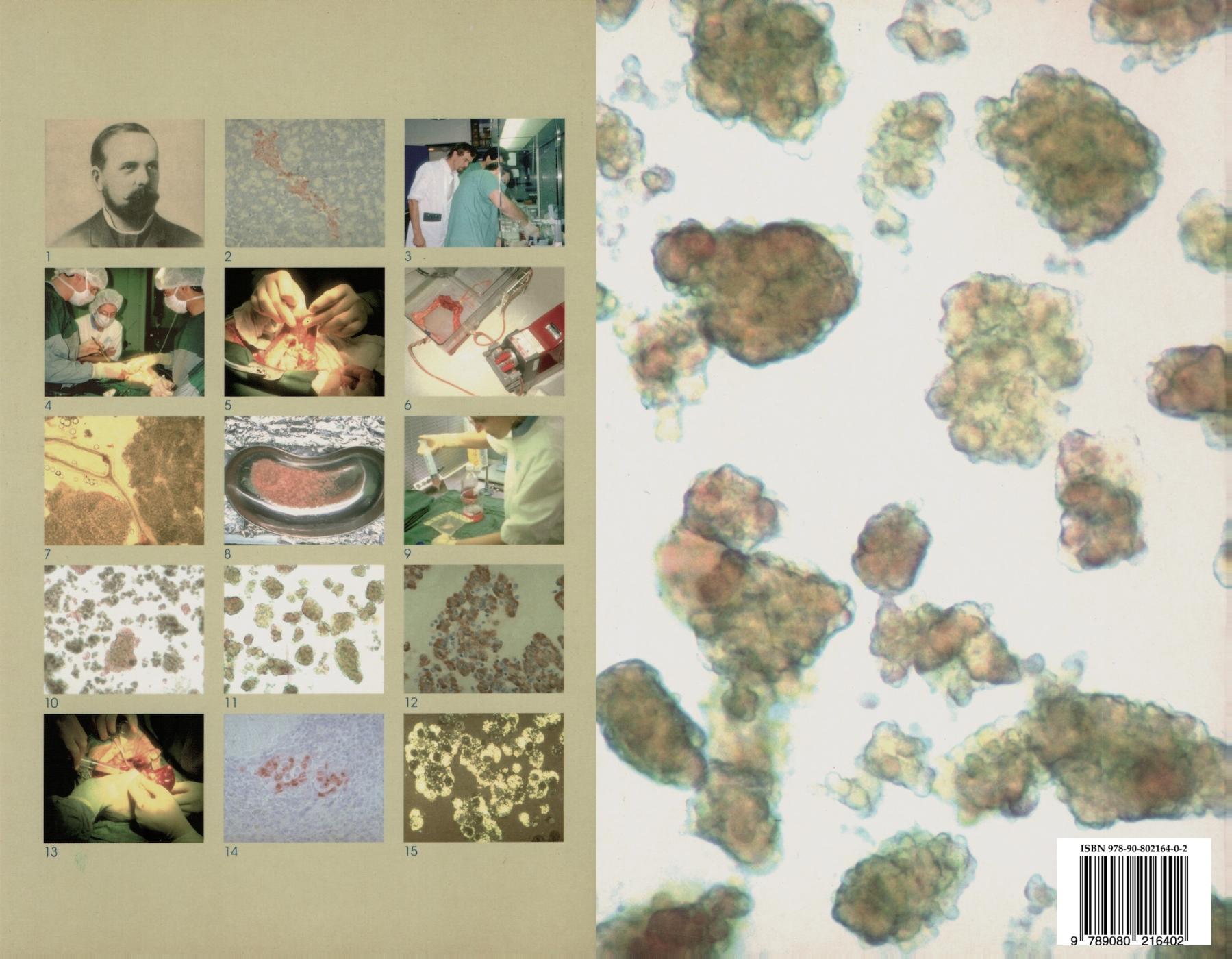
Contents1. Introduction2. Impact of Donor-Related Variables on Islet Isolation Outcome in Dogs | Diabetologia 37:111-114,19943. Assessment of Islet Isolation Efficacy in Dogs | Cell Transplant 3:91-101,19944. Cell Preservation in University of Wisconsin Solution during Isolation of Canine Islets of Langerhans | Cell Transplant 3: 315-324,19945. Contribution of Partial Pancreatectomy, Systemic Hormone Delivery, and Duct Obliteration to Glucose Regulation in Canine Pancreas | Diabetes 38:1082-1089,19896. Insulinotropic Properties of Cholecystokinin, Gastric Inhibitory Polypeptide, and Glucagon-like Peptide-1during Perifusion of Short-term Cultured Canine Isolated Islets | Submitted7. Function and Survival of Intrasplenic Islet Autografts in Dogs | Submitted8. Metabolic Control after Intrasplenic Islet Autotransplantation in Dogs: ß-cell Secretory Capacity, Insulin Action, and the Enteroinsular Axis | Submitted9. Summary and Future Prospects | Samenvatting en Toekomstverwachtingen (Summary... in Dutch)AcknowledgementsCurriculum Vitae Publications Related to this Dissertation Abbreviations Illustration of Islet Isolation and TransplantationPancreatic islet isolation in the University of Wisconsin solution is a new concept introduced here ... allowing transplantation of pure islets as an effective treatment in insulin-dependent diabetes.Illustration of Islet Isolation and Transplantation(captions at last page of the dissertation referring to French Flap documentary photographs album)1. Paul Langerhans2. Section of the normal dog pancreas showing islets stained reddish-brown (immunostained for insulin)3. The author, watching the dog islet isolation procedure in the Minneapolis surgical research laboratory4. Start of the operation in the dog (From left to right: Professor Hein G. Gooszen, Ms. M. Jane Field (Minneapolis), and Dr. Onno R. Guicherit, at our surgical laboratory)5. The pancreas is removed6. Infusion of the collagenase solution via the ducts in the dog pancreas - collagenase leaking from the pancreas is recirculated using a pump (Islet laboratory, at the Department of Cell Biology and Histology, Leiden)7. During collagenase digestion at 37-39°C the pancreas falls apart (non-stained pancreatic exocrine tissue and free-ed small blood vessel, at low magnification) 8. Dissociated pancreatic tissue9. Tissue is further dispersed by aspiration in a syringe, and sieved to remove undigested fragments, ducts and vessels ~ demonstrated by Ms. Jane Field at our islet laboratory.10. Tissue suspension demonstrating low purity of the islets (stained red by dithizone) obtained by dextran gradient separation after isolation in the RPMI tissue culture solution (dark-brown exocrine fragments remain unstained)11. Pure islet suspension (after dithizone staining) obtained by density separation in Percoll gradients (in University of Wisconsin solution) after islet isolation in the University of Wisconsin solution (islets are only slightly stained due to poor diffusion over the cell membrane in the preservation solution)12. Section of highly purified islets obtained by dextran density separation after isolation in the University of Wisconsin solution13. Islets are autotransplanted by infusion in the spleen of the dog14. Transplanted islet in section of the spleen of one of the dogs shortly after the onset of fasting hyperglycemia at three months posttransplant (immunostained for insulin) 15. Highly purified human islets obtained by Percoll density separation after isolation in the University of Wisconsin solution (immunostained with gold for insulin; not counterstained)Pancreatic islet transplantation : studies on the technique and efficacy of islet isolation and transplantationThesis, Dissertation (English) by Michel P.M. van der BurgPancreatic islet transplantation aims to prevent, postpone or ameliorate the long-term crippling complications of insulin-dependent diabetes mellitus (IDDM). At present pancreas transplantation is the only way to reach long-term normal glucose control, but it requires major surgery and life-long immunosuppressive therapy, and therefore is only considered for the minority of IDDM patients who need a kidney transplant. Islet transplantation potentially offers many advantages over pancreas transplantation, e.g. implantation is simple and safe, and isolated islets can be manipulated to lower or eliminate the need for immunosuppressive drugs. The feasibility of clinical islet transplantation has recently been demonstrated, but many problems need to be solved before large-scale application in IDDM patients can be considered. A major obstacle is the variability of islet isolation outcome in terms of islet yield and purity of the preparations. Further the metabolic sequelae of isolating the islets from their natural environment, and implantation in 'foreign' organs has received little attention. We studied these issues in a — preclinical — dog model, and demonstrated for the first time that interindividual differences in the islet content of the pancreas and other donor factors may explain 60% of the variability of islet isolation outcome. Further a new concept for islet isolation was introduced: the isolation of islets in an organ preservation solution (the University of Wisconsin solution)—originally developed for cold storage of the pancreas prior to transplantation. This new method allowed for the first time large-scale isolation of consistently 100% pure islets, and further improved islet yield. Intrasplenic islet autotransplantation in dogs was successful allowing fasting normoglycemia, mild postprandial hyperglycemia and postprandial normo-insulinemia up to 3 years posttransplant. Detailed metabolic studies demonstrated (i) persistent (cholinergic) denervation of the transplanted islets and (ii) preservation of glucose-dependent insulinotropic effects at physiological stimulation with exogenous gut hormones both during in vitro perifusion of isolated islets before transplantation, and during infusion in long-term transplanted animals. Since in contrast to postprandial normoinsulinemia, severe hypoinsulinemia was observed during maximal intravenous stimulation with nutrients in the transplanted animals, the hormonal branch of the enteroinsular axis appears to be the major physiological control mechanism for glucoregulation after pancreatic islet transplantation.Michel P.M. van der Burg | ISNI 0000 0003 9087 4539ISBN eBook (pdf) published 2022 : 978-90-802164-0-2ISBN paperback published 1994 : 9789080216419, 9080216410
In het kort
ISBN-13
9789080216402
Uitgever
Verschenen
24 oktober 2022
Imprint
Druk
2
Bibliografisch
ISBN-139789080216402
Editie2
Druk2
TaalEngels eng
Pagina’s192
GeïllustreerdJa
Uitgave
UitgeverBurg, M.P.M. Van Der
ImprintMichel van der Burg
CB-relatie-id8315980
Verschenen24 oktober 2022
StatusLeverbaar 04
BeschikbaarheidBeschikbaar 20
Zonder prijsPrijs volgt
Vorm & inhoud
ProductvormE-book ED
VormdetailE107 PDF
SamenstellingPakket (meerdelig)
Beveiliging e-bookGeen 00
Classificatie
Medewerkers
Auteur A01M.P.M. van der Burg
Illustrator A12P.G. van der Burg
Illustrator A12M.P.M. van der Burg
Fotograaf A13M.P.M. van der Burg
Redacteur B01M.P.M. van der Burg
Illustrator A12S.B. Blankevoort
Gerelateerde producten
GerelateerdPancreatic islet transplantation 9789080216419
Herkomst
Werk-id (NSTC)500822946
MeldingBevestigd bij publicatie 03
Bijgewerkt6 augustus 2026
Trefwoorden
Lijkt op dit boek

Samen zorgen
Gendergids

Beest in mijn hoofd
Availability and accessibility of healthcare for deaf and hard of hearing patients
Upper Urinary Tract Urothelial Carcinoma

Beest in mijn hoofd
Rethinking Knowledge Integration in Health Through Digital Experimentation
Anatomie en fysiologie

Gene and cell therapies in Europe

Als het nooit stopt
NSTC 500822946 · CB-relatie 8315980 · Bijgewerkt 6 augustus 2026