
Procedure matters construction and deconstructivism in European civil procedure
On 20 January 2012, Xandra Kramer was installed as holder of the Chair of European Civil Procedure at the Erasmus School of Law, Erasmus University Rotterdam. She specialises in private international law and civil procedure, and takes an interest in empirical legal research. In 2012, she joined the Erasmus School of Law interdisciplinary research programme 'Behavioural Approaches to Contract and Tort'.
In her inaugural lecture she stresses the importance of effective procedural law rules to enforce rights and act as the guarantor of fundamental rights. The enforcement of cross border rights is complicated by the huge differences in civil procedure as well as legal and practical obstacles. These complications jeopardise the right of access to justice and fair trial, and have as a result triggered the harmonisation of civil procedure. She illustrates that the gradual harmonisation of civil procedure within the EU is largely ad hoc and lacks both a vision and an architectural plan. The 'deconstructivism' in European civil procedure is a potential source of injustice and may endanger rather than improve access to justice. This necessitates a fundamental debate on the foundations and future architecture of European civil procedure in which common denominators should be access to justice, securing quality of justice, and best practices based on empirical evidence. She urges academics to be at the forefront in creating a blueprint for the future of European civil procedure.
In her inaugural lecture she stresses the importance of effective procedural law rules to enforce rights and act as the guarantor of fundamental rights. The enforcement of cross border rights is complicated by the huge differences in civil procedure as well as legal and practical obstacles. These complications jeopardise the right of access to justice and fair trial, and have as a result triggered the harmonisation of civil procedure. She illustrates that the gradual harmonisation of civil procedure within the EU is largely ad hoc and lacks both a vision and an architectural plan. The 'deconstructivism' in European civil procedure is a potential source of injustice and may endanger rather than improve access to justice. This necessitates a fundamental debate on the foundations and future architecture of European civil procedure in which common denominators should be access to justice, securing quality of justice, and best practices based on empirical evidence. She urges academics to be at the forefront in creating a blueprint for the future of European civil procedure.
In het kort
ISBN-13
9789462361096
Uitgever
Verschenen
16 december 2013
Bibliografisch
ISBN-139789462361096
SerieErasmus Law Lectures — deel 33
Editie1
TaalEngels eng
Pagina’s32
GeïllustreerdNee
Uitgave
UitgeverKoninklijke Boom uitgevers PW
CB-relatie-id7500275
Verschenen16 december 2013
StatusOnbekend 00
BeschikbaarheidContact leverancier 99
Adviesprijs (incl. btw)€ 20,00
Vorm & inhoud
ProductvormPaperback BC
SamenstellingLos product
Classificatie
NUR (hoofd)Privaatrecht 822
NUR (alle)822 Privaatrecht
Medewerkers
Auteur A01Xandra Kramer
Herkomst
Werk-id (NSTC)500460291
MeldingUpdate 04
Laatste CB-bericht7794
Bijgewerkt7 augustus 2026
Lijkt op dit boek
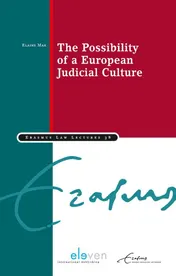
The possibility of a European judicial culture

International Business Courts
Judicial decision making in civil law
Judicial decision making in civil law

Volume 2
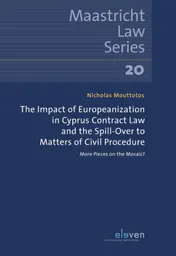
The Impact of Europeanization in Cyprus Contract Law and the Spill-Over to Matters of Civil Procedure

Between Hobbes Leviathan and Smith's invisible hand
Civil Justice System Competition in the European Union

The Roundabouts of European Law and Economics
Towards a European Reassessment of Punitive Law Enforcement?
NSTC 500460291 · CB-relatie 7500275 · Laatste CB-bericht 7794 · Bijgewerkt 7 augustus 2026