

First critical edition of Petrus Thomae's theory of non-causal dependence. This work of Scotist metaphysics is an investigation into the ultimate constitution of things. In the course of this treatise, Petrus Thomae examines whether the essences of things ultimately depend on being thought of by God for their very intelligibility or whether they have it of themselves. Defending in detail the second option, Peter argues that creatures exist independently of the divine intellect in the divine essence. They enjoy real, eternal being in the divine essence and objective being in the divine mind. Aware that these views conflicted with his belief in the Christian doctrine of creation, Peter laboured to alleviate the conflict with a theory of non-causal dependence, according to which even if God did not cause creatures to be in the divine essence, nevertheless they are necessary correlatives of the divine essence.
In het kort
ISBN-13
9789462700352
Uitgever
Verschenen
7 juli 2015
Imprint
Bibliografisch
ISBN-139789462700352
SerieAncient and Medieval Philosophy - Series 1 — deel 52
Editie1
TaalEngels eng
GeïllustreerdNee
Uitgave
UitgeverUniversitaire Pers Leuven
ImprintLeuven University Press
CB-relatie-id8004161
Verschenen7 juli 2015
StatusLeverbaar 04
BeschikbaarheidBeschikbaar 20
Adviesprijs (incl. btw)€ 75,00
Vorm & inhoud
ProductvormHardback BB
SamenstellingLos product
Classificatie
NUR (hoofd)Geschiedenis van de filosofie 732
NUR (alle)732 Geschiedenis van de filosofie
Medewerkers
Auteur A01Petrus Thomae
Redacteur B01Garrett R. Smith
Herkomst
Werk-id (NSTC)100049362
MeldingBevestigd bij publicatie 03
Bijgewerkt6 augustus 2026
Lijkt op dit boek
Quaestiones de ente
Petri Thomae Quaestiones de formis
Quaestiones de divinis praedicamentis XXVIII-XXXII
Immanent Transcendence
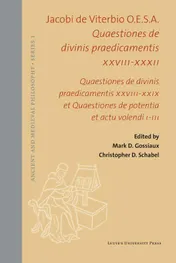
Quaestiones de divinis praedicamentis XXVIII-XXXII

Syncategoremata

Summa (Quaestiones ordinariae) art. LXIII-LXVII
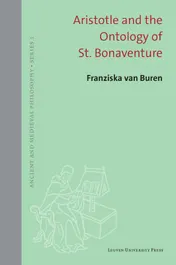
Aristotle and the Ontology of St. Bonaventure

Summa (Quaestiones ordinariae) art. LXIII-LXVII
Henry of Ghent: Metaphysics and the Trinity
NSTC 100049362 · CB-relatie 8004161 · Bijgewerkt 6 augustus 2026