
Religious institutes and catholic culture in 19th- and 20th-century europe
Ook verkrijgbaar als
A broad perspective on the role of religious institutes in social and cultural practices. This volume examines the cultural contribution of religious institutes, men and women religious, and their role in the constitution of Catholic communities of communication in different European countries. The articles focus on social and cultural history by comparing both discourses and cultural and social practices, as well as examining international networks and cultural transference. How did religious institutes function as cultural elites in the production and mediation of knowledge, ideologies, cultural codes, and practices? What kind of discursive and operational strategies did they use to help construct and propagate social Catholicism, ultramontanism, and confessionalism, and to establish and promote the Catholic communication system? What were the central mechanisms in the production of knowledge and how were they incorporated within identity politics? The volume also takes a broad perspective on the role of religious institutes in the production and propagation of religious, cultural, and social practices, and in the socialisation of the Catholic population.
In het kort
ISBN-13
9789461662149
Uitgever
Verschenen
5 maart 2014
Imprint
Bibliografisch
ISBN-139789461662149
SerieKADOC Studies on Religion, Culture and Society — deel 13
Editie1
TaalEngels eng
Pagina’s216
GeïllustreerdNee
Uitgave
UitgeverUniversitaire Pers Leuven
ImprintLeuven University Press
CB-relatie-id8004161
Verschenen5 maart 2014
StatusLeverbaar 04
BeschikbaarheidBeschikbaar 20
Zonder prijsPrijs volgt
Vorm & inhoud
ProductvormE-book ED
VormdetailE107 PDF
SamenstellingLos product
Beveiliging e-bookDigitaal watermerk 02
Classificatie
NUR (hoofd)Cultuur- en mentaliteitsgeschiedenis 694
NUR (alle)694 Cultuur- en mentaliteitsgeschiedenis
Medewerkers
Herkomst
Werk-id (NSTC)100049808
MeldingBevestigd bij publicatie 03
Bijgewerkt6 augustus 2026
Lijkt op dit boek
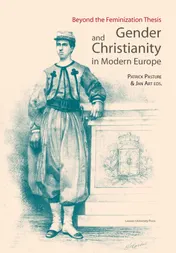
Gender and Christianity in Modern Europe
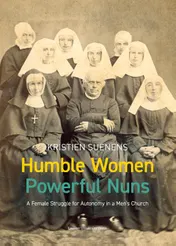
Humble Women, Powerful Nuns
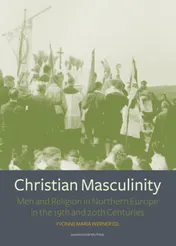
Christian masculinity
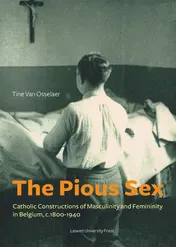
The Pious Sex
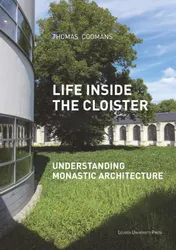
Life Inside the Cloister
Catholicism and the Welfare State in Secular France
Universalism and Liberation
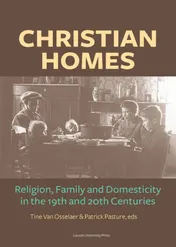
Christian Homes
The transformation of the christian churches in Western Europe (1945-2000)
Religion, Colonization and Decolonization in Congo, 1885-1960. Religion, colonisation et décolonisation au Congo, 1885-1960
NSTC 100049808 · CB-relatie 8004161 · Bijgewerkt 6 augustus 2026