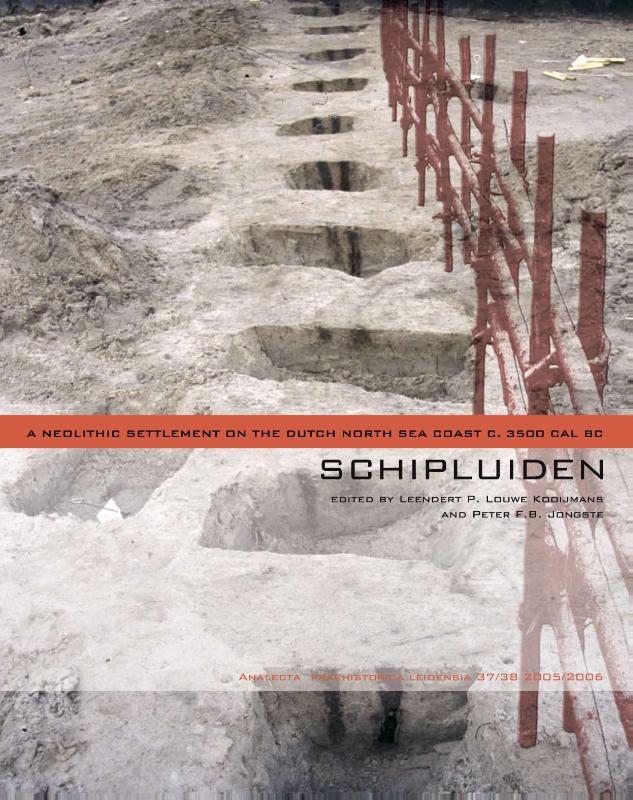
Schipluiden a neolithic settlement on the Dutch North Sea coast c. 3500 CAL BC
Peter Jongste bewerker
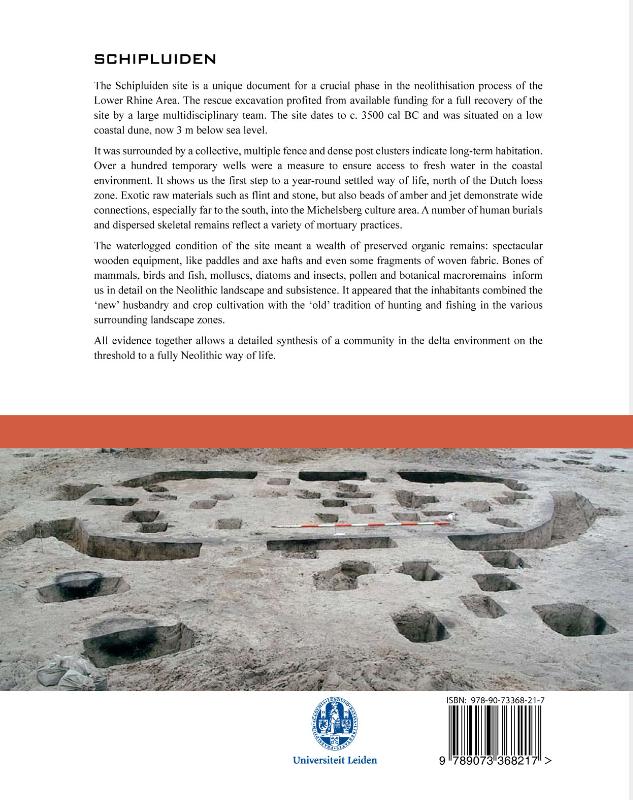
The Schipluiden site is a unique document for a crucial phase in the neolithisation process of the Lower Rhine Area. The rescue excavation profited from available funding for a full recovery of the site by a large multidisciplinary team. The site dates to c. 3500 cal BC and was situated on a low coastal dune, now 3 m below sea level.
It was surrounded by a collective, multiple fence and dense post clusters indicate long-term habitation. Over a hundred temporary wells were a measure to ensure access to fresh water in the coastal environment. It shows us the first step to a year-round settled way of life, north of the Dutch loess zone. Exotic raw materials such as flint and stone, but also beads of amber and jet demonstrate wide connections, especially far to the south, into the Michelsberg culture area. A number of human burials and dispersed skeletal remains reflect a variety of mortuary practices.
The waterlogged condition of the site meant a wealth of preserved organic remains: spectacular wooden equipment, like paddles and axe hafts and even some fragments of woven fabric. Bones of mammals, birds and fish, molluscs, diatoms and insects, pollen and botanical macroremains inform us in detail on the Neolithic landscape and subsistence. It appeared that the inhabitants combined the 'new' husbandry and crop cultivation with the 'old' tradition of hunting and fishing in the various surrounding landscape zones.
All evidence together allows a detailed synthesis of a community in the delta environment on the threshold to a fully Neolithic way of life.
(Second edition print, first edition published in 2006)
It was surrounded by a collective, multiple fence and dense post clusters indicate long-term habitation. Over a hundred temporary wells were a measure to ensure access to fresh water in the coastal environment. It shows us the first step to a year-round settled way of life, north of the Dutch loess zone. Exotic raw materials such as flint and stone, but also beads of amber and jet demonstrate wide connections, especially far to the south, into the Michelsberg culture area. A number of human burials and dispersed skeletal remains reflect a variety of mortuary practices.
The waterlogged condition of the site meant a wealth of preserved organic remains: spectacular wooden equipment, like paddles and axe hafts and even some fragments of woven fabric. Bones of mammals, birds and fish, molluscs, diatoms and insects, pollen and botanical macroremains inform us in detail on the Neolithic landscape and subsistence. It appeared that the inhabitants combined the 'new' husbandry and crop cultivation with the 'old' tradition of hunting and fishing in the various surrounding landscape zones.
All evidence together allows a detailed synthesis of a community in the delta environment on the threshold to a fully Neolithic way of life.
(Second edition print, first edition published in 2006)
In het kort
ISBN-13
9789088902086
Uitgever
Verschenen
10 oktober 2013
Bibliografisch
ISBN-139789088902086
SerieAnalecta Praehistorica Leidensia — deel 37/38
Editie2
TaalEngels eng
Pagina’s520
GeïllustreerdJa
Uitgave
Vorm & inhoud
ProductvormPaperback BC
SamenstellingLos product
Classificatie
NUR (hoofd)Archeologie 682
NUR (alle)682 Archeologie
Medewerkers
Bewerker B05Leendert Louwe Kooijmans
Bewerker B05Peter Jongste
Herkomst
Werk-id (NSTC)500478067
MeldingBevestigd bij publicatie 03
Bijgewerkt6 augustus 2026
Lijkt op dit boek
Durrington Walls and Woodhenge: A place for the living
Durrington Walls and Woodhenge: A place for the living
Indigenous Knowledge in Transformation
Indigenous Knowledge in Transformation

Archaeological Approaches to Inequality, Political Organisation, and Social Complexity

Archaeological Approaches to Inequality, Political Organisation, and Social Complexity
Stadterweiterungen und urbane Dynamik im Mittelalter
Stadterweiterungen und urbane Dynamik im Mittelalter
Prehistoric Shore Settlements of the Southwestern Balkans
Prehistoric Shore Settlements of the Southwestern Balkans
NSTC 500478067 · CB-relatie 9180064 · Bijgewerkt 6 augustus 2026