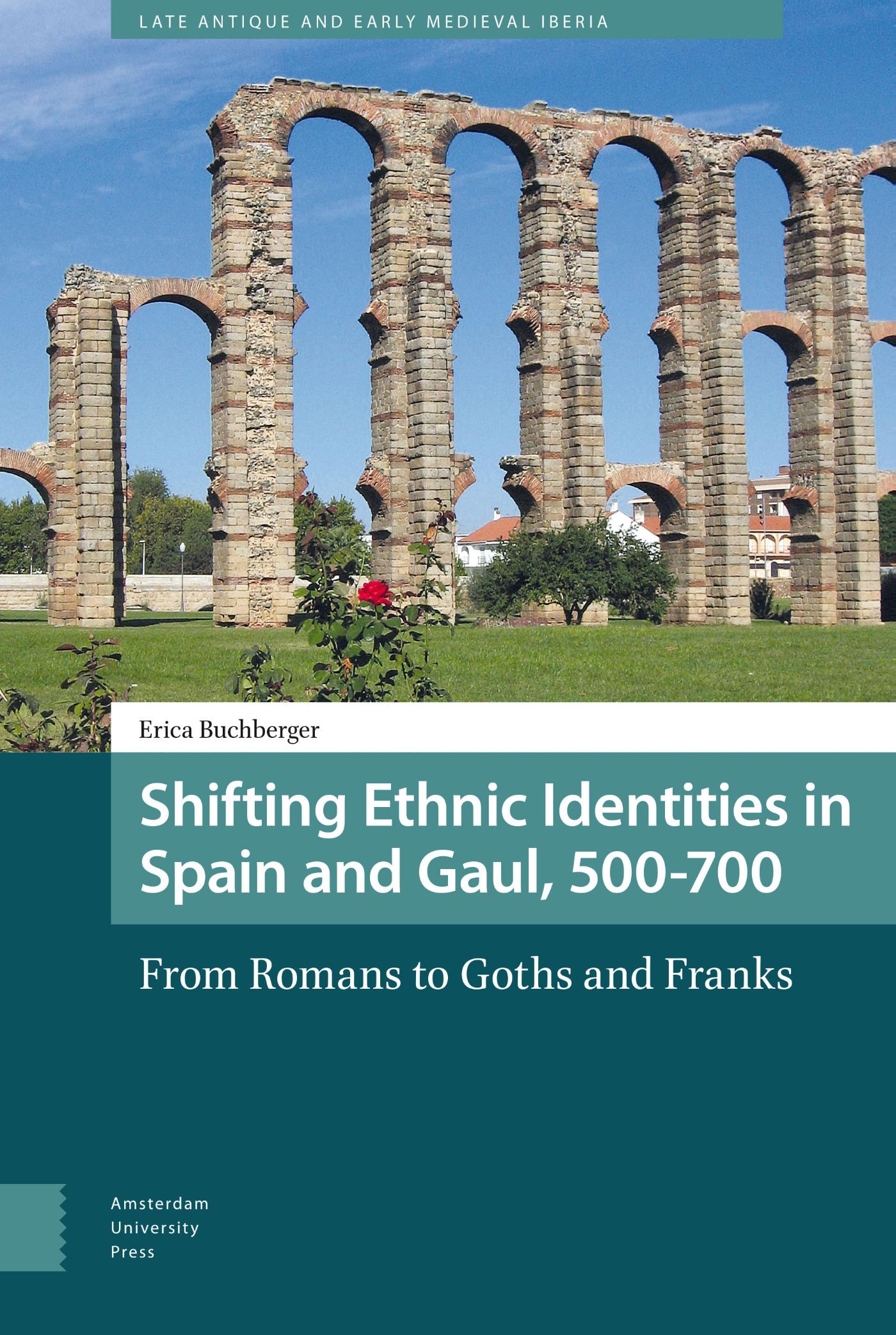
Shifting ethnic identities in spain and gaul, 500-700 from romans to goths and Franks
Ook verkrijgbaar als
Previous scholarship has examined the ethnic identities of Goths, Franks, and other 'barbarian' groups in the post-Roman West, but Romans have been relatively neglected. Part of the reason for this lacuna is the assumption that 'Roman' continued to denote solely cultural and legal affiliation. In fact, as this book demonstrates, contemporaries also associated Romanness with descent and described Romans just like they described Franks and Goths - whom scholars are perfectly happy to call 'ethnic groups'. By distinguishing between political, religious, and descent nuances with which authors used the terms 'Roman', 'Goth', and 'Frank', this comparative study tracks changes in the use and perception of these identifications, which allowed Romans in Iberia and Gaul to adopt the Gothic or Frankish identities of their new rulers, one nuance at a time.AUP Catalogue S17 textTraditional scholarship on post-Roman western culture has tended to examine the ethnic identities of Goths, Franks, and similar groups while neglecting the Romans themselves, in part because modern scholars have viewed the concept of being Roman as one denoting primarily a cultural or legal affiliation. As this book demonstrates, however, early medieval 'Romanness' also encompassed a sense of belonging to an ethnic group, which allowed Romans in Iberia and Gaul to adopt Gothic or Frankish identities in a more nuanced manner than has been previously acknowledged in the literature.
In het kort
ISBN-13
9789048527441
Uitgever
Verschenen
6 maart 2017
Imprint
Bibliografisch
ISBN-139789048527441
Editie1
TaalEngels eng
Pagina’s218
GeïllustreerdNee
Uitgave
UitgeverAmsterdam University Press
ImprintAmsterdam University Press
CB-relatie-id7400597
Verschenen6 maart 2017
StatusOnbekend 00
Vorm & inhoud
ProductvormE-book ED
VormdetailE107 PDF
SamenstellingLos product
Beveiliging e-bookAdobe DRM 03
Classificatie
NUR (hoofd)Middeleeuwen (500-1500) 684
NUR (alle)684 Middeleeuwen (500-1500)
Medewerkers
Auteur A01Erica Buchberger
Herkomst
Werk-id (NSTC)500068997
MeldingBevestigd bij publicatie 03
Bijgewerkt6 augustus 2026
Lijkt op dit boek





NSTC 500068997 · CB-relatie 7400597 · Bijgewerkt 6 augustus 2026