
Spatial approaches to a circular economy Determining locations and scales of closing material loops using geographic data
Rapid urbanization has exerted unsustainable pressures on the environment, and implementing circular economy (CE) in cities has been seen by policy makers as a potential solution for resource scarcity. Scholars have therefore called for an understanding of the spatial aspects of CE that go beyond urban governance strategies, engendering the recent integration of spatial disciplines, such as urban planning and regional economics, into the study of CE. Using the Netherlands as a case study, this research asks the question, "what determines the locations and scales of closing material loops in a circular economy?”, using both quantitative and qualitative spatial analysis methods, and both present- and future-oriented perspectives. Novel data sources on locations of material stocks and flows were used, including waste statistics and material stock maps. Research results were presented in five chapters, each corresponding to an academic paper. Current locations and scales are identified by analyzing the locations of waste reuse clusters in the Netherlands, and future locations and scales are addressed by identifying the optimal locations and service areas of circular construction hubs in Amsterdam. As an overall conclusion, I identified 5 conceptual and methodological tensions that occur when determining locations and scales for closing material loops: urban manufacturing vs urban mining, clusters vs hubs, spaces vs people vs materials, present vs future, and quantitative vs qualitative.
In het kort
ISBN-13
9789463667821
Uitgever
Verschenen
5 december 2023
Imprint
Bibliografisch
ISBN-139789463667821
Editie1
TaalEngels eng
Pagina’s226
GeïllustreerdJa
Uitgave
Vorm & inhoud
ProductvormPaperback BC
SamenstellingLos product
Classificatie
NUR (hoofd)Bouwkunde 955
NUR (alle)955 Bouwkunde
Medewerkers
Auteur A01Tanya Tsui
Herkomst
Werk-id (NSTC)501568232
MeldingBevestigd bij publicatie 03
Bijgewerkt6 augustus 2026
Lijkt op dit boek
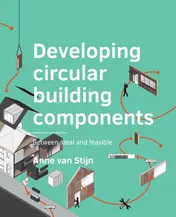
Developing circular building components
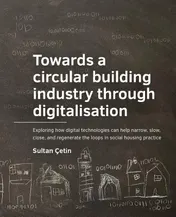
Towards a circular building industry through digitalisation
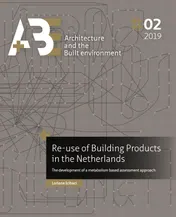
Re-use of Building Products in the Netherlands
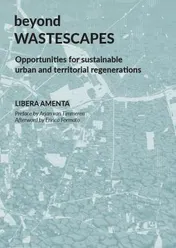
beyond wastescapes
Securing Healthy Circular Material Flows In The Built Environment
The wasted city
The Circular Economy in Practice
Cities in interaction
The Architecture of Circular Building Products
The Spatial Dimension of Household Energy Consumption
NSTC 501568232 · CB-relatie 6225289 · Bijgewerkt 6 augustus 2026