
Spatial Planning for Urban Resilience in the Face of the Flood Risk Institutional Actions, Opportunities and Challenges
The research was inspired by the increasing impact of extreme weather events and changing climate patterns on flood-prone regions and cities, and the consequent human and economic costs. Despite global efforts for flood resilience and climate adaptation involving climate analysts, economists, social scientists, politicians, hydrological engineers, spatial planners, and policymakers, it is only partially clear how best to construct resilience measures and implement concrete initiatives. The complexity of institutions is a key factor that is often neglected, and which needs further investigation. The thesis examines the institutional arrangements that determine the role of spatial planning in managing flood risk, through an in-depth case study of Guangzhou, one of the most vulnerable cities in China and globally. The thesis employs theories of historical institutionalism, planning procedure and planning tools, policy framing and collaborative governance, to explore the mechanisms and factors that influence the creative planning and design process. Content analysis, GIS-based mapping, stakeholder analysis and TOWS analysis are used to investigate data from official policy documents, grey literature, geo-information data and interview scripts. The findings indicate that institutional arrangements, such as long-established planning traditions, formal planning procedures and tools, policy framing patterns and contextual organisational factors, determine spatial planning’s role in managing flood risk. They do this through (1) the extent of the changeability of an established planning system towards expanded flood resilience measures; (2) the performance of cross-level communication and boundary-spanning work between planning and water management; (3) the legal framework that planners and hydrological engineers follow; and (4) the capacities of planning and water management institutions to work on flood issues. This research shows how to apply knowledge from policy science, political science, institutional science and administration, to analyse the nature of the planning process in tackling the urgent challenge of flood risk and climate change.
In het kort
ISBN-13
9789463663861
Uitgever
Verschenen
8 maart 2021
Imprint
Bibliografisch
ISBN-139789463663861
Editie1
TaalEngels eng
Pagina’s296
GeïllustreerdJa
Uitgave
UitgeverTU Delft Open
ImprintTU Delft Open
CB-relatie-id6225289
Verschenen8 maart 2021
StatusOnbekend 00
Vorm & inhoud
ProductvormPaperback BC
SamenstellingLos product
Classificatie
NUR (hoofd)Bouwkunde 955
NUR (alle)955 Bouwkunde
Medewerkers
Auteur A01Meng Meng
Herkomst
Werk-id (NSTC)501446131
MeldingBevestigd bij publicatie 03
Bijgewerkt6 augustus 2026
Lijkt op dit boek
Spatial Planning and Design for Resilience
Spatial Quality as a decisive criterion in flood risk strategies
Rhine Cities - Urban Flood Integration (UFI)
Adaptive planning for resilient coastal waterfronts

Understanding culture in territorial management and its implications for spatial planning

Urban Renewal Decision-Making in China: Stakeholders, Process, and System Improvement
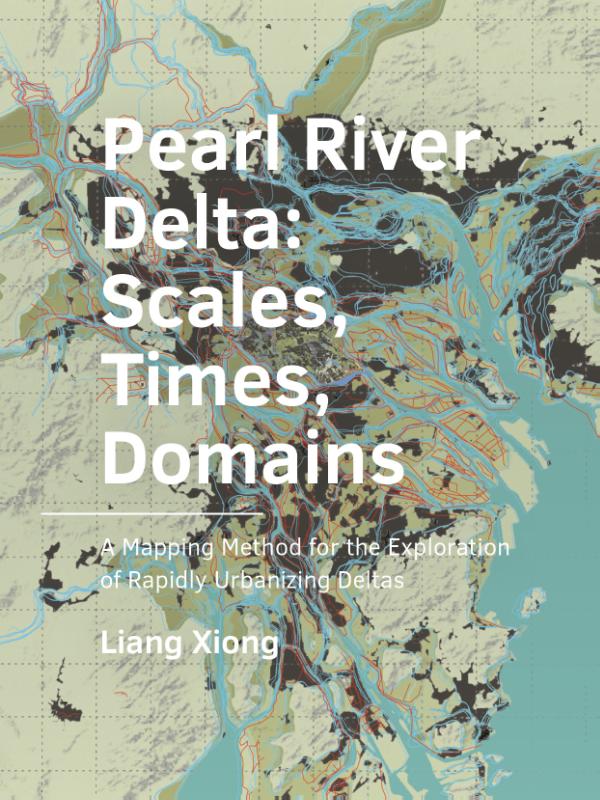
Pearl River Delta: Scales, Times, Domains
Towards a Method of Participatory Planning in an Emerging Metropolitan Delta in the Context of Climate Change
Urban and regional heat island adaptation measures in the Netherlands
Climate Change and the Resilience of Collective Memories
NSTC 501446131 · CB-relatie 6225289 · Bijgewerkt 6 augustus 2026