
Summistae The Commentary Tradition on Thomas Aquinas’ Summa Theologiae from the 15th to the 17th Centuries
Marco Toste red.
Ook verkrijgbaar als
Part 1: Framing the commentary tradition1.The Commentary Tradition on the ‘Summa Theologiae’Lidia Lanza – Marco Toste2. Thomas Aquinas as Authority and the ‘Summa Theologiae’ as Auctoritas in the Late Middle AgesMonica Brinzei – Chris Schabel3.The Genesis of a Genre? Late Medieval Commentaries on the ‘Summa Theologiae’Ueli Zahnd4.Theology in ‘via sancti Thomae’ at the University of Padua and the ‘Summa Theologiae’Matthew GaetanoPart 2: Discussions in the commentary tradition5.Remarks on the Debate on ‘Summa Theologiae’ I, q. 2, art. 2 in 17th-Century Dominican TheologyIgor Agostini6.The Proofs of God’s Existence: The Discussion of the Value of the ‘Five Ways’ in the 16th-Century Iberian Commentaries on the ‘Summa Theologiae’ Mauro Mantovani 7.The Light of Glory in Molina, Vázquez, and SuárezWilliam Duba8.Creation and Subsistence: Early Modern Commentators on the Subsistence of Prime MatterHelen Hattab9.Ways of Angelic Location: 16th-Century Dominican Summistae on ‘Summa Theologiae’ I, q. 52, art. 1Daniel D. Novotny – Tomaš Machula10.From Invincible Ignorance to Tolerance: Arriaga, Vázquez, and BayleJean-Luc Solere11.The Approach of Some Major Commentators on ‘Summa Theologiae’ II-II, q. 10: ‘De Infidelitate’Andreas Wagner12.Between Self-Preservation and Self-Sacrifice: The Debate in 16th-Century ScholasticismMarco Toste13.“Si peccavit per hoc quod fregit ostium, páguelo!”: The Debate on Whether the Prisoner Condemned to Death Can Lawfully Escape in the 16th-Century Commentary Tradition on the ‘Summa Theologiae’Lidia LanzaIndicesIndex of Manuscripts 427Index of Names ( –19th Century)Index of Names (19th Century– )The importance of the Summa theologiae on late scholasticismThomas Aquinas’ Summa theologiae is one of the classics in the history of theology and philosophy. Beyond its influence in the Middle Ages, its importance is also borne out by the fact that it became the subject of commentary. During the sixteenth century it was gradually adopted as the official text for the teaching of scholastic theology in most European Catholic universities. As a result, university professors throughout Europe and the colonial Americas started lecturing and producing commentaries on the Summa and using it as a starting point for many theological and philosophical discussions. Some of the works of major authors such as Vitoria, Soto, Molina, Suárez and Arriaga are for all intents and purposes commentaries on the Summa. This book is the first scholarly endeavour to investigate this commentary tradition. As it examines late scholasticism against its institutional backdrop and contains studies of unpublished manuscripts and texts, it will remain an authoritative source for the research of late scholasticism.Thomas Aquinas’ Summa theologiae is one of the classics in the history of theology and philosophy. Beyond its influence in the Middle Ages, its importance is also borne out by the fact that it became the subject of commentary. During the sixteenth century it was gradually adopted as the official text for the teaching of scholastic theology in most European Catholic universities. As a result, university professors throughout Europe and the colonial Americas started lecturing and producing commentaries on the Summa and using it as a starting point for many theological and philosophical discussions. Some of the works of major authors such as Vitoria, Soto, Molina, Suárez and Arriaga are for all intents and purposes commentaries on the Summa. This book is the first scholarly endeavour to investigate this commentary tradition. As it examines late scholasticism against its institutional backdrop and contains studies of unpublished manuscripts and texts, it will remain an authoritative source for the research of late scholasticism.
In het kort
ISBN-13
9789462702622
Uitgever
Verschenen
10 maart 2021
Imprint
Bibliografisch
ISBN-139789462702622
SerieAncient and Medieval Philosophy - Series 1 — deel 58
Editie1
TaalEngels eng
Pagina’s456
GeïllustreerdNee
Uitgave
UitgeverUniversitaire Pers Leuven
ImprintLeuven University Press
CB-relatie-id8004161
Verschenen10 maart 2021
StatusOnbekend 00
BeschikbaarheidContact leverancier 99
Adviesprijs (incl. btw)€ 120,00
Vorm & inhoud
ProductvormHardback BB
SamenstellingLos product
Classificatie
NUR (hoofd)Geschiedenis van de filosofie 732
NUR (alle)732 Geschiedenis van de filosofie
Medewerkers
Redacteur B01Lidia Lanza
Redacteur B01Marco Toste
Herkomst
Werk-id (NSTC)500845124
MeldingBevestigd bij publicatie 03
Bijgewerkt6 augustus 2026
Trefwoorden
Lijkt op dit boek
Questiones super I-VII libros Politicorum
Questiones super I-VII libros Politicorum
The Medieval Aristotle

Summa (Quaestiones ordinariae) art. LXIII-LXVII

Summa (Quaestiones ordinariae) art. LXIII-LXVII
The science of the soul
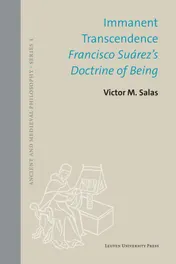
Immanent Transcendence
Quaestiones de ente
Averroes’ natural philosophy and its reception in the Latin West
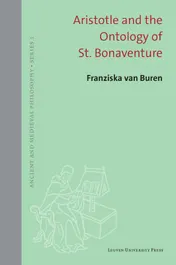
Aristotle and the Ontology of St. Bonaventure
NSTC 500845124 · CB-relatie 8004161 · Bijgewerkt 6 augustus 2026