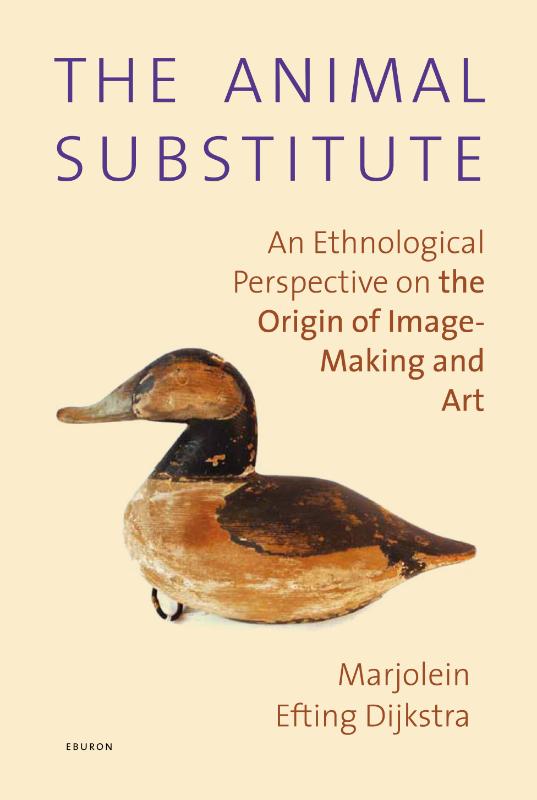
The animal substitute an ethnological perspective on the origin of image-making and art
Hardback304 pagina’sNederlands
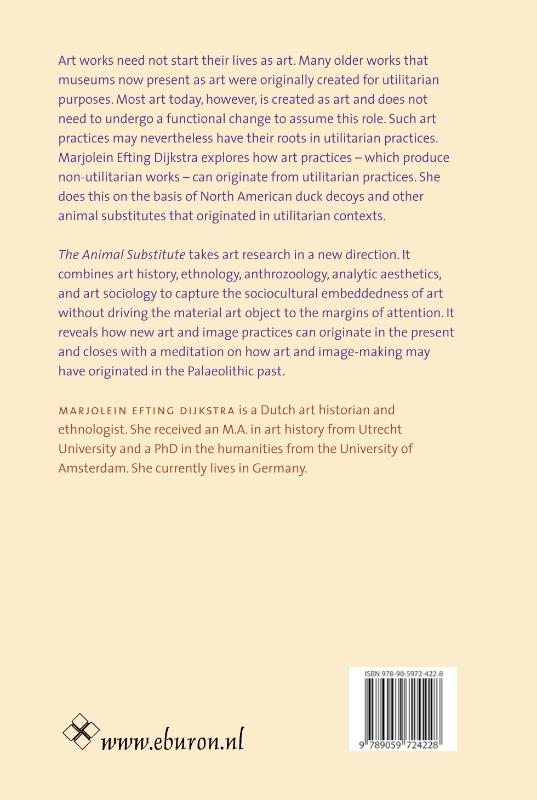
Art works need not start their lives as art. Many older works that museums now present as art were originally created for utilitarian purposes. Most art today, however, is created as art and does not need to undergo a functional change to assume this role. Such art practices may nevertheless have their roots in utilitarian practices. Marjolein Efting Dijkstra explores how art practiceswhich produce non-utilitarian workscan originate from utilitarian practices. She does this on the basis of North American duck decoys and other animal substitutes that originated in utilitarian contexts.
The Animal Substitute takes art research in a new direction. It combines art history, ethnology, anthrozoology, analytic aesthetics, and art sociology to capture the sociocultural embeddedness of art without driving the material art object to the margins of attention. It reveals how new art and image practices can originate in the present and closes with a meditation on how art and image-making may have originated in the Palaeolithic past.
Marjolein Efting Dijkstra is a Dutch art historian and ethnologist. She received an M.A. in art history from Utrecht University and a PhD in the humanities from the University of Amsterdam. She currently lives in Germany.
In het kort
Bibliografisch
ISBN-139789059724228
Editie1
TaalNederlands dut
Pagina’s304
GeïllustreerdJa
Uitgave
UitgeverEburon Uitgeverij B.V.
CB-relatie-id7804140
Verschenen1 december 2010
StatusInactief 08
BeschikbaarheidContact leverancier 99
Zonder prijsPrijs volgt
Vorm & inhoud
ProductvormHardback BB
SamenstellingLos product
Classificatie
NUR (hoofd)Zoogdieren 436
NUR (alle)436 Zoogdieren
Medewerkers
Auteur A01Marjolein Efting Dijkstra
Herkomst
Werk-id (NSTC)500302754
MeldingBevestigd bij publicatie 03
Bijgewerkt6 augustus 2026
Lijkt op dit boek
NSTC 500302754 · CB-relatie 7804140 · Bijgewerkt 6 augustus 2026