
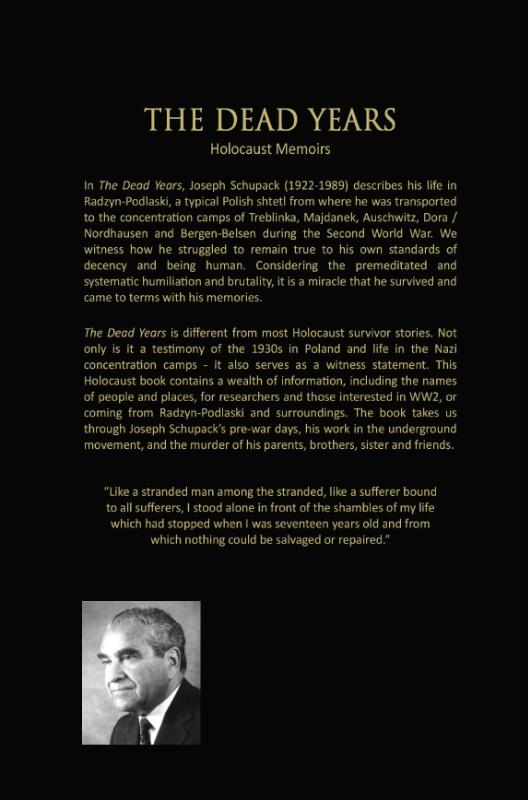
PrefaceBefore the WarThe Russians are ComingThe Germans are hereWith the Russians in Brest-LitovskLife in RadzynFather and Brother in Lublin PrisonNew Laws and New Forms of AbuseMy Sister Sonja is DeadThe JudenratThe Poles, the Germans, the JewsUncle Jankiel and the Gypsy WomanWe make PlansThe Transports to Auschwitz and TreblinkaMy Grandmother, the Bobeshi Basia-GellaYom KippurMy Family, My ChildAlone in RadzynAs Aryans in WarsawUnder Way with Forged PapersIn the Ghetto of MiedzyrzecThe Ghetto is LiquidatedIn MajdanekAuschwitzLeaving AuschwitzCamp Dora / NordhausenBergen-BelsenFreeThe Trip to PolandCONTENTSPrefaceBefore the WarThe Russians are ComingThe Germans are hereWith the Russians in Brest-LitovskLife in RadzynFather and Brother in Lublin PrisonNew Laws and New Forms of AbuseMy Sister Sonja is DeadThe JudenratThe Poles, the Germans, the JewsUncle Jankiel and the Gypsy WomanWe make PlansThe Transports to Auschwitz and TreblinkaMy Grandmother, the Bobeshi Basia-GellaYom KippurMy Family, My ChildAlone in RadzynAs Aryans in WarsawUnder Way with Forged PapersIn the Ghetto of MiedzyrzecThe Ghetto is LiquidatedIn MajdanekAuschwitzLeaving AuschwitzCamp Dora / NordhausenBergen-BelsenFreeThe Trip to PolandBack in GermanyThe Big DisappointmentThree DatesIn Memory of my HevraGlossary of Foreign WordsPicturesAbout the AuthorKind Review RequestFurther ReadingColophonIt’s an important memoir from a young man’s experience of a history that should never be forgotten.In The Dead Years, Joseph Schupack (1922- 1989) describes his life in Radzyn-Podlaski, a typical Polish shtetl from where he was transported to the concentration camps of Treblinka, Majdanek, Auschwitz, Dora / Nordhausen and Bergen-Belsen during the Second World War. We witness how he struggled to remain true to his own standards of decency and being human. Considering the premeditated and systematic humiliation and brutality, it is a miracle that he survived and came to terms with his memories.The Dead Years is different from most Holocaust survivor stories. Not only is it a testimony of the 1930s in Poland and life in the Nazi concentration camps - it also serves as a witness statement. This Holocaust book contains a wealth of information, including the names of people and places, for researchers and those interested in WW2, or coming from Radzyn-Podlaski and surroundings. The book takes us through Joseph Schupack’s pre-war days, his work in the underground movement, and the murder of his parents, brothers, sister and friends.We witness how people in the depths of misery shared their last morsel of food, how they were prepared for any sacrifice. There are many examples of brotherly love that grew out of empathetic pain.Finally freed, Schupack encountered rampant anti-Semitism when he tried to reclaim his possessions in Poland after the end of the war. For the Poles in his home town, the best Jews were the ones who did not return. A new, strictly anti-Semitic organization had been founded and its primary goal was the liquidation of all Jews returning from hiding or concentration camps. Decades after WWII, the author, mentally scarred by his war experiences, confronted his demons.“Like a stranded man among the stranded, like a sufferer bound to all sufferers, I stood alone in front of the shambles of my life which had stopped when I was seventeen years old and from which nothing could be salvaged or repaired.”In The Dead Years, Joseph Schupack (1922- 1989) describes his life in Radzyn-Podlaski, a typical Polish shtetl from where he was transported to the concentration camps of Treblinka, Majdanek, Auschwitz, Dora / Nordhausen and Bergen-Belsen during the Second World War. We witness how he struggled to remain true to his own standards of decency and being human. Considering the premeditated and systematic humiliation and brutality, it is a miracle that he survived and came to terms with his memories.The Dead Years is different from most Holocaust survivor stories. Not only is it a testimony of the 1930s in Poland and life in the Nazi concentration camps - it also serves as a witness statement. This Holocaust book contains a wealth of information, including the names of people and places, for researchers and those interested in WW2, or coming from Radzyn-Podlaski and surroundings. The book takes us through Joseph Schupack’s pre-war days, his work in the underground movement, and the murder of his parents, brothers, sister and friends.We witness how people in the depths of misery shared their last morsel of food, how they were prepared for any sacrifice. There are many examples of brotherly love that grew out of empathetic pain.Finally freed, Schupack encountered rampant anti-Semitism when he tried to reclaim his possessions in Poland after the end of the war. For the Poles in his home town, the best Jews were the ones who did not return. A new, strictly anti-Semitic organization had been founded and its primary goal was the liquidation of all Jews returning from hiding or concentration camps. Decades after WWII, the author, mentally scarred by his war experiences, confronted his demons.“Like a stranded man among the stranded, like a sufferer bound to all sufferers, I stood alone in front of the shambles of my life which had stopped when I was seventeen years old and from which nothing could be salvaged or repaired.”
In het kort
ISBN-13
9789492371164
Uitgever
Verschenen
16 februari 2017
Imprint
Bibliografisch
ISBN-139789492371164
Editie1
TaalEngels eng
Pagina’s218
GeïllustreerdJa
Uitgave
UitgeverAmsterdam Publishers
ImprintAmsterdam Publishers
CB-relatie-id6530716
Verschenen16 februari 2017
StatusOnbekend 00
BeschikbaarheidContact leverancier 99
Zonder prijsPrijs volgt
Vorm & inhoud
ProductvormPaperback BC
SamenstellingLos product
Classificatie
Medewerkers
Auteur A01Joseph Schupack
Herkomst
Werk-id (NSTC)500078083
MeldingBevestigd bij publicatie 03
Bijgewerkt6 augustus 2026
Trefwoorden
NSTC 500078083 · CB-relatie 6530716 · Bijgewerkt 6 augustus 2026