
The European fight against terrorism financing: professional fields and new governing practices
Paperback260 pagina’sEngels
About the thesis:
Combating the financing of terrorism has been a core component of the global War on Terror that began after the 9/11 terrorist attacks. This book shows how the fight against terrorism financing has taken shape and become important in Europe. An examination of two case studies - the EU's Third AML/CFT (Anti-Money Laundering and Combatting the Financing of Terrorism) Directive and the Terrorist Finance Tracking Program - sheds light on the emerging structures of European security governing, characterized by increased public-private cooperation and the almost invisible new governing practices involving the risk and link-based analysis of massive sets of personal financial data. The author presents a critical reflection on and discussion of the societal and political implications of these measures.
About the author:
Mara Wesseling (1979) studied Political Geography at the University of Amsterdam and International Relations at Sciences-Po Paris. Previously working at the French Embassy in the Netherlands, the Ministry of Foreign Affairs and the European Institute of Public Administration (EIPA), she returned to the University of Amsterdam lecture at the European Studies department and to complete a Ph.D. thesis on the European Fight against Terrorism Financing. She currently works as a post-doc researcher at Sciences-Po Paris.
Combating the financing of terrorism has been a core component of the global War on Terror that began after the 9/11 terrorist attacks. This book shows how the fight against terrorism financing has taken shape and become important in Europe. An examination of two case studies - the EU's Third AML/CFT (Anti-Money Laundering and Combatting the Financing of Terrorism) Directive and the Terrorist Finance Tracking Program - sheds light on the emerging structures of European security governing, characterized by increased public-private cooperation and the almost invisible new governing practices involving the risk and link-based analysis of massive sets of personal financial data. The author presents a critical reflection on and discussion of the societal and political implications of these measures.
About the author:
Mara Wesseling (1979) studied Political Geography at the University of Amsterdam and International Relations at Sciences-Po Paris. Previously working at the French Embassy in the Netherlands, the Ministry of Foreign Affairs and the European Institute of Public Administration (EIPA), she returned to the University of Amsterdam lecture at the European Studies department and to complete a Ph.D. thesis on the European Fight against Terrorism Financing. She currently works as a post-doc researcher at Sciences-Po Paris.
In het kort
Bibliografisch
ISBN-139789088916816
Editie1
TaalEngels eng
Pagina’s260
GeïllustreerdJa
Uitgave
Vorm & inhoud
ProductvormPaperback BC
SamenstellingLos product
Classificatie
NUR (hoofd)Politicologie 754
NUR (alle)754 Politicologie
Medewerkers
Auteur A01Mara Wesseling
Herkomst
Werk-id (NSTC)500473775
MeldingBevestigd bij publicatie 03
Bijgewerkt6 augustus 2026
Lijkt op dit boek

Wim Kok, een leven op eigen kracht. Deel II
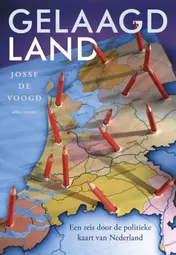
Gelaagd land
Oorlog in transitie
Oorlog in transitie

Het jaar dat wij antifascisten werden

De magie van de achterkamertjes
La révolution des communes

Het recht op islamofobie

Het recht op islamofobie

Filosofische fluisteraars, theologische techbro's, politieke rattenvangers
NSTC 500473775 · CB-relatie 9580114 · Bijgewerkt 6 augustus 2026