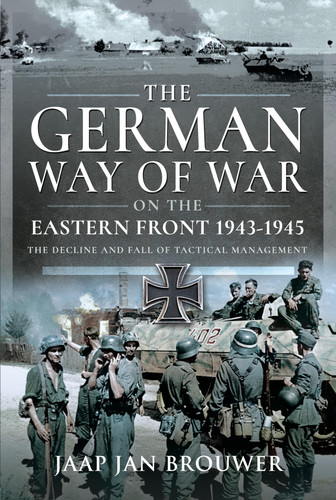
The German Way of War on the Eastern Front, 1943-1945 The Decline and Fall of Tactical Management
Hardback240 pagina’sEngelsInternationale bron
"... takes a holistic approach to defining the German decline in offensive and defensive projections. Given sufficient support, they could and did perform successful operations..." -Historical Miniatures Gaming Society
Early 1943 marked a turning point in the battle on the Eastern Front. After the devastating defeat at Stalingrad, the German army was no longer able to take the initiative and control the battle. In the following years, despite tactical victories, the German army would be gradually pushed back until Soviet units eventually reached Berlin and captured the Reichstag. In the meantime, both enemies had learned a great deal and new weapons were rapidly introduced onto the battlefield. On 8 May 1945, this bloody confrontation between the two giants ended in the unconditional surrender of Germany and a new geopolitical equilibrium was created.
This titanic battle is illustrated with witness accounts from generals, soldiers and civilians. Attention is not only paid to the course of the battle, but also to the tactics and organisational dimensions of the armies involved, the challenges of the vastness of the country, the dilemmas for civilians caught between the fighting parties and the flight of millions of Germans to the West in an attempt to escape from the atrocities of the Soviet army. The book also considers the role of the Reichsbahn in the field of logistics, and the importance of the innovation and production capacity of both armies. In also pays attention to the origins of the Cold War that was to follow this confrontation and which would last until 1989.
Early 1943 marked a turning point in the battle on the Eastern Front. After the devastating defeat at Stalingrad, the German army was no longer able to take the initiative and control the battle. In the following years, despite tactical victories, the German army would be gradually pushed back until Soviet units eventually reached Berlin and captured the Reichstag. In the meantime, both enemies had learned a great deal and new weapons were rapidly introduced onto the battlefield. On 8 May 1945, this bloody confrontation between the two giants ended in the unconditional surrender of Germany and a new geopolitical equilibrium was created.
This titanic battle is illustrated with witness accounts from generals, soldiers and civilians. Attention is not only paid to the course of the battle, but also to the tactics and organisational dimensions of the armies involved, the challenges of the vastness of the country, the dilemmas for civilians caught between the fighting parties and the flight of millions of Germans to the West in an attempt to escape from the atrocities of the Soviet army. The book also considers the role of the Reichsbahn in the field of logistics, and the importance of the innovation and production capacity of both armies. In also pays attention to the origins of the Cold War that was to follow this confrontation and which would last until 1989.
In het kort
Bibliografisch
ISBN-139781399032995
TaalEngels eng
Pagina’s240
Uitgave
UitgeverPen & Sword Books Limited
Verschenen1 januari 2024
Vorm & inhoud
ProductvormHardback BB
Medewerkers
Auteur A01Jaap Jan Brouwer
Herkomst
Bijgewerkt26 augustus 2026
Trefwoorden
Bijgewerkt 26 augustus 2026