
ThinkingSkins Cyber-physical systems as foundation for intelligent adaptive façades
New technologies and automation concepts emerge in the digitalization of our environment. This is, for example, reflected by intelligent production systems in Industry 4.0. A core aspect of such systems is their cyber-physical implementation, which aims to increase productivity and flexibility through embedded computing capacities and the cooperation of decentrally networked production plants. This development stage of automation has not yet been achieved in the current state-of-the-art of façades. Being responsible for the execution of adaptive measures, façade automation is part of hierarchically and centrally organised Building Automation Systems (BAS). The research project ThinkingSkins is guided by the hypothesis that, aiming at an enhanced overall building performance, façades can be implemented as cyber-physical systems. Accordingly, it addresses the research question: How can cyber-physical systems be applied to façades, in order to enable coordinated adaptations of networked individual façade functions?
In het kort
ISBN-13
9789463662840
Uitgever
Verschenen
27 mei 2020
Imprint
Bibliografisch
ISBN-139789463662840
Editie1
TaalEngels eng
Pagina’s282
GeïllustreerdJa
Uitgave
Vorm & inhoud
ProductvormPaperback BC
SamenstellingLos product
Classificatie
NUR (hoofd)Bouwkunst, architectuur 648
NUR (alle)648 Bouwkunst, architectuur
Medewerkers
Auteur A01Jens Böke
Herkomst
Werk-id (NSTC)500697873
MeldingBevestigd bij publicatie 03
Bijgewerkt6 augustus 2026
Lijkt op dit boek

The Intelligent Built-Environment as Cyber-Physical System
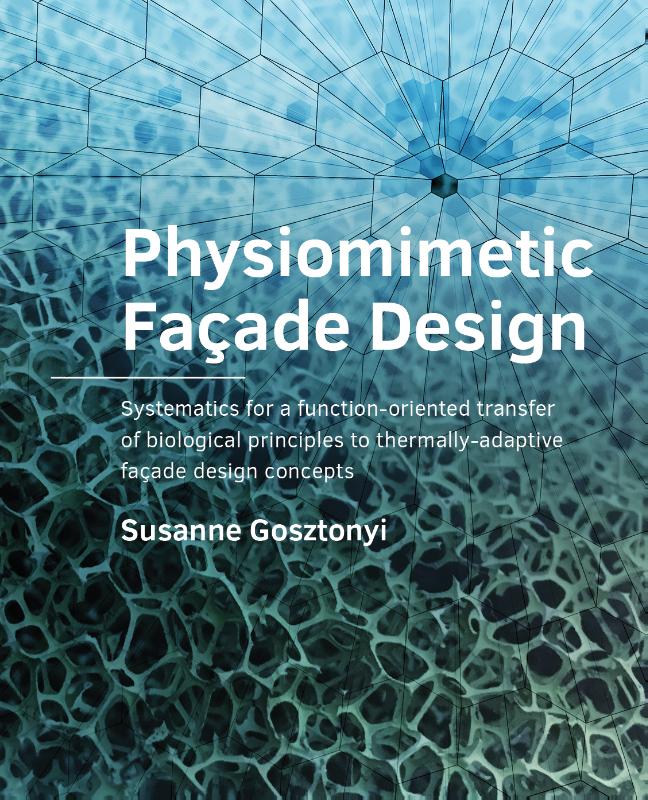
Physiomimetic Façade Design

Hybrid Intelligence in Architectural Robotic Materialization (HI-ARM)

Immediate Systems in Architecture

Special issue-2018

Integral facade construction

Façade 2018 – Adaptive!

ne-xt facades

Adaptive thermal comfort opportunities for dwellings

Countercurrent Heat Exchange Building Envelope Using Ceramic Components
NSTC 500697873 · CB-relatie 6225289 · Bijgewerkt 6 augustus 2026