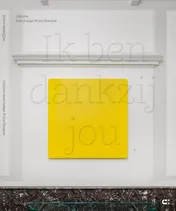
Transitoria - Joke Raes & Jonas Vansteenkiste
Joke Raes
Transitoria - Joke Raes & Jonas Vansteenkiste
Frederik Van Laere · Ranti Tjan · Willem Elias · Stef Van Bellingen · Patrick Bassant · Jeroen Laureyns · Meruro Washida · Carine Fol · Julie Vandenbroucke · Yoriko Ishizawa · Jonas Vansteenkiste · Philippe Van Cauteren · Els Wuyts · Mieke Mels · Sofie Crabbé · Jan Leysen · Jan Verhaeghe · Sevie Tsampalla
Paperback320 pagina’sMeertaligLeverbaar
Transitoria
First recorded in 1325–1375
Middle English: transitoria, from Latin tr?nsit?rius “fleeting”
Transit: the act or fact of passing through a transitional space, an intermediate space.
Transitoria has a relationship with Foucault’s Heterotopia. He uses the term to describe spaces that have more layers of meaning or relationships to other places than immediately meet the eye.
In general, a heterotopia is a parallel space. Foucault explains the link between utopias and heterotopias using the metaphor of a mirror. A mirror is a utopia because the image reflected is a ‘placeless place’, an unreal virtual place that allows one to see one’s own visibility. However, the mirror is also a heterotopia, in that it is a real object.
The heterotopia of the mirror is at once absolutely real, relating with the real space surrounding it, and absolutely unreal, creating a virtual image.
Appear/Disappear
Skin
Surprise
Repeat/Reprise
You/Me
Elusive
Reappropriation
Form Follows Fiction
Looking for balance
Living Portraits
Masks & Façades
Derrida
New Memories
Proliferate & Collect
Studio/Cabinet
First recorded in 1325–1375
Middle English: transitoria, from Latin tr?nsit?rius “fleeting”
Transit: the act or fact of passing through a transitional space, an intermediate space.
Transitoria has a relationship with Foucault’s Heterotopia. He uses the term to describe spaces that have more layers of meaning or relationships to other places than immediately meet the eye.
In general, a heterotopia is a parallel space. Foucault explains the link between utopias and heterotopias using the metaphor of a mirror. A mirror is a utopia because the image reflected is a ‘placeless place’, an unreal virtual place that allows one to see one’s own visibility. However, the mirror is also a heterotopia, in that it is a real object.
The heterotopia of the mirror is at once absolutely real, relating with the real space surrounding it, and absolutely unreal, creating a virtual image.
Appear/Disappear
Skin
Surprise
Repeat/Reprise
You/Me
Elusive
Reappropriation
Form Follows Fiction
Looking for balance
Living Portraits
Masks & Façades
Derrida
New Memories
Proliferate & Collect
Studio/Cabinet
In het kort
Bibliografisch
ISBN-139789464363012
Editie1
TaalMeertalig mul
Pagina’s320
GeïllustreerdNee
Uitgave
UitgeverMeta4Books vzw
CB-relatie-id8592217
Verschenen3 september 2021
StatusLeverbaar 04
BeschikbaarheidBeschikbaar 20
Adviesprijs (incl. btw)€ 40,00
Vorm & inhoud
ProductvormPaperback BC
SamenstellingLos product
Classificatie
NUR (hoofd)Kunst algemeen 640
NUR (alle)640 Kunst algemeen
Medewerkers
Auteur A01Joke Raes
Auteur A01Frederik Van Laere
Auteur A01Ranti Tjan
Auteur A01Willem Elias
Auteur A01Stef Van Bellingen
Auteur A01Patrick Bassant
Auteur A01Jeroen Laureyns
Auteur A01Meruro Washida
Auteur A01Carine Fol
Auteur A01Julie Vandenbroucke
Auteur A01Yoriko Ishizawa
Auteur A01Jonas Vansteenkiste
Auteur A01Philippe Van Cauteren
Auteur A01Els Wuyts
Auteur A01Mieke Mels
Auteur A01Sofie Crabbé
Auteur A01Jan Leysen
Auteur A01Jan Verhaeghe
Auteur A01Sevie Tsampalla
Herkomst
MeldingBevestigd bij publicatie 03
Bijgewerkt6 augustus 2026
Lijkt op dit boek



CB-relatie 8592217 · Bijgewerkt 6 augustus 2026