
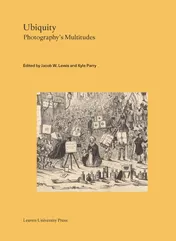
Introduction. Ubiquity Has a HistoryJacob W. Lewis and Kyle ParryChapter 1. Early Photography’s PresenceJacob W. LewisChapter 2. Photographic Privilege at the World’s Columbian ExpositionAnnie RuddChapter 3. Material Ecologies in the Géniaux Brothers’ Picture Archive of Brittany, ca. 1900Maura CoughlinChapter 4. “Our Best Machines Are Made of Sunlight”: Photography and Technologies of LightNiharika DinkarChapter 5. Managing Time: Nonhuman Animal Labor in Photographic ImagesJoseph MooreChapter 6. In 1973: Family Photography as Material, Affective HistoryMette SandbyeChapter 7. Where Is My Photo? A Study of the Representation of Tehran in the Work of Contemporary Iranian PhotographersMohammadreza MirzaeiChapter 8. Evidence of Feeling: Race, Police Violence, and the Limits of DocumentationCatherine ZuromskisChapter 9. On Photographic Ubiquity in the Age of Online Self-ImagingDerek Conrad MurrayChapter 10. Parafiction and the New Latent ImageKate Palmer AlbersChapter 11. Dispersal and Denial: Photographic Ubiquity and the Microbial AnalogyKyle ParryChapter 12. That Liking Feeling: Mood, Emotion, and Social Media PhotographyMichelle HenningChapter 13. “The Compass of Repair”: An Interview with Ariella Aïsha AzoulayJacob W. Lewis & Kyle ParryPlatesA critical anthology on the widespread use and influence of photographyFrom its invention to the internet age, photography has been considered universal, pervasive, and omnipresent. This anthology of essays posits how the question of when photography came to be everywhere shapes our understanding of all manner of photographic media. Whether looking at a portrait image on the polished silver surface of the daguerreotype, or a viral image on the reflective glass of the smartphone, the experience of looking at photographs and thinking with photography is inseparable from the idea of ubiquity—that is, the apparent ability to be everywhere at once. While photography’s distribution across cultures today is undeniable, the insidious logics and pervasive myths that have governed its spread demand our critical attention, now more than ever.From its invention to the internet age, photography has been considered universal, pervasive, and omnipresent. This anthology of essays posits how the question of when photography came to be everywhere shapes our understanding of all manner of photographic media. Whether looking at a portrait image on the polished silver surface of the daguerreotype, or a viral image on the reflective glass of the smartphone, the experience of looking at photographs and thinking with photography is inseparable from the idea of ubiquity—that is, the apparent ability to be everywhere at once. While photography’s distribution across cultures today is undeniable, the insidious logics and pervasive myths that have governed its spread demand our critical attention, now more than ever.
In het kort
ISBN-13
9789462702899
Uitgever
Verschenen
31 januari 2022
Imprint
Bibliografisch
Uitgave
UitgeverUniversitaire Pers Leuven
ImprintLeuven University Press
CB-relatie-id8004161
Verschenen31 januari 2022
StatusOnbekend 00
BeschikbaarheidContact leverancier 99
Adviesprijs (incl. btw)€ 49,50
Vorm & inhoud
ProductvormPaperback BC
SamenstellingLos product
Classificatie
NUR (hoofd)Fotografie, film, video als kunstvormen 652
Trefwoordensocial media · art history · history of technology · history of photography · ubiquity · critical theory · media studies · digital media · internet studies · visual studies
Medewerkers
Redacteur B01Jacob W. Lewis
Redacteur B01Kyle Parry
Herkomst
MeldingBevestigd bij publicatie 03
Bijgewerkt6 augustus 2026
Trefwoorden
Lijkt op dit boek


CB-relatie 8004161 · Bijgewerkt 6 augustus 2026