
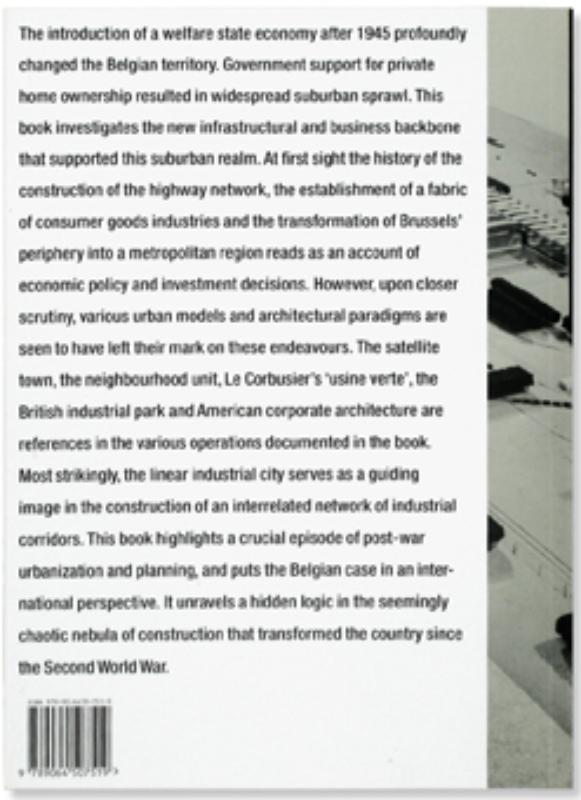
Building the Economic Backbone of the Belgian Welfare State infrastructure, planning and architecture 1945-1973
Andrew Jocelyne red.
Paperback367 pagina’sNederlands
The introduction of a welfare state economy after 1945 profoundly changed the Belgian territory. Government support for private home ownership resulted in widespread suburban sprawl. This book investigates the new infrastructural and business backbone that supported this suburban realm. At first sight the history of the construction of the highway network, the establishment of a fabric of consumer goods industries and the transformation of Brussels periphery into a metropolitan region reads as an account of economic policy and investment decisions. However, upon closer scrutiny, various urban models and architectural paradigms are seen to have left their mark on these endeavors. The satellite town, the neighborhood unit, Le Corbusiers usine verte, the British industrial park and American corporate architecture are references in the various operations documented in the book. Most strikingly, the linear industrial city serves as a guiding image in the construction of an interrelated network of industrial corridors. This book highlights a crucial episode of post-war urbanization and planning, and puts the Belgian case in an international perspective. It unravels a hidden logic in the seemingly chaotic nebula of construction that transformed the country since the Second World War.
In het kort
ISBN-13
9789064507519
Uitgever
Verschenen
1 maart 2011
Bibliografisch
ISBN-139789064507519
Editie1
TaalNederlands dut
Pagina’s367
GeïllustreerdJa
Uitgave
Uitgevernai010 uitgevers/publishers
CB-relatie-id7100743
Verschenen1 maart 2011
StatusInactief 08
BeschikbaarheidContact leverancier 99
Adviesprijs (incl. btw)€ 29,95
Vorm & inhoud
ProductvormPaperback BC
SamenstellingLos product
Classificatie
NUR (hoofd)Bouwkunst, architectuur 648
NUR (alle)648 Bouwkunst, architectuur
Medewerkers
Auteur A01Michael Ryckewaert
Redacteur B01Andrew Jocelyne
Herkomst
Werk-id (NSTC)500291056
MeldingBevestigd bij publicatie 03
Bijgewerkt6 augustus 2026
Lijkt op dit boek
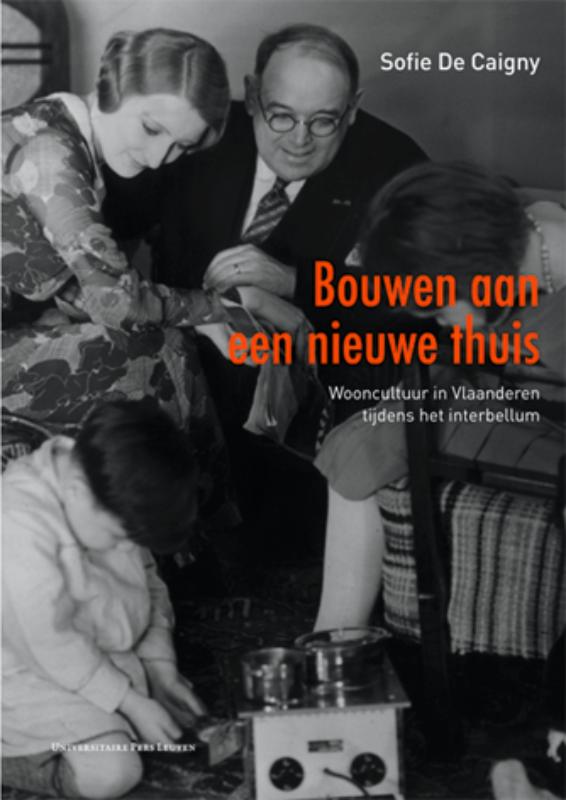
Bouwen aan een nieuwe thuis
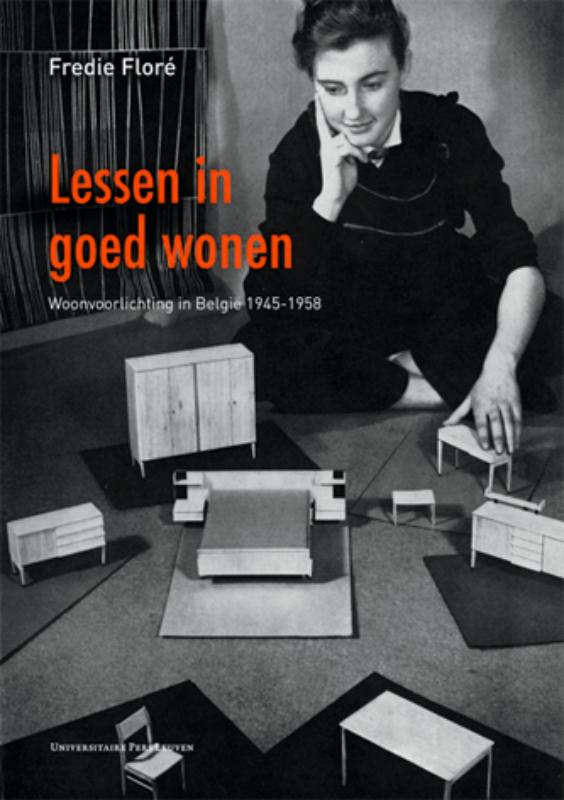
Lessen in goed wonen
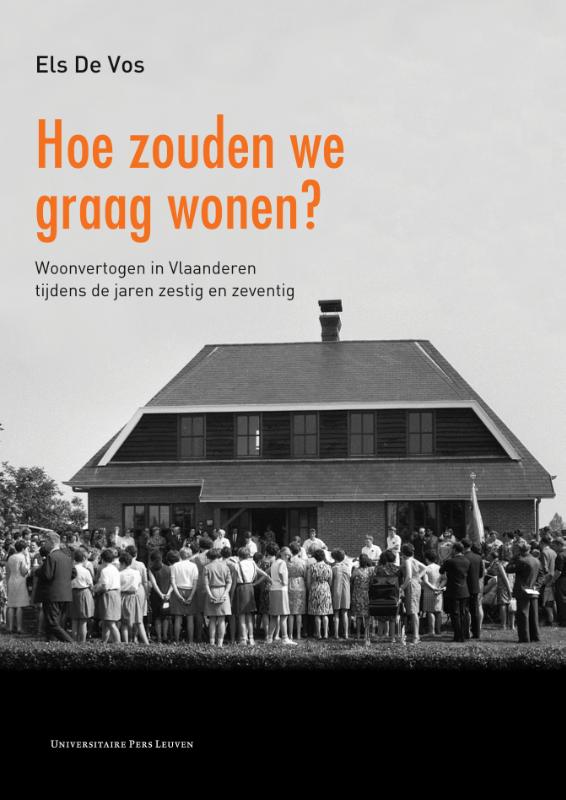
Hoe zouden we graag wonen?
Architectuur voor vrijetijdscultuur
Ruimtelijke planning: Denken over omgeving in Vlaanderen en Brussel
Framing Urban Renewal in Flanders
Ruimtelijke planning
De architectuur van de welvaartsstaat opnieuw bekeken
Clusters en economische groei
Participatiegolven
NSTC 500291056 · CB-relatie 7100743 · Bijgewerkt 6 augustus 2026