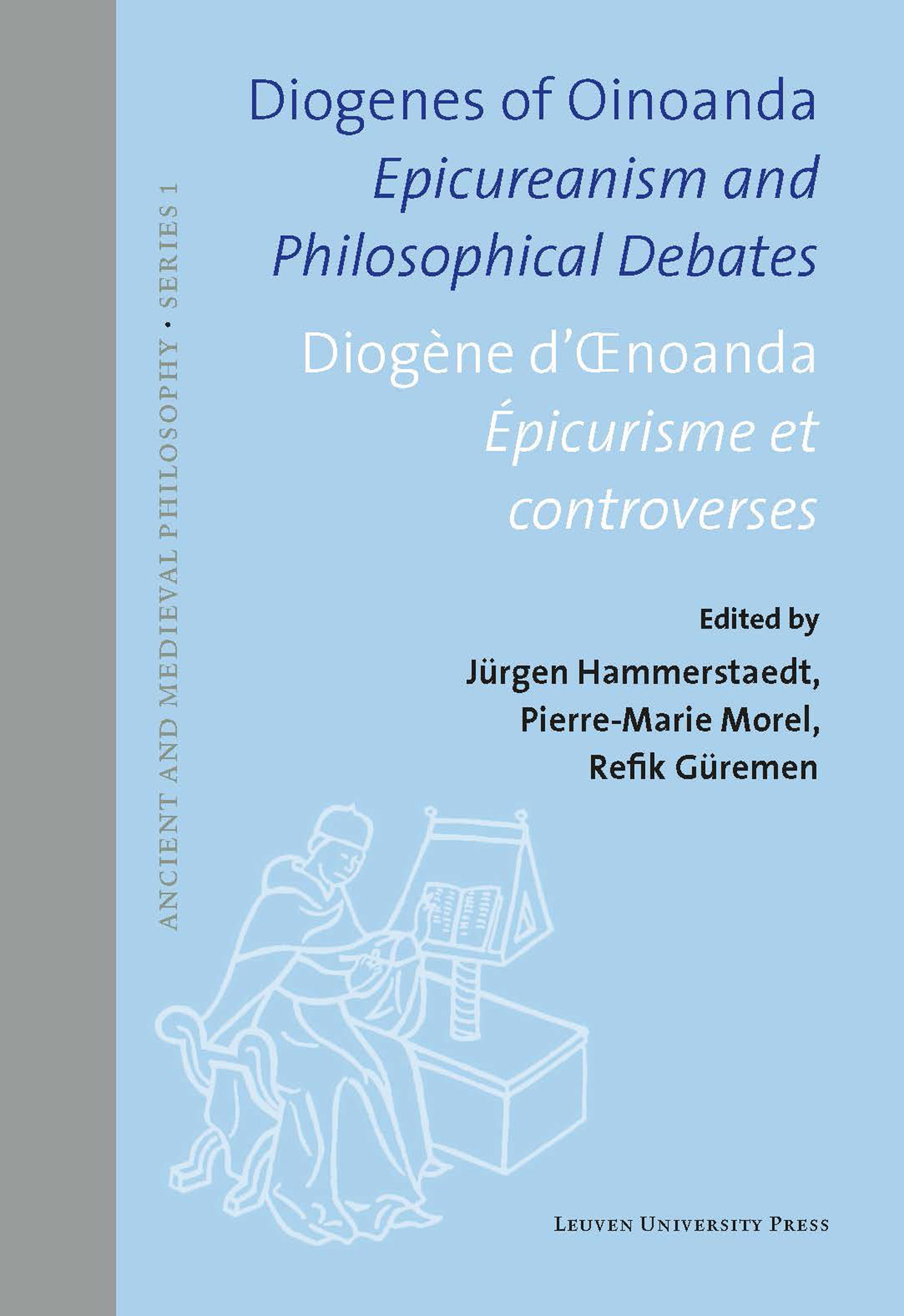
Diogenes of Oinoanda · Diogène d’Œnoanda Epicureanism and philosophical debates · éicurisme et controverses
List of IllustrationsMartin Ferguson SmithForeword. The Importance of Diogenes of OinoandaPierre-Marie Morel and Jürgen HammerstaedtPrefaceMartin BachmannOinoanda. Research in the City of DiogenesJürgen HammerstaedtThe Philosophical Inscription of Diogenes in the Epigraphic Context of Oinoanda. New Finds, New Research, and New ChallengesMichael ErlerDiogenes against Plato. Diogenes' Critique and the Tradition of Epicurean Antiplatonism Francesco VerdePlato's Demiurge (NF 155 = YF 200) and Aristotle's Flux (fr. 5 Smith). Diogenes of Oinoanda on the History of PhilosophyGiuliana LeoneDiogène d'Œnoanda et la polémique sur les meteoraFrancesca MasiVirtue, Pleasure, and Cause. A case of multi-target polemic? Diogenes of Oenoanda, fr. 32-33 SmithVoula TsounaDiogenes of Oinoanda and the CyrenaicsJean-Baptiste GourinatLa critique des stoïciens dans l'inscription d'ŒnoandaRefik GüremenDiogenes of Oinoanda and the Epicurean Epistemology of DreamsAlain GigandetDiogène, Lucrèce et la théorie épicurienne de l'imaginaire. Fragment 9 -; De rerum natura IV 971-993Pierre-Marie MorelLa Terre entière, une seule patrie. Diogène d'Œnoanda et la politiqueGeert RoskamDiogenes' Polemical Approach, or How to Refute a Philosophical Opponent in an Epigraphic ContextAbbreviations used for Diogenes and other Inscriptions of OinoandaBibliographyAbout the AuthorsIndex of PlacesIndex of Gods and Mythological Figures or ConceptsIndex of Ancient Persons, Philosophical Schools and ConceptsIndex of Persons of Modern TimesIndex of Ancient TextsFirst collection of essays entirely devoted to the inscription of Diogenes of Oinoanda.First collection of essays entirely devoted to the inscription of Diogenes of Oinoanda.The texts of Diogenes of Oinoanda (2nd century AD) who invited his readers to an Epicurean life is the largest ancient inscription ever discovered. Over 70 new finds have increased the number of known wall blocks and fragments to nearly 300, offering new insights into Diogenes' distinctive presentation of philosophy. This collection of essays discusses the philosophical significance of these discoveries and is the first of this kind entirely devoted to Diogenes of Oinoanda. Particular attention is paid to his philosophical aims and polemical strategies. Diogenes was apparently well aware of still ongoing philosophical debates, engaging in polemics against Presocratic philosophers, Platonics, and especially Stoics. His views about important issues like happiness, fear, old age, and the afterlife are explained on the bases of Epicurean physics and theology, ethics, politics, theory of knowledge, and psychology.Les textes de Diogène d'Œnoanda (Deuxième siècle de notre ère), qui invitait ses lecteurs au mode de vie épicurien, constituent la plus grande inscription antique jamais découverte. Les recherches récentes (plus de 70 pièces) ont porté le nombre de morceaux du mur et de fragments à près de 300, offrant ainsi un nouvel aperçu de la pensée propre de Diogène. Les essais réunis dans ce volume, le premier recueil d'articles entièrement consacré à Diogène d'Œnoanda, examinent la signification de ces découvertes. Ils portent une attention particulière aux intentions philosophiques de Diogène et à ses stratégies polémiques. L'épicurien était manifestement bien averti des débats philosophiques de son temps, engageant lui-même la polémique contre les présocratiques, les platoniciens et, plus spécialement, les stoïciens. Ses idées concernant les problèmes fondamentaux du bonheur, de la peur, de la vieillesse et de la vie après la mort ont pour horizon la pensée épicurienne sous ses différents aspects : physique et théologie, éthique, politique, théorie de la connaissance et psychologie.Contributors: Martin Bachmann (The German Archaeological Institute), Michael Erler (University of Würzburg), Alain Gigandet (University Paris - Est Créteil), Jean-Baptiste Gourinat (Centre National de la Recherche Scientifique/University of Paris - Sorbonne/Ecole Normale Supérieure), Refik Güremen (Mimar Sinan University), Jürgen Hammerstaedt (University of Cologne), Giuliana Leone (University of Naples Federico II), Francesca Masi (University Ca' Foscari of Venice), Pierre-Marie Morel (University of Paris 1 - Panthéon Sorbonne / Institut Universitaire de France), Geert Roskam (KU Leuven), Martin Ferguson Smith (Durham University), Voula Tsouna (University of California), Francesco Verde (La Sapienza University of Rome)The texts of Diogenes of Oinoanda (2nd century AD) who invited his readers to an Epicurean life is the largest ancient inscription ever discovered. Over 70 new finds have increased the number of known wall blocks and fragments to nearly 300, offering new insights into Diogenes’ distinctive presentation of philosophy. This collection of essays discusses the philosophical significance of these discoveries and is the first of this kind entirely devoted to Diogenes of Oinoanda. Particular attention is paid to his philosophical aims and polemical strategies. Diogenes was apparently well aware of still ongoing philosophical debates, engaging in polemics against Presocratic philosophers, Platonics, and especially Stoics. His views about important issues like happiness, fear, old age, and the afterlife are explained on the bases of Epicurean physics and theology, ethics, politics, theory of knowledge, and psychology. Les textes de Diogène d’Œnoanda (Deuxième siècle de notre ère), qui invitait ses lecteurs au mode de vie épicurien, constituent la plus grande inscription antique jamais découverte. Les recherches récentes (plus de 70 pièces) ont porté le nombre de morceaux du mur et de fragments à près de 300, offrant ainsi un nouvel aperçu de la pensée propre de Diogène. Les essais réunis dans ce volume, le premier recueil d’articles entièrement consacré à Diogène d’Œnoanda, examinent la signification de ces découvertes. Ils portent une attention particulière aux intentions philosophiques de Diogène et à ses stratégies polémiques. L’épicurien était manifestement bien averti des débats philosophiques de son temps, engageant lui-même la polémique contre les présocratiques, les platoniciens et, plus spécialement, les stoïciens. Ses idées concernant les problèmes fondamentaux du bonheur, de la peur, de la vieillesse et de la vie après la mort ont pour horizon la pensée épicurienne sous ses différents aspects : physique et théologie, éthique, politique, théorie de la connaissance et psychologie.
In het kort
ISBN-13
9789461662217
Uitgever
Verschenen
23 mei 2017
Imprint
Bibliografisch
ISBN-139789461662217
SerieAncient and Medieval Philosophy - Series 1 — deel 55
Editie1
TaalEngels eng
Pagina’s348
GeïllustreerdNee
Uitgave
UitgeverUniversitaire Pers Leuven
ImprintLeuven University Press
CB-relatie-id8004161
Verschenen23 mei 2017
StatusLeverbaar 04
BeschikbaarheidBeschikbaar 20
Zonder prijsPrijs volgt
Vorm & inhoud
ProductvormE-book ED
VormdetailE107 PDF
SamenstellingLos product
Beveiliging e-bookDigitaal watermerk 02
Classificatie
NUR (hoofd)Geschiedenis van de filosofie 732
NUR (alle)732 Geschiedenis van de filosofie
Medewerkers
Herkomst
MeldingBevestigd bij publicatie 03
Bijgewerkt6 augustus 2026
Lijkt op dit boek
Geletterde geesten - tweede editie
Petri Thomae Quaestiones de formis
Petri Thomae Quaestiones de formis
Orality and Scribal Culture in the High Middle Ages
Orality and Scribal Culture in the High Middle Ages
Orality and Scribal Culture in the High Middle Ages
Het verhaal van de filosofie: de Oudheid

Summa (Quaestiones ordinariae) art. LXXIII - LXXV

Summa (Quaestiones ordinariae) art. LXXIII - LXXV
Plutarch’s 'Politikos'
CB-relatie 8004161 · Bijgewerkt 6 augustus 2026