
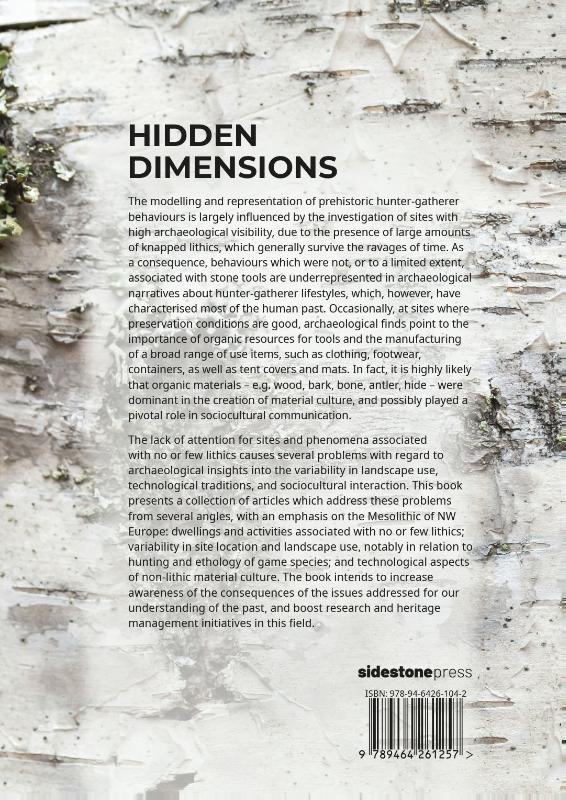
Hidden dimensions Aspects of Mesolithic hunter-gatherer landscape use and non-lithic technology
Hans Peeters bewerker
Hardback260 pagina’sEngels
IntroductionCultural dynamics in Stone Age hunter-gatherer lifeways. Hidden dimensionsOle Grøn & Hans PeetersPart 1 – Dwellings with no or little knapped lithicsA Mesolithic bark mat on Kvitsøy in south-western NorwaySigrid Alræk DugstadNo knapping on the floor! Norwegian examples of (mainly) Mesolithic dwellings with few associated lithicsSilje FretheimPart 2 – Sites in the landscape with no or little knapped lithics.Mesolithic sites with no or few finds: some examples from the west coast of SwedenRobert HernekDozens of large and (almost) empty pits. Towards a new geography for the French Mesolithic?Nathalie Achard-Corompt, Emmanuel Ghesquière, Christophe Laurelut, Charlotte Leduc, Arnaud Rémy, Isabelle Richard, Vincent Riquier, Luc Sanson & Julia WattezMesolithic Landscapes and where to hunt the big game: everywhere, or ???David Vogt, Ole Grøn, Hans Peeters, Robert Hernek & Eva DavidPart 3 – Non-lithic material culture.What is not there? Skin and fur objects in prehistoric hunter-gatherer societiesTorunn KlokkernesThin and spiky: eyed needles, sharp awls (a case study on materials from the Upper Palaeolithic Yana site, Arctic Siberia)Vladimir V. Pitulko & Elena Y. PavlovaBone flakes from traditional metapodial reduction in postglacial depositsÉva David, Arturo Cueva Temprana & Justyna OrłovskaThe modelling and representation of prehistoric hunter-gatherer behaviours is largely influenced by the investigation of sites with high archaeological visibility, due to the presence of large amounts of knapped lithics, which generally survive the ravages of time. As a consequence, behaviours which were not, or to a limited extent, associated with stone tools are underrepresented in archaeological narratives about hunter-gatherer lifestyles, which, however, have characterised most of the human past. Occasionally, at sites where preservation conditions are good, archaeological finds point to the importance of organic resources for tools and the manufacturing of a broad range of use items, such as clothing, footwear, containers, as well as tent covers and mats. In fact, it is highly likely that organic materials – e.g. wood, bark, bone, antler, hide – were dominant in the creation of material culture, and possibly played a pivotal role in sociocultural communication.The lack of attention for sites and phenomena associated with no or few lithics causes several problems with regard to archaeological insights into the variability in landscape use, technological traditions, and sociocultural interaction. This book presents a collection of articles which address these problems from several angles, with an emphasis on the Mesolithic of NW Europe: dwellings and activities associated with no or few lithics; variability in site location and landscape use, notably in relation to hunting and ethology of game species; and technological aspects of non-lithic material culture. The book intends to increase awareness of the consequences of the issues addressed for our understanding of the past, and boost research and heritage management initiatives in this field.
In het kort
ISBN-13
9789464261264
Uitgever
Verschenen
3 november 2022
Imprint
Bibliografisch
ISBN-139789464261264
Editie1
TaalEngels eng
Pagina’s260
GeïllustreerdJa
Uitgave
UitgeverSidestone Press
ImprintSidestone Press
CB-relatie-id9180064
Verschenen3 november 2022
StatusOnbekend 00
Vorm & inhoud
ProductvormHardback BB
SamenstellingLos product
Classificatie
NUR (hoofd)Archeologie 682
NUR (alle)682 Archeologie
Medewerkers
Bewerker B05Ole Grøn
Bewerker B05Hans Peeters
Herkomst
Werk-id (NSTC)501508859
MeldingBevestigd bij publicatie 03
Bijgewerkt6 augustus 2026
Lijkt op dit boek
Hidden dimensions
Living with Flint
Prehension and hafting traces on flint tools
Artefact Biographies from Mesolithic and Neolithic Europe and Beyond
Between Thy and Tübingen
Flintknapping from the Lateglacial to the Early Holocene
Resurfacing the submerged past
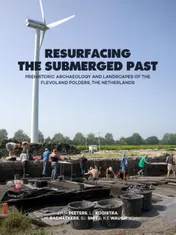
Resurfacing the submerged past
The Handle Core Concept
Quarries and mines in social context
NSTC 501508859 · CB-relatie 9180064 · Bijgewerkt 6 augustus 2026