
Making temporary homes Why meanings and activities matter
A housing shortage has been building up in the Netherlands in the last 30 years. Decreasing the housing shortage takes time, while people need a place to live now. Temporarily transforming vacant buildings into housing could reduce this need by providing the housing market with time to catch up. Can different user perspectives be included in housing design so all residents can easily make their home? A review of literature from housing studies, indoor environmental quality, architectural design and environmental psychology, for students, starters on the housing market and refugees accepted for permanent residency, indicated that using meanings of home could benefit housing design. Six factors were identified using a questionnaire that was developed to identify differences in meanings of home and what activities people engaged in, linked to indoor environmental preferences they had for those activities. Qualitative methods were used to better understand what people do to make a home. Three groups of activities were identified that reflect how home is a place built with meanings, through the use of objects, decorations, and the presence of other people. The results of a workshop with professionals indicated that meanings of home can be organised on three axes and that activities operate on different time frames (continuous, long-term, and short-term, respectively). This means that small actions, too, can contribute to creating a home, though which specific actions help someone and which do not, depend on the individual. The results can be used for housing design when architects and psychologists work together.
In het kort
ISBN-13
9789463668781
Uitgever
Verschenen
24 juni 2024
Imprint
Bibliografisch
ISBN-139789463668781
Editie1
TaalEngels eng
Pagina’s274
GeïllustreerdJa
Uitgave
Vorm & inhoud
ProductvormPaperback BC
SamenstellingLos product
Classificatie
NUR (hoofd)Bouwkunde 955
NUR (alle)955 Bouwkunde
Medewerkers
Auteur A01Marjolein Overtoom
Herkomst
Werk-id (NSTC)501589622
MeldingBevestigd bij publicatie 03
Bijgewerkt6 augustus 2026
Lijkt op dit boek
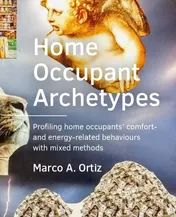
Home Occupant Archetypes
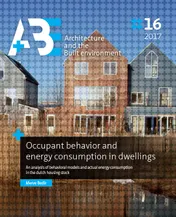
Occupant behavior and energy consumption in dwellings
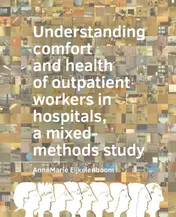
Understanding comfort and health of outpatient workers in hospitals, a mixed-methods study
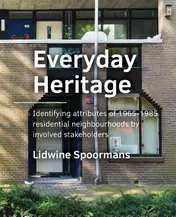
Everyday Heritage
Learning from co-housing initiatives
The Potential of Small, Low-Carbon, Zero-Energy Housing
Housing justice as expansion of people’s capabilities for housing
Securing Healthy Circular Material Flows In The Built Environment
Towards a Better-Functioning Private Rented Sector in Metropolitan China
Beyond good intentions
NSTC 501589622 · CB-relatie 6225289 · Bijgewerkt 6 augustus 2026