
The Potential of Small, Low-Carbon, Zero-Energy Housing A Multidimensional Approach
This thesis examines the potential of small, low-carbon, (near) zero-energy dwellings as a solution that would both address sustainability challenges and answer to the growing housing shortage in North-West Europe. It adopts a multidimensional outlook that encompasses institutional, social and technical aspects surrounding the dwellings. The institutional aspect is addressed through an investigation of financial, legislative, technical and cultural barriers to the implementation and uptake of small, low-carbon, zero-energy dwellings. A context specific approach is adopted taking into account contextual peculiarities for the formulation of more refined policy suggestions. The social dimension is addressed first from the perspective of market supply through an investigation of the perceptions of housing professionals. The distinction between perceived versus actual barriers identified by housing professionals is made highlighting a potential dyssynchronisation between policy developments and local practice. Accordingly the study calls for innovation in information dissemination between policy and local practice and between housing professionals themselves. The social dimension is then addressed from the perspective of market demand through an investigation of consumers’ current housing preferences. The assumption stating that, due to an increase in smaller, elderly, and lower-income households, current housing preferences are leaning towards smaller dwellings is refuted underlining the importance of distinguishing between smallest and smaller dwelling sizes. Lastly, the technical dimension is addressed through conducting a partial life cycle assessment that focuses on the embodied carbon of the dwellings. Both downsizing and the use of low-carbon materials such as timber are investigated as embodied carbon reduction strategies. Together, the three dimensions provide a holistic evaluation of the potential of small, low-carbon, zero-energy dwellings as a solution while addressing the complexity in reaching sustainable outcomes.
In het kort
ISBN-13
9789463668101
Uitgever
Verschenen
18 januari 2024
Imprint
Bibliografisch
ISBN-139789463668101
Editie1
TaalEngels eng
Pagina’s264
GeïllustreerdJa
Uitgave
Vorm & inhoud
ProductvormPaperback BC
SamenstellingLos product
Classificatie
NUR (hoofd)Bouwkunde 955
NUR (alle)955 Bouwkunde
Medewerkers
Auteur A01Cynthia Souaid
Herkomst
Werk-id (NSTC)501575072
MeldingBevestigd bij publicatie 03
Bijgewerkt6 augustus 2026
Lijkt op dit boek
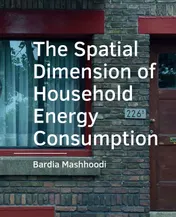
The Spatial Dimension of Household Energy Consumption
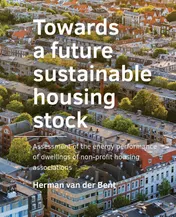
Towards a future sustainable housing stock
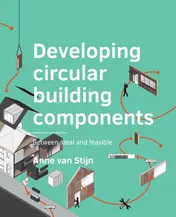
Developing circular building components
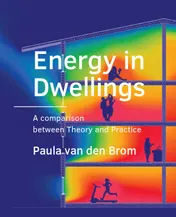
Energy in Dwellings
Learning from co-housing initiatives
Policy instruments to improve energy performance of existing owner occupied dwellings
Facade refurbishment toolbox
Occupant behavior and energy consumption in dwellings
Housing Refurbishment for Energy Efficiency and Comfort
Securing Healthy Circular Material Flows In The Built Environment
NSTC 501575072 · CB-relatie 6225289 · Bijgewerkt 6 augustus 2026