
Media Policy for the Digital Age
Paperback84 pagina’sNederlands
Contents - 6[-]Preface - 10[-]1 Introduction and abstract - 12[-]2 Media and society: some general reflections - 18[-] 2.1 A dynamic but complex media landscape - 18[-] 2.2 Fast commercial marketplace, slow government response - 19[-] 2.3 Aims and scope of the report - 20[-] 2.4 Definitions of the media landscape - 21[-] 2.5 Values that inspire and legitimate the definition of public interests - 21[-] 2.5.1 Freedom and equality - 21[-] 2.5.2 Accessibility - 22[-] 2.5.3 Independence - 22[-] 2.5.4 Pluralism - 22[-]3 A changing landscape: short overview of the dominant trends - 24[-] 3.1 Major characteristics of the media landscape in the digital age - 25[-] 3.2 Will traditional values do? a fresh look and the need for a broader perspective - 26[-]4 A short history of the dutch broadcasting policy - 30[-] 4.1 Early commercial days - 30[-] 4.2 Perceived scarcity - 31[-] 4.3 Post second world war - 31[-] 4.4 The 1960s - commercial pressure from the north sea - 32[-] 4.5 New broadcasting law 1967 - 33[-] 4.6 Policy in the 1970s - 34[-] 4.7 Different structure for regional broadcasting - 34[-] 4.8 Pseudo-commercialism and increasing domestic competition - 34[-] 4.9 More competition from abroad - 35[-] 4.10 Scientific council report 1982 - 36[-] 4.11 1987 and further: the new media law and its later modifications - 36[-]5 Other domains of media policy - 40[-] 5.1 Broadcast policy in 2005 - 40[-] 5.2 Commercial broadcasting - 41[-] 5.3 Press policy in 2005 - 41[-] 5.4 Cable policy in 2005 - 41[-] 5.5 Policy for new media in 2005 - 41[-] 5.6 Media concentration in 2005 - 42[-]6 Infrastructure in the netherlands: challenges and policy questions - 44[-] 6.1 Digitalisation and technological convergence - 45[-] 6.1.1 Digitalisation - 45[-] 6.1.2 Technological convergence - 46[-] 6.1.3 Spectrum scarcity - 46[-] 6.2 Related policy questions - 47[-] 6.3 Economic consequences - 47[-] 6.4 Summing up: robust trends and uncertain developments - 48[-] 6.5 Conclusions - 49[-]7 The media landscape: an institutional perspective on change - 52[-] 7.1 International landscape - 52[-] 7.2 National landscape - 54[-] 7.3 The role of the dutch government - 56[-] 7.4 Fragmented supervision - 58[-] 7.5 Content providers to the media landscape - 59[-] 7.5.1 Quality as a public interest - 61[-]8 a new paradigm: a functional approach to the media landscape - 64[-] 8.1 Reasons for renewal - 65[-] 8.1.1 future-proof policymaking - 65[-] 8.1.2 the relevance of values - 66[-] 8.1.3 hybridisation - 66[-] 8.2 The strategic matrix - combining functions with values - 67[-] 8.3 Defining the functions in detail - 68[-] 8.3.1 News provision - 68[-] 8.3.2 Opinion and debate - 68[-] 8.3.3 Entertainment - 69[-] 8.3.4 Arts and culture (and education) - 69[-] 8.3.5 Specialised information - 69[-] 8.3.6 Advertising and public relations (persuasive information or communication) - 70[-] 8.4 Using a functional approach to develop dutch media policy - 71[-] 8.5 More explicit and precise legitimation for public broadcasting is needed - 73[-] 8.6 Values, risks and priorities: a functional analysis of the media landscape - 74[-] 8.7 Government media policy: the need for selective and cautious involvement - 74[-] 8.8 Specific recommendations - 76[-] 8.9 Rethinking public broadcasting - 77[-] 8.9.1 Questions - 77[-] 8.9.2 Answers - 78[-] 8.9.3 Closing remarks - 80[-]Bibliography - 84Voor een gezonde democratie is een gevarieerd en toegankelijk media-aanbod van groot belang. Radio, televisie, kranten en tijdschriften spelen een belangrijke rol in de maatschappelijke informatievoorziening, het publieke debat, de cultuur, de vrijetijdsbesteding en de ontspanning. Het mediabeleid van de regering is erop gericht een veelzijdig, kwalitatief hoogwaardig en onafhankelijk mediaaanbod te garanderen, dat toegankelijk is voor alle bevolkingsgroepen waar ook in het land. Door de opkomst van het internet en veranderend consumentengedrag is het medialandschap echter sterk aan het veranderen. In deze Engelse vertaling van het WRR-Rapport Focus op functies brengt de WRR advies uit aan de regering om daarmee de doelstellingen van het mediabeleid op een toekomstbestendige wijze op een lijn te brengen met de (verwachte) veranderingen in het medialandschap. Klik hier voor meer informatie over de "http://www.aup.nl/do.php?a=show_visitor_book&isbn=9789053567333">Nederlandse editie Focus op Functies Deze titel kunt u inzien in Google Books - http://books.google.com/books?vid=ISBN9789053568262. Deze titel is onderdeel van de OAPEN Library - http://www.oapen.org.Voor een gezonde democratie is een gevarieerd en toegankelijk media-aanbod van groot belang. Radio, televisie, kranten en tijdschriften spelen een belangrijke rol in de maatschappelijke informatievoorziening, het publieke debat, de cultuur, de vrijetijdsbesteding en de ontspanning. Het mediabeleid van de regering is erop gericht een veelzijdig, kwa
In het kort
ISBN-13
9789053568262
Uitgever
Verschenen
26 november 2005
Bibliografisch
ISBN-139789053568262
Editie1
TaalNederlands dut
Pagina’s84
GeïllustreerdNee
Uitgave
UitgeverAmsterdam University Press
CB-relatie-id7400597
Verschenen26 november 2005
StatusInactief 08
BeschikbaarheidContact leverancier 99
Adviesprijs (incl. btw)€ 29,95
Vorm & inhoud
ProductvormPaperback BC
SamenstellingLos product
Classificatie
NUR (hoofd)Algemene sociale wetenschappen 741
NUR (alle)741 Algemene sociale wetenschappen
Medewerkers
Herkomst
Werk-id (NSTC)500682083
MeldingBevestigd bij publicatie 03
Bijgewerkt6 augustus 2026
Lijkt op dit boek
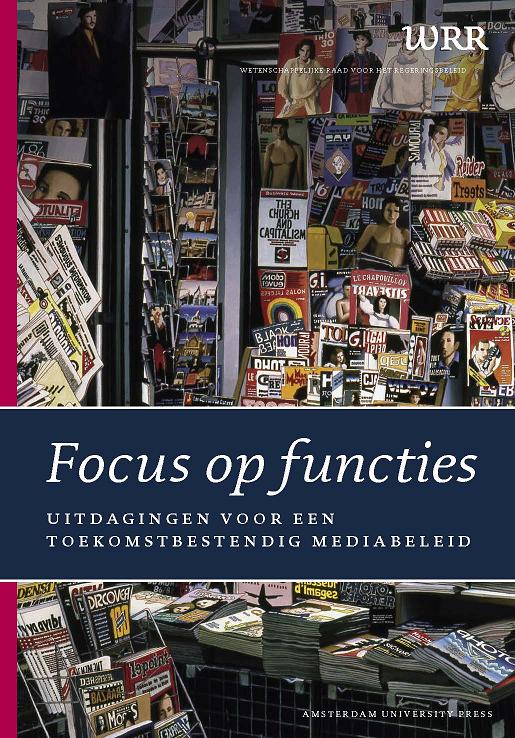
Focus op functies
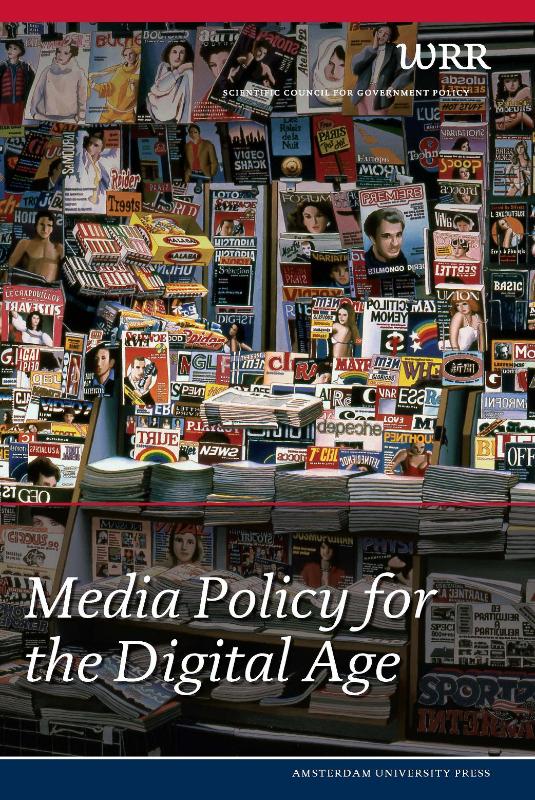
Media Policy for the Digital Age
Focus op functies
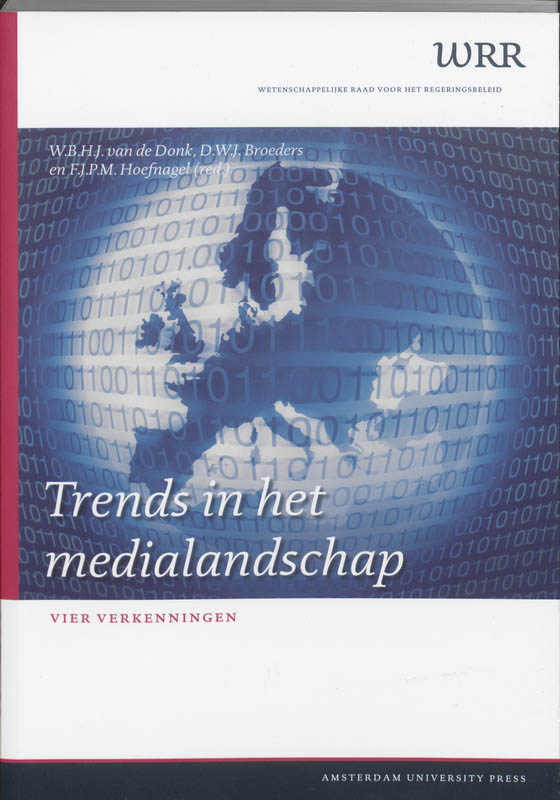
Trends in het medialandschap
Een schets van het Europese mediabeleid
Beleid inzake media, cultuur en kwaliteit
Beleid inzake media, cultuur en kwaliteit
De publieke kern van het internet
Toezien op publieke belangen
De regulering van media in internationaal perspectief
NSTC 500682083 · CB-relatie 7400597 · Bijgewerkt 6 augustus 2026