
Mutual Recognition 2.0 Coherent, effective, and efficient application of judicial cooperation instruments in criminal matters
The MR2.0 project examines the effective, coherent, and efficient application of mutual recognition instruments in criminal matters, with a special focus on measures that affect the personal liberty of individuals. The analysis is carried out from the perspective of the issuing authorities, who are at the core of decisions on which instruments to apply.To explore how these authorities operate in practice, the project studied four Member States - the Netherlands, Germany, Poland, and Spain - through desk research and interviews with practitioners. Each country report identified difficulties, gaps, and examples of good practice encountered in the daily application of EU judicial cooperation tools.The final report brings these findings together, offering a synthesis of national insights. It highlights practical challenges, inconsistencies, and solutions developed by practitioners, providing a clearer picture of how instruments work across borders.Based on this analysis, the project formulates a set of recommendations directed at EU institutions, national legislators, and practitioners. These proposals aim to improve the current system, foster mutual trust, and strengthen cooperation in the Area of Freedom, Security and Justice.
In het kort
ISBN-13
9789493458321
Uitgever
Verschenen
16 februari 2026
Imprint
Bibliografisch
ISBN-139789493458321
SerieMaastricht Law Series — deel 5
Editie1
TaalEngels eng
Pagina’s619
GeïllustreerdNee
Uitgave
UitgeverWJS Uitgevers B.V.
ImprintWJS Uitgevers
CB-relatie-id6757506
Verschenen16 februari 2026
StatusOnbekend 00
Vorm & inhoud
ProductvormE-book ED
VormdetailE107 PDF
SamenstellingLos product
Beveiliging e-bookDigitaal watermerk 02
Classificatie
NUR (hoofd)Recht algemeen 820
NUR (alle)820 Recht algemeen
Medewerkers
Herkomst
Werk-id (NSTC)501660396
MeldingBevestigd bij publicatie 03
Bijgewerkt6 augustus 2026
Lijkt op dit boek
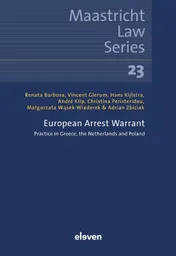
European Arrest Warrant
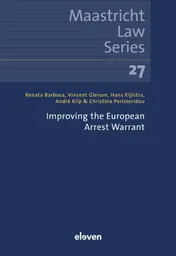
Improving the European Arrest Warrant
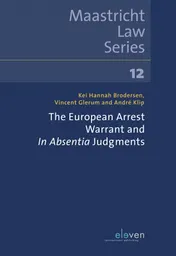
The European Arrest Warrant and In Absentia Judgements
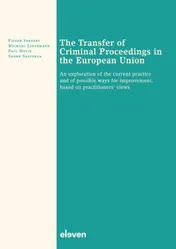
The Transfer of Criminal Proceedings in the European Union
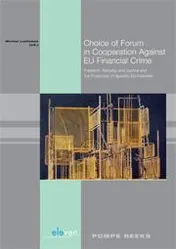
Choice of forum in cooperation against EU financial crime
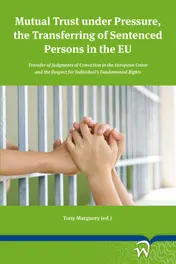
Mutual Trust under Pressure, the Transferring of Sentenced Persons in the EU
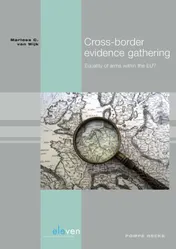
Cross-border evidence gathering
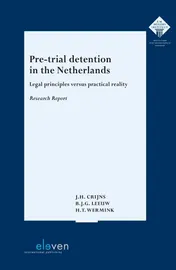
Pre-trial detention in the Netherlands: legal principles versus practical reality
Implementing and Enforcing EU Criminal Law
Judicial coherence in the European Union
NSTC 501660396 · CB-relatie 6757506 · Bijgewerkt 6 augustus 2026